


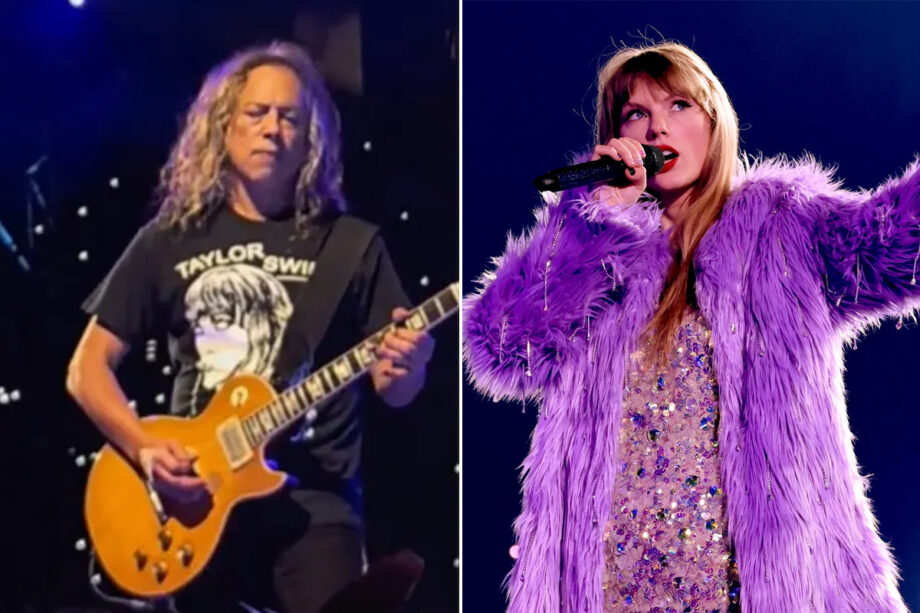
Metallica guitarist Kirk Hammett wore a satirical t-shirt reading “Taylor Swift is a CIA Psyop” during the band’s concert in Budapest on June 13, 2026. The shirt was designed by Chris Musina of the brand Nomasters as a humorous critique of absurd conspiracy theories claiming Taylor Swift is a government asset. The message did not land as intended, and both Taylor Swift fans and music critics took to social media to express their disapproval of the stage choice.
The incident quickly became known as “Shirtgate 2026” across social media platforms. Swifties flooded comment sections and trending topics to voice their frustration. Some fans attempted to give Hammett the benefit of the doubt by acknowledging the satirical nature of the shirt. One Taylor Swift fan commented, “Even Kirk Hammet can’t be normal about Taylor Swift. I will give him the benefit of the doubt and assume it was a joke and he doesn’t actually believe that nonsense.” The backlash revealed a significant generational and cultural divide in how different fan communities interpret stage humor and celebrity messaging.
The controversy highlighted broader tensions between rock music culture and pop music fandom. Some Metallica supporters defended Hammett’s right to wear what he chose, arguing it was simply a joke that shouldn’t spark conflict. Others questioned the wisdom of using a major concert platform to amplify conspiracy theories, even in jest. One Metallica fan commented, “Jeez. It’s just a joke, relax. They are legends, no need to start a beef,” reflecting the perspective of those who viewed the incident as harmless entertainment.

The incident gained significant traction across multiple social media platforms. The shirt became the subject of widespread discussion and debate about the responsibility of established artists when they use their platforms and audiences. Some critics pointed out that wearing such a shirt, regardless of intent, still amplifies conspiracy theories to thousands of concertgoers and millions online who might not understand or appreciate the satirical angle.
The timing of the incident coincided with broader cultural conversations about misinformation and conspiracy theories in the digital age. The Taylor Swift CIA conspiracy theory itself has become a recurring meme and talking point in online spaces. By bringing the conspiracy theory onto a major concert stage, Hammett inadvertently gave it additional visibility and legitimacy in the eyes of some observers, even though the shirt’s designer explicitly stated the intention was to mock rather than promote the theory.
The backlash demonstrated the power of fan communities to mobilize quickly around perceived slights or controversial statements. Taylor Swift’s fanbase, known for its passionate and organized online presence, made their displeasure known swiftly and loudly. The incident sparked conversations within music journalism and fan communities about the boundaries of stage humor and whether certain jokes are worth the inevitable controversy they generate, particularly when they involve conspiracy theories that some people genuinely believe.