

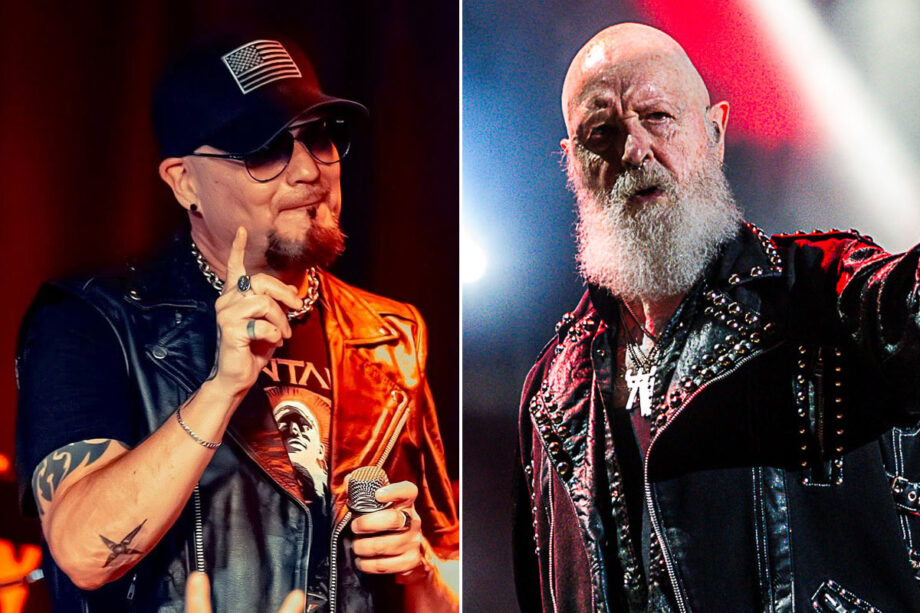
Former Judas Priest frontman Tim ‘Ripper’ Owens has reflected candidly on his tenure with the legendary British heavy metal band. He acknowledged that he joined during one of the most challenging periods in metal history. In a recent interview with Radio Futuro, Owens discussed how the seismic shift in musical tastes during the 1990s fundamentally altered the landscape for heavy metal. He explained why Rob Halford’s eventual return proved crucial to the genre’s resurgence.
“Yeah, it was a hard time, wasn’t it? It was a hard time. I couldn’t have joined Judas Priest at a worse time [for] heavy metal, could I? I mean, it was just so bad,” Owens explained. “But it came back right in the time that I left Judas Priest, that Rob came back, metal started coming back with these big tours again. And it was great. You know what? Judas Priest needed Rob back at that time. I think that probably was a big help of bringing heavy metal back, was [Iron] Maiden getting Bruce [Dickinson] back and Priest getting Rob back. I think it gave it a little resurgence. But I was in [Priest during] a terrible time of heavy metal.”
Owens’ assessment reflects the brutal reality that metal faced following the 1991 release of Nirvana’s “Nevermind.” This album fundamentally shifted popular musical tastes away from the genre almost overnight. The Ohio-based singer was recruited by Judas Priest in 1996 after drummer Scott Travis discovered him performing with British Steel, a Judas Priest cover band. This timing placed Owens squarely in the eye of metal’s commercial storm. Grunge and alternative rock dominated the cultural conversation while traditional heavy metal struggled for relevance and radio play.

During his seven-year tenure with Priest, Owens recorded two studio albums that showcased the band’s willingness to adapt to changing times. The 1997 album “Jugulator” and 2001’s “Demolition” represented the band’s experimental approach during a transitional era. Owens earned a Grammy nomination in 1999 for Best Metal Performance for the track “Bullet Train” from “Jugulator.” Despite the quality of these recordings, Owens’ era with the band has largely been overshadowed by the legacy of Halford’s original tenure and subsequent return.
The turning point came in 2003 when Judas Priest reunited with Rob Halford. This marked the end of Owens’ time with the band. This reunion coincided with a broader resurgence in heavy metal that saw iconic bands reclaiming their positions at the forefront of rock music. Iron Maiden’s reunion with Bruce Dickinson and Judas Priest’s return to their classic lineup became symbolic of metal’s comeback. These reunions signaled to fans and the industry alike that the genre was ready to reclaim its cultural prominence.
Owens also reflected on the creative differences between his era and the band’s current approach. “But I think that that record [‘Jugulator’] was important because we still made a heavy metal record. And Judas Priest, every record’s a little bit different. I think now they make kind of normal heavy metal records. They don’t really experiment too much anymore. But they used to experiment, and that’s what made me fall in love with Judas Priest. But, yeah, I think it was important.” His comments underscore the experimental nature of the Owens-era Priest. During this period, the band was actively trying to navigate the treacherous waters of 1990s musical trends while maintaining their metal credentials.

Today, Owens continues his career with multiple projects including KK’s Priest, which features former Judas Priest guitarist KK Downing. He maintains an active solo touring schedule. While his time with Judas Priest remains a footnote in the band’s storied history, Owens’ candid reflections offer valuable perspective on one of metal’s most turbulent decades. They highlight the strategic importance of iconic frontmen in revitalizing genre momentum during periods of cultural indifference.