

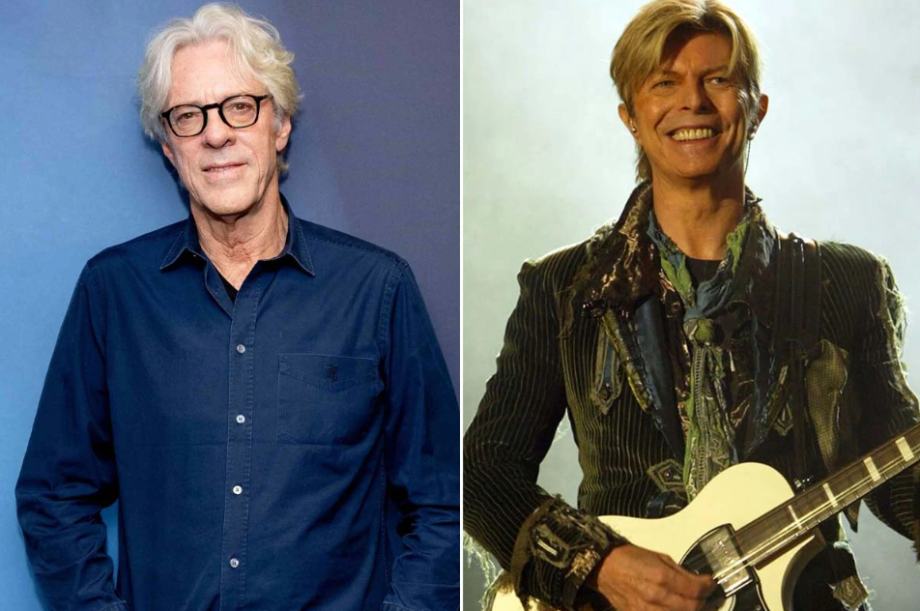
Stewart Copeland, the drummer of The Police, recently sparked debate after sharing a blunt opinion about David Bowie’s body of work during an interview with The Guardian.
His remarks came while responding to a question about what he believes is the most overrated album in music history. When asked, “What’s the most overrated album, and why?” Copeland offered an unexpected answer that dismissed Bowie’s entire catalog.
“Anything by David Bowie,” Copeland responded. “I recognize the great mark that Bowie left on the world. He was innovative in 10 different ways, an inspiration for a generation. His credentials as one of the most important artists of our time cannot be questioned.”

Although he acknowledged Bowie’s lasting influence and cultural importance, Copeland went on to explain why the music never resonated with him on a personal level.
“However, it didn’t work for me,” he continued. “I never wanted to look like that, I never wanted to sound like that, I didn’t get it. I was into Jimi Hendrix.”
Copeland’s dismissal stands in contrast to the widespread commercial and critical success Bowie achieved throughout his career. According to publicly documented chart history, several of Bowie’s RCA-era albums—including Aladdin Sane and Pin Ups (both released in 1973), Diamond Dogs (1974), and Scary Monsters (and Super Creeps) (1980)—all reached number one on the UK Albums Chart. His 1983 release Let’s Dance topped charts in both the UK and the United States, becoming one of his most commercially successful albums.

Despite that success, some critics have taken issue with certain phases of Bowie’s output. Far Out Magazine has argued that Let’s Dance represented a creative turning point where Bowie “lost his way,” citing his collaboration with producer Nile Rodgers and a conscious shift toward mainstream hits. The publication noted that Bowie told Rodgers, “I really want you to make hits.”
Even so, Bowie’s later career was met with renewed critical praise. Reviews highlighted his final two albums—2013’s The Next Day and 2016’s Blackstar, which was released just two days before his death—as among the strongest and most well-received works of his career.
Copeland’s comments were part of a wider interview in which he reflected on various moments from his own career, including what he described as “cringeworthy celebrity encounters” and his experiences interacting with other iconic figures in the music industry.