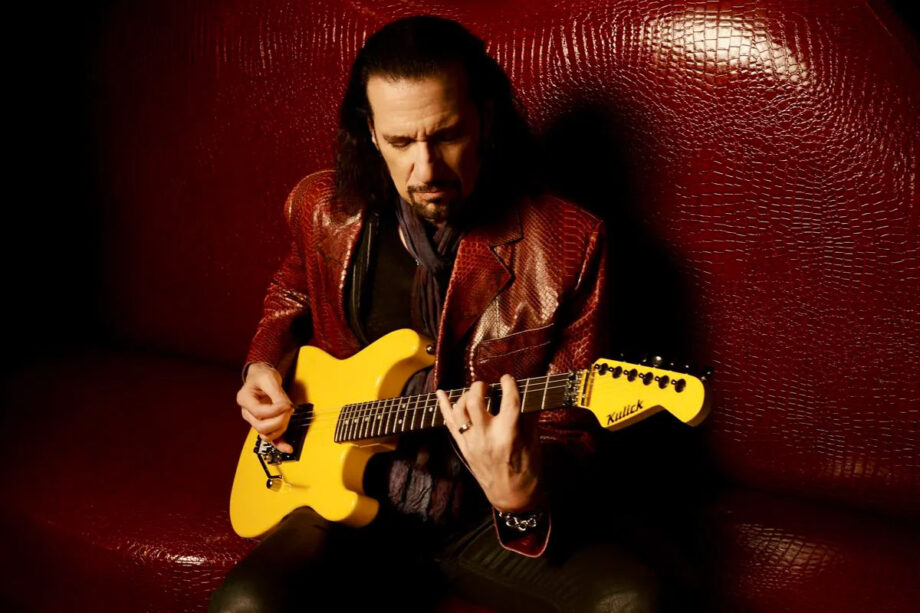
Former KISS guitarist Bruce Kulick has opened up about discovering his serious heart condition and the journey that led to life-saving surgery. A routine physical examination more than a decade ago first revealed an issue with his heart that would eventually require major intervention.
“I always believed in every year I got a physical, especially by the time I was, like, 40 or 50, [to] just see my doctor,” Kulick recalled. “And it was my primary back in California about 12 years ago, and he’s listening to my heart and he goes, like, ‘You have a murmur.’ And I go, like, ‘Okay. I don’t know what it means.’ Not every murmur means you need surgery.”
The initial discovery set Kulick on a path of medical monitoring that would span over a decade. His primary care physician referred him to a cardiologist in Los Angeles. Further testing revealed the underlying cause of the murmur. “They did whatever test it was back then, I don’t remember, ultrasound, this or that, ‘You have a bicuspid valve,'” Kulick explained. “And to be quite honest, back then, all right, it was a name, but I didn’t really understand the mechanics of what that meant.”

Despite the diagnosis, Kulick felt relatively healthy throughout the years of monitoring. “Every year I’d go, I didn’t feel that different from year to year, basically. Except you get a little older. And every year it was, like, not much of a change. ‘Okay, see you in six months for this next test,’ or a year,” he said.
The situation changed dramatically when tests conducted in November 2025 revealed a significant progression in his condition. When Kulick met with his cardiologist in December 2025, he received news that would alter the course of his life. “He said, ‘Okay, now you’re severe aortic stenosis from your bicuspid valve,'” Kulick recounted. “And again, I didn’t feel that different, so I was kind of like staring at the floor. And he’s explaining everything to my wife, Lisa, who came with me.”
His cardiologist emphasized the importance of timely intervention. “He says, ‘Now it’s much more common. Not to wait. You’re 72. You wanna consider repairing this while your baseline is strong,’ meaning, for the people listening, that you’re generally healthy, so you can handle [it], instead of being in some bad way,” Kulick explained.

The cardiologist initially discussed the possibility of a minimally invasive procedure known as TAVR, or Transcatheter Aortic Valve Replacement. However, further testing would reveal that Kulick’s specific anatomy required a different approach. “Well, we need to do a few more tests to see. Maybe we can do the TAVR, which is a less invasive repair. Although, as soon as I started to do the research in early January, I was realizing, ‘I’m gonna wind up with open-heart surgery,'” Kulick explained.
The cardiologist never ruled out open-heart surgery. Additional tests including a CT scan and angiogram would determine the best course of action. “But he knew from the CT scan that I needed open-heart surgery, that trying to put a valve in through a vein, [which is] less invasive, of course, it wouldn’t be a great fit and I wouldn’t get great results,” Kulick said.
Kulick’s condition stems from a bicuspid aortic valve, a birth defect in which the aortic valve has two leaflets instead of the normal three. This congenital condition is relatively common and can develop into severe aortic stenosis over time. Aortic stenosis is a narrowing of the valve opening that restricts blood flow from the heart. For patients with bicuspid aortic valve stenosis, surgical aortic valve replacement through open-heart surgery remains the preferred treatment option, particularly when the condition becomes severe. The decision to pursue surgery rather than the less invasive TAVR procedure was based on Kulick’s specific valve anatomy and the medical team’s assessment that traditional open-heart surgery would provide superior long-term outcomes.
Kulick underwent open-heart surgery in April 2025. He spent eight days in the hospital during his initial recovery. Many people were surprised by the need for such an invasive procedure given Kulick’s otherwise healthy lifestyle. “A lot of people were really surprised. ‘Why does Bruce need open-heart surgery? He looks like a healthy guy. We know he’s not a drinker or smoker.’ And I had to be really clear that this was a birth defect, this was planned,” Kulick said.
Kulick emphasized that his situation was not unique. “Birth defects are very common. I don’t know where it comes from — three generations above or whatever,” he noted. He also discovered that others with the same birth defect had undergone repair at younger ages. “I do know other people that had the same birth defect, but they knew about it way younger, and they had it repaired way younger than me. But it wasn’t suggested to me… I would’ve been, like, 60 when I found out.”
The recovery from open-heart surgery is a lengthy process. It contrasts sharply with the faster recuperation associated with minimally invasive procedures. By May 2025, just twelve days after his operation, Kulick was home and beginning his recovery journey. He noted slow but steady improvements.
Despite the challenges ahead, Kulick expressed gratitude for modern medical science and the successful outcome of his procedure. “I still am blown away completely with the technology. I know that it keeps getting better, and whatever they did in that operating room in April was a miracle. And for me to come out of it doing as well as I’m doing now is just a testament to medical science. So I’m blessed that I followed it,” he concluded.