

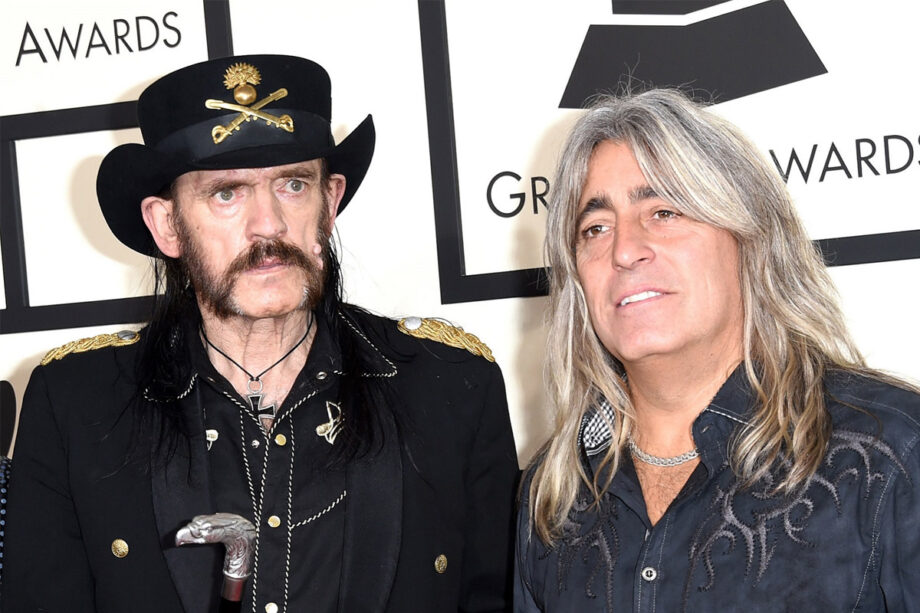
Legendary drummer Mikkey Dee has opened up about one of heavy metal’s most intriguing “what-ifs”—his decision to respectfully decline Motörhead frontman Lemmy Kilmister’s offer to join the band during a 1986 tour. Despite the honor of being asked by one of rock’s most iconic figures, he simply didn’t feel ready for such a monumental role at that stage of his career.
“In the King Diamond days, we were a great band, with great camaraderie, and we all pulled in the same direction,” Dee recalled. “But by ’88 I thought that things were changing for the worst, which is why I left the band. It seemed to me that King took his own horse and rode away and left us a little bit. We were no longer like a fist, and that pissed me off. I started to feel like a background drummer. So I said, ‘Look, I’m not having that much fun, and I feel very narrow as a drummer, technically, so I’m going to depart’.”
Dee’s departure from King Diamond came after the completion of the supporting tour for the band’s 1988 album “Them.” This marked the end of a creatively intense period that would prove formative for his development as a musician. His initial rejection of Motörhead’s offer came two years earlier, during the height of King Diamond’s momentum.

“We were touring together with Motörhead in ’86, and I actually got offered to join the band,” Dee explained. “They actually called me up after that tour and I respectfully turned them down. I didn’t think I was ready for a band like Motörhead. I hadn’t earned my stripes on my shoulders yet. I didn’t have enough spunk, really.”
Despite turning down the opportunity, the connection between Dee and Kilmister never faded. Lemmy would send him postcards from all over the world. The two musicians maintained contact over the years, and the tie between them was never severed.
Dee’s time with King Diamond from 1985 to 1988 proved to be his “college” period as a drummer. He mastered complex time signatures and technical precision during this era, which would define his playing style. The band’s theatrical approach to metal required him to navigate intricate arrangements and unconventional song structures. This pushed him to expand his capabilities far beyond traditional heavy metal drumming.

During this period, King Diamond released three studio albums: “Fatal Portrait” in 1986, “Abigail” in 1987, and “Them” in 1988. Each album showcased Dee’s remarkable speed and technical prowess.
The dynamics within King Diamond shifted as the band gained popularity. Frontman King Diamond increasingly took a dominant role in songwriting and decision-making. This creative imbalance ultimately led to Dee’s departure, as he felt relegated to a supporting role rather than being treated as an equal contributor. Though he left the band after the “Them” tour, he was briefly rehired to play session drums on the follow-up album “Conspiracy” in 1989. He was permanently replaced by Snowy Shaw after that session work.
After leaving King Diamond, Dee continued his career with Don Dokken. He embarked on an extensive tour that kept him occupied and satisfied musically. When Lemmy approached him again in 1990 with another offer to join Motörhead, Dee had to decline once more due to his commitment to the Dokken tour.
It wasn’t until 1992, when Lemmy extended the invitation a third time, that Dee finally accepted. He replaced legendary Motörhead drummer Phil “Philthy Animal” Taylor. This decision would cement his legacy as one of metal’s most respected and technically gifted drummers. He maintained this position throughout his 23-year tenure with the band until 2015.