

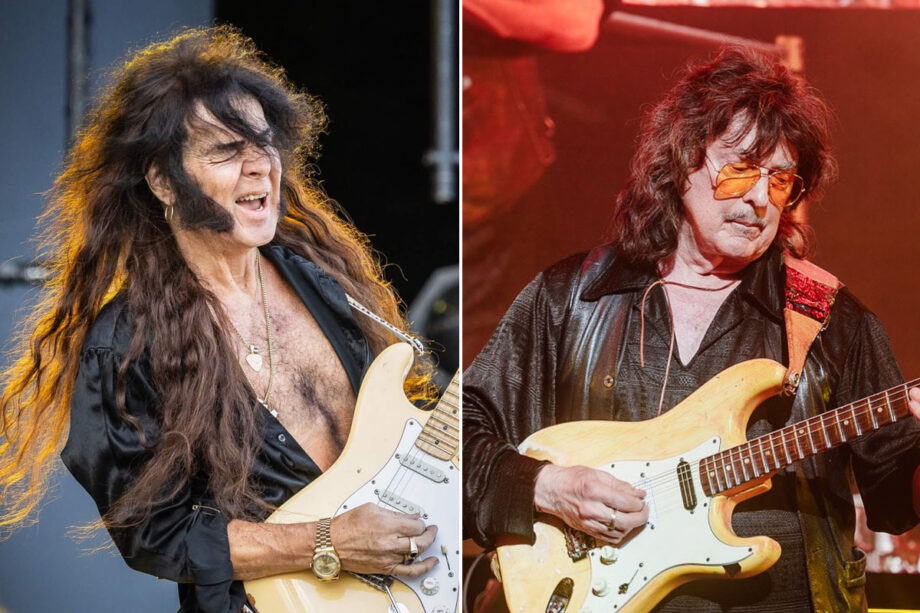
Yngwie Malmsteen recently praised Ritchie Blackmore’s surprise live return with Deep Purple during a new interview with eonmusic. Blackmore recently joined his former band on stage for the first time in over three decades during their headlining concert on August 12 at the Northwell at Jones Beach Theater in Wantagh, New York.
When asked what he made of his early influence playing with Deep Purple again, Malmsteen shared his positive reaction to the reunion.
“I think it was beautiful,” Malmsteen said. “I think it’s great. I’m really happy that he did it, and best to him and to the rest of the guys too.”

Malmsteen then went on to recall his own experience sharing the stage with Deep Purple during a tour in 2009.
“I actually did a tour with Deep Purple back in 2009, and I went up and did ‘Smoke on the Water’ with them,” Malmsteen continued. “Roger Glover and Ian Paice were there, and Jon Lord happened to be in town – Tokyo – that day, so yeah, it was pretty sick. I enjoyed that. They’re great. I’m glad that they’re keeping it up. It’s good.”
The moment Malmsteen is celebrating was a rare one for Deep Purple, and it carried more weight than a typical guest appearance. Blackmore joined the band on August 12 for a performance of “Smoke on the Water,” a reunion that arrived 33 years after his previous appearance with the group. The guitarist’s last show with Deep Purple took place in Helsinki, Finland in November 1993.

Blackmore’s connection to Malmsteen runs deep, and Malmsteen has spoken about it many times over the years. Malmsteen recalled receiving Deep Purple’s Fireball from his sister for his eighth birthday and said, “When I heard that, my path was clear.” He also credited Blackmore’s “syncopated pentatonic lines” and learned the solos on Made in Japan “inside out.”
Malmsteen has also been careful to draw a line between his influences and his own identity as a player. Malmsteen said, “I love Ritchie Blackmore, no doubt about it, but my playing is nothing like his.” He has explained that his neoclassical approach was built primarily on classical violin and the music of Paganini rather than on Blackmore’s blues-based guitar style.