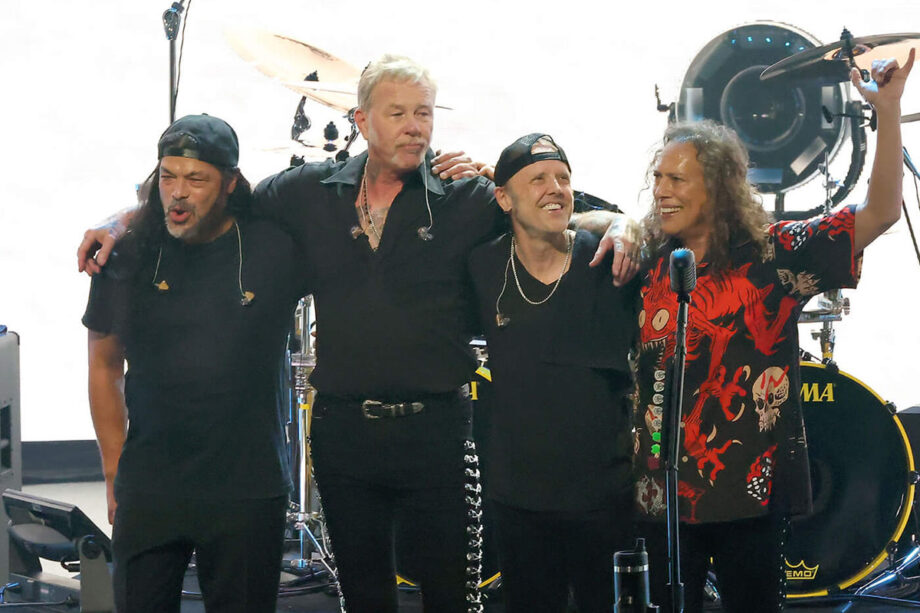
Metallica’s 3 October 2026 show at Sphere in Las Vegas was never just another stop on a residency. It was the first full-scale metal concert to use the venue’s 16K wraparound screen, and the band treated that scale as part of the performance rather than a backdrop.
The playing held up under the pressure. Metallica sounded raw and technically sharp, with James Hetfield’s voice still carrying real edge, while Lars Ulrich’s drumming, Kirk Hammett’s guitar work and Robert Trujillo’s onstage energy drew steady praise.
Not everything stayed focused on the four men onstage. The visuals were so dominant that the music sometimes sat underneath the image system, driving it rather than leading the show.

The crowd matched the venue more than a typical Metallica pit. Fans stayed seated for long stretches, and the room felt notably calmer than a standard arena date.
That restraint did not mean a lack of emotion. The night was widely called epic and overwhelming, and many in attendance treated it as a rare communal event instead of a chance to mosh.

Production defined the evening. The screen work was huge, detailed and at times disorienting, with imagery that regularly dwarfed the band itself.
The visuals did not land evenly for everyone. Certain effects worked better than others, but the overall result fit Metallica’s size, catalogue and long-running taste for theatrical staging.
Seen as a whole, the performance says plenty about where the band stands now. Metallica can still command modern technology without losing its identity, and the residency makes a strong case for its pull with both lifelong fans and a younger crowd that wants an experience, not just a concert.
That shift may be the real story here: a metal show built as an immersive cultural event, played to a crowd that came to witness something historic rather than to tear the room apart.