


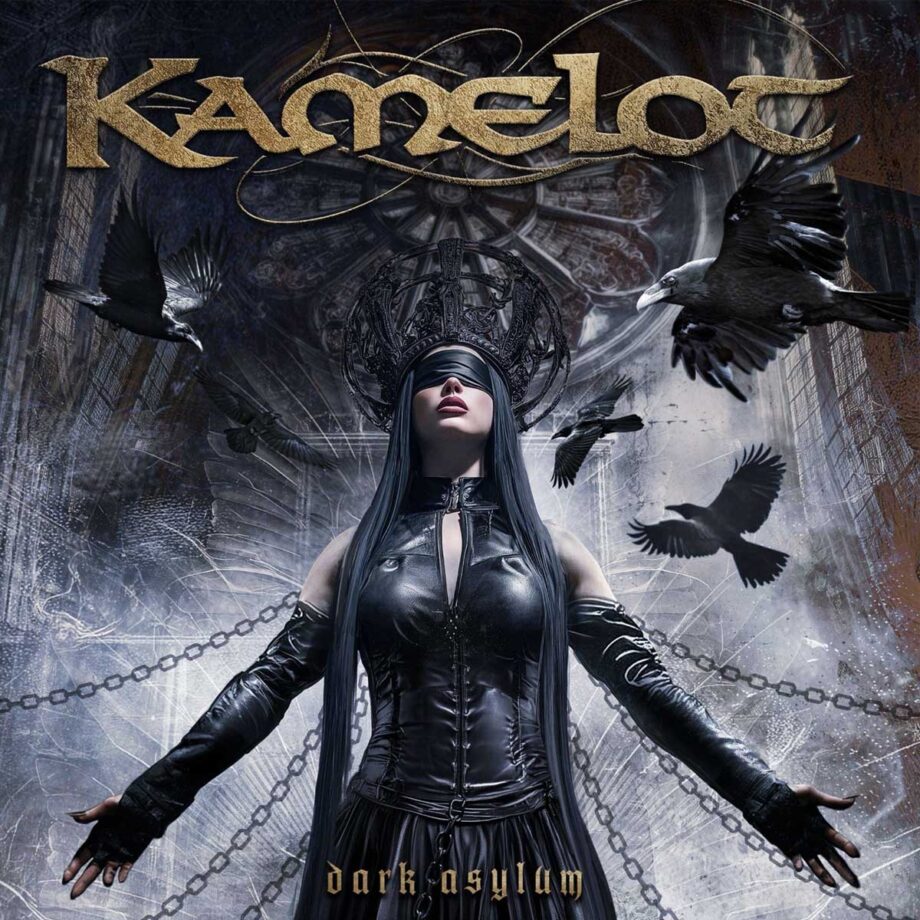
Kamelot’s Dark Asylum is documented well enough to confirm both its existence and its release date of August 28, 2026 through Napalm Records. The core details of the release are credible and consistent across the retail and streaming platforms that list it.
This new record is Kamelot’s follow-up to The Awakening and arrives as part of a major 2026 cycle, paired with an extensive “Dark Asylum World Tour.” That pairing fits the band’s long-standing pattern of releasing concept-driven studio albums alongside large-scale touring, though this cycle’s promotional rollout felt unusually front-loaded, with singles and tour announcements surfacing well ahead of the album itself.
The most concrete piece of documentation is the tracklist itself: a 15-track sequence beginning with “Sanctorium” and closing with “Sanctum Requiem,” corroborated across multiple listings, though the runtime metadata on some platforms appears to contain cataloging errors.

Sonically, Dark Asylum leans into a darker, Gothic-tinged atmosphere, more shadowed and theatrical than a straightforward power-metal record. As the band’s fourteenth studio album, it stays within Kamelot’s established symphonic-power-metal framework rather than breaking from it.
The guest list — including Ignacia Fernández, Clémentine Delauney, Tobias Sammet, and additional vocalists on “Beneath the Moon (Tunglið)” — points to layered, collaborative production built around cinematic arrangement and narrative polish, a sound that should feel familiar to listeners already drawn to Kamelot’s symphonic-metal side rather than harsher modern metalcore.
Reception so far leans mixed-to-positive, though it’s early enough that no settled consensus has formed. Early impressions frame the album as a successful return to the qualities long-time fans value, positioning it as a significant new entry in the catalog rather than a reinvention. Even so, most of what’s available remains tied closely to the promotional cycle — previews, announcement coverage, and early writeups rather than a broad, independent cross-section of criticism — so it’s most accurate to describe Dark Asylum as a stylistically coherent release that emphasizes atmosphere and orchestration over stylistic risk.

Early community discussion shows enthusiasm around the announcement, with listeners confirming the album’s status as Kamelot’s fourteenth studio effort and noting its presence across fan-facing catalog platforms well before release day. A clearer picture of long-term community consensus isn’t yet available, but the conversation so far centers on the album’s darker aesthetic, its guest vocalists, and the band’s continued commitment to symphonic storytelling, without any signs of dramatic backlash.
For modern metal and metalcore listeners, Dark Asylum stands out less as a crossover experiment and more as a polished example of how contemporary symphonic metal blends mood, melody, and narrative scale. Its existence, release timing, and tracklist are well established, even if the deeper critical and community legacy is still taking shape. As it stands, Dark Asylum is confirmed as a real 2026 release — one whose lasting reputation will become clearer with time.