

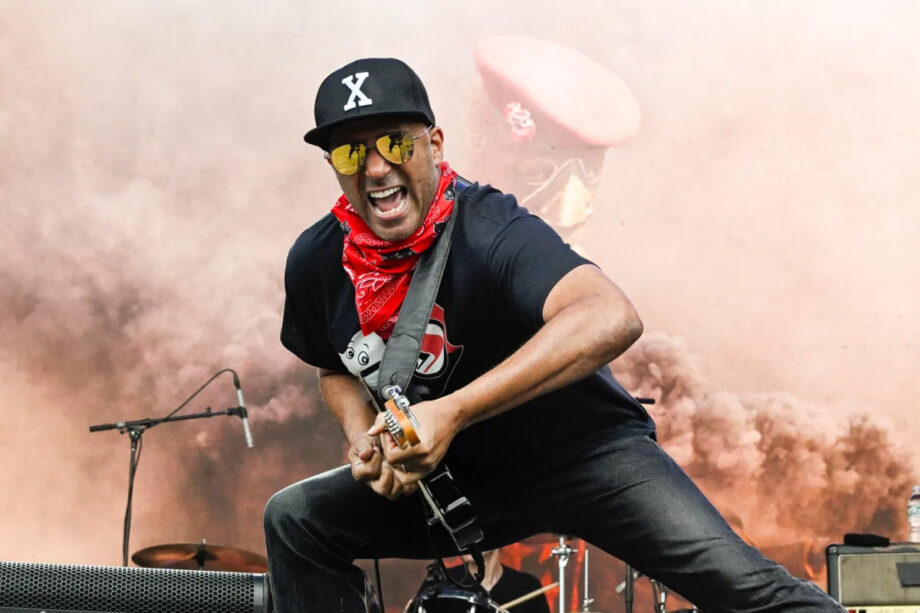
Rage Against the Machine guitarist Tom Morello has fiercely criticized the notion that metal music should remain apolitical. He argues that artists who censor their beliefs out of fear of internet trolls are committing a massive mistake and doing a total disservice to their art. In a recent statement, Morello addressed the double standard that musicians face when it comes to political expression.
“When people say that musicians should not be involved in politics, it means they are people that disagree with your politics,” Morello explained. “The second that you write a song that agrees with their politics, all of a sudden they’re all for it. So, one, it’s very hypocritical, but two, I also think that, why should you give away your free speech rights in the job that you do? Because it offends someone?”
Morello emphasized that self-censorship extends beyond the music industry. It represents a broader failure of conscience. “I think the converse is what is actually true. I think that you do yourself and your times a disservice by censoring who you are in your work. Not just musicians. I think, one, it’s sort of weirdly sort of selfish to kind of ghettoize musicians as, like, ‘Oh, they shouldn’t say anything.’ I think in your work as a music journalist or in your work as a tour manager or as your work as a bus driver, whatever, you should not leave behind who you are and what you believe.”
The guitarist’s stance reflects a lifelong commitment to using art as a vehicle for political expression and challenging authority. Morello’s activism is deeply rooted in his family history. His mother founded Parents for Rock and Rap in 1987 to counter censorship efforts targeting music, particularly the campaigns of the Parents Music Resource Center that sought to restrict rock and hip-hop. This legacy of fighting for free speech in music has shaped Morello’s unwavering belief that artists have both the right and responsibility to speak out on political matters.
Throughout his career with Rage Against the Machine, Morello has demonstrated that rock music serves as far more than entertainment. It functions as a powerful political statement. The band, formed in 1991, combined heavy rock, metal, hip-hop, and funk with fiercely outspoken lyrics that challenged corporate power, war, racism, and injustice. This integration of music and activism became the band’s defining characteristic, proving that commercial success and uncompromising political messaging are not mutually exclusive.
In recent years, Morello has continued to be an active voice against censorship and injustice. He has campaigned on immigration reform and joined efforts to close Guantanamo Bay. He has also participated in protests against fascism and authoritarianism. His presence at demonstrations, where he has led crowds in renditions of Woody Guthrie’s “This Land Is Your Land,” underscores his belief that artists must use their platforms during times of great injustice.

Morello’s final warning carries particular weight: “I think, like I said, there’s an extra hot layer of hell for people in times of great injustice who censor themselves and remain quiet when they should have spoken out because they’re afraid of some Internet troll.” This statement encapsulates his core conviction that silence in the face of injustice is not neutrality. It is complicity. For Morello, the choice is clear: artists must refuse to abandon their principles, regardless of the backlash they may face.