

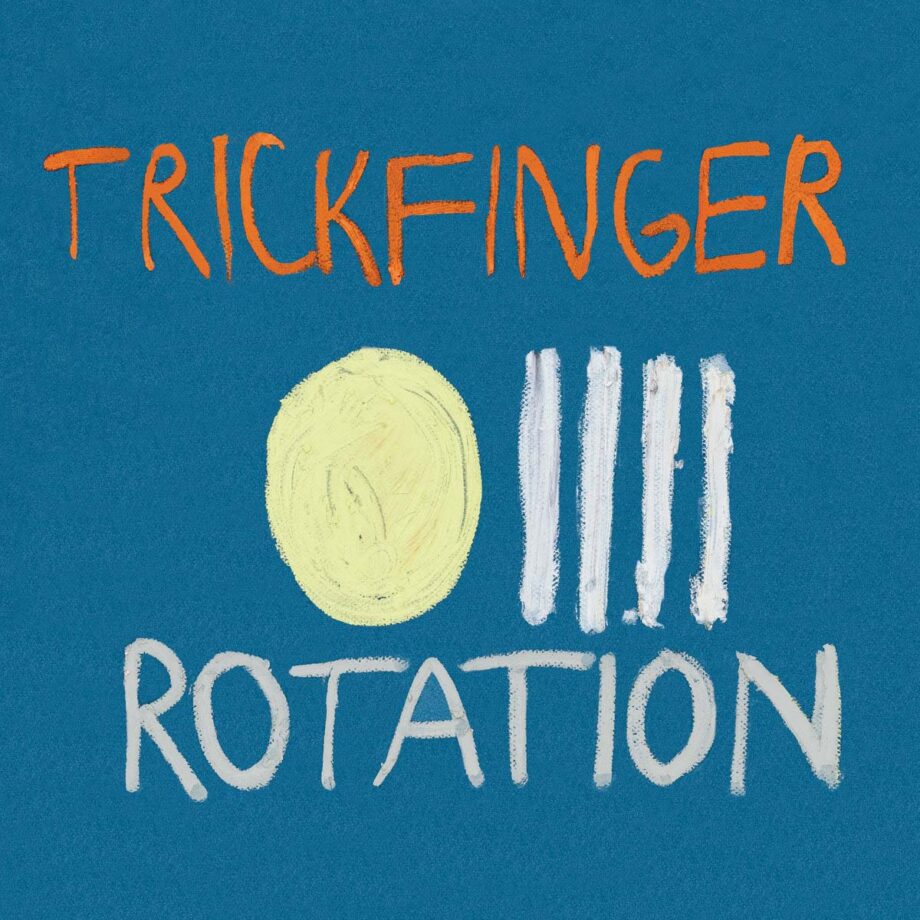
Trickfinger’s Rotation arrives less as a metal-event release than as a project orbiting metal-adjacent listening habits, framed primarily through its electronic and experimental identity rather than any direct metal positioning. The EP by Trickfinger and John Frusciante was released on 10 July 2026, with its announcement circulating through Red Hot Chili Peppers fan communities around the same window.
Rotation is a compact release, five tracks running twenty-eight minutes, sitting in exploratory territory rather than the fuller arc of a conventional LP. It’s issued under the Trickfinger name alongside John Frusciante, reinforcing the long-running association between Frusciante’s electronic work and this side project. The timing places the record as part of an established side-catalogue rather than a new genre pivot aimed at metal audiences.
The clearest sonic reference point is the earlier single “Tysch,” tagged under an electronica release category and pointing toward minimal, melodic electronic textures. The broader Trickfinger catalogue and its surrounding commentary describe a sound built on atmosphere, texture, and sequencing rather than riff language or metalcore structure. Rotation reads as a production-focused electronic EP, prioritizing mood and composition over guitar-driven dynamics.

There isn’t yet a substantial body of professional criticism addressing Rotation directly, whether in metal coverage or broader rock press. What’s available leans toward release listings and announcement posts rather than a developed slate of reviews engaging with the album itself. At this stage, it’s fair to say the record hasn’t generated enough coverage to support a clear critical consensus in either direction.
Early reaction has centered mainly on recognition of Frusciante’s continuing Trickfinger output rather than any debate over genre direction or production choices. There’s little sign yet of meaningful discussion in metal-focused spaces, suggesting the album hasn’t become a notable talking point within those communities. The conversation around Rotation currently looks narrow and announcement-driven rather than evaluative.
For modern metal and metalcore listeners, Rotation is best understood as a peripheral listen. It reflects the broader experimental ecosystem that often overlaps with heavy-music audiences, but it doesn’t present itself as a metal record or a metalcore crossover. Its appeal likely sits with listeners drawn to boundary-pushing side projects and artist-driven experimentation rather than those seeking riff density or stylistic aggression—its significance remains contextual, tied to Frusciante’s electronic identity rather than to any direct relevance for metal publications.