

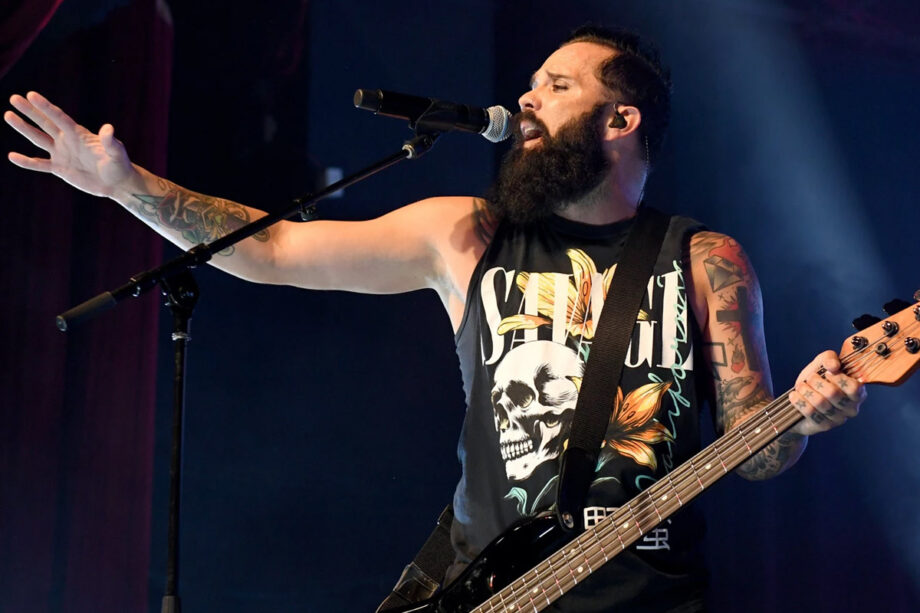
Skillet frontman John Cooper delivered a raw and vulnerable confession mid-set, revealing deeply personal struggles from his youth that shaped his journey toward faith. The musician stopped the show to speak directly from the heart about his mother’s death when he was just 15 years old. This event triggered a period of intense emotional turmoil and family conflict.
Cooper detailed how the loss of his mother led him into a dark chapter of his life marked by violent thoughts and fantasies. “My mom died when I was 15 years old. I began fighting with my dad. I had some very dark times. I am embarrassed to say this but just being real with you tonight,” he told the audience. He continued with striking honesty: “I used to sometimes fantasize about hurting people. I wanted to hurt my dad. And I used to fantasize if he tried just what would I do. And I would spend long hours at night in my bed thinking about very dark violent things.”
The confession underscored how music became a crucial outlet during this turbulent period. However, Cooper emphasized that music alone was not enough to pull him from the darkness. His breakthrough came through a spiritual awakening that fundamentally altered the trajectory of his life. “Music helped me. But music did not help me enough. I met someone who changed my life. Gave me hope when I had no hope at all. Gave me a family, when I had no family at all. Even when I was a sinner, He died for me and that is my number one hero, Jesus Christ,” Cooper proclaimed.

Cooper’s testimony reflects a broader pattern in his public life where he has consistently spoken about the intersection of faith and music. Throughout his career, the Skillet frontman has maintained that his Christian faith serves as the foundation for his artistic expression and personal identity. His willingness to address the darker aspects of his past demonstrates a commitment to authenticity that has resonated with fans who appreciate his unflinching honesty about mental health and spiritual struggle.
The frontman’s journey from despair to hope has become a defining narrative within Christian metal music circles. Cooper’s openness about his mother’s disapproval of rock music and his subsequent path to reconciling his faith with his artistic calling illustrates the complex relationship many Christian musicians navigate. His story serves as a testament to how personal tragedy and spiritual conviction can coexist within an artist’s life, ultimately informing both their music and their message to audiences.
In recent years, Cooper has become increasingly vocal about his beliefs and the role of faith in the music industry. His mid-show confession represents part of a larger pattern where he uses his platform to address not only his own experiences but also broader spiritual and cultural issues. The vulnerability he displayed during this performance underscores why Skillet has maintained such a dedicated following across multiple decades. Fans connect with an artist willing to expose his wounds and his healing in equal measure.