

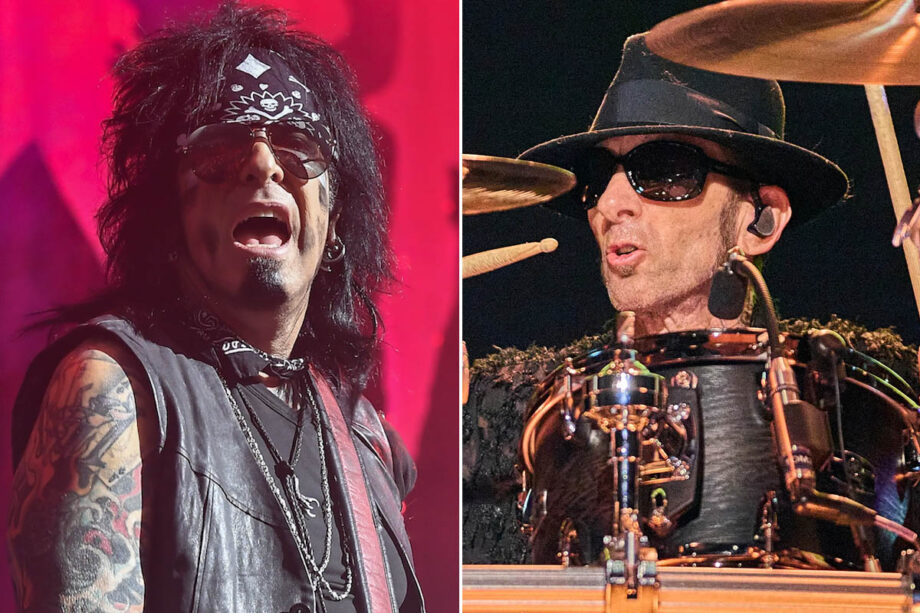
Mötley Crüe bassist Nikki Sixx has issued a scathing public response to former Godsmack drummer Shannon Larkin’s claims that the legendary band relies on backing tracks during live performances. Sixx dismissed Larkin as a bitter, B-level musician who is leveraging Crüe’s massive spotlight to compensate for his own stalling career momentum.
“Who’s this Shannon Larkin hater? It’s funny how so many B- and C-level bands seem to spend more time talking about us than writing songs people actually remember,” Sixx stated. “Maybe it’s jealousy, maybe it’s insecurity, maybe ticket sales are a little slow. Either way, borrowing someone else’s spotlight has never been much of a long-term career strategy.”
Sixx elaborated further on his perspective regarding musicianship and longevity in the industry. “I genuinely feel for musicians who never figured out that the best publicity is writing great songs—over and over again, decade after decade for fans not critics. It reminds me of the endless bimbo podcast crowd that builds an audience by talking about everyone else instead of creating something worth talking about. Anyway, maybe he needs to take a nap before he does more press.”

The tension between Mötley Crüe and Godsmack extends back more than a decade. The feud began during the 2009 Crüe Fest 2 tour when Godsmack served as a supporting act. The conflict originated from Mötley Crüe’s treatment of support bands on the tour. Shannon Larkin and frontman Sully Erna claimed that the legendary band’s security personnel were unnecessarily restrictive with their guests attempting to access backstage areas.
Larkin recalled in interviews that Mötley Crüe’s fans often left venues early after Godsmack’s performance. The support band interpreted this as a lack of respect from the headliner’s audience. The animosity intensified when Erna allegedly penned the 2010 track “Cryin’ Like a Bitch” in response to Sixx’s behavior toward Godsmack during the tour. Larkin later claimed the song was actually written about former San Diego Chargers quarterback Philip Rivers.
Sixx responded by insulting Godsmack publicly and alleging that the band had repeatedly requested to appear on his radio show. He declared on a Facebook livestream that he would refuse any future festival dates if booked on the same bill as Godsmack. This declaration cemented the rift between the two acts.

Regarding the backing track controversy, Sixx has consistently maintained that Mötley Crüe performs “live top to bottom every night.” While Mötley Crüe faced accusations of using backing tracks at the 1997 American Music Awards, the band has since built its reputation on delivering authentic live performances. Larkin’s recent comments about backing tracks in live performances appear to be part of a broader industry discussion rather than a specific new accusation. Sixx’s response demonstrates the band’s continued sensitivity to such allegations and their commitment to defending their live performance integrity.
The exchange underscores the persistent tension between the two bands and reflects deeper industry debates about authenticity in live rock performances. Sixx’s dismissal of Larkin as a B-level musician represents the latest chapter in a feud that has defined both bands’ relationship for nearly two decades, with no signs of reconciliation on the horizon.