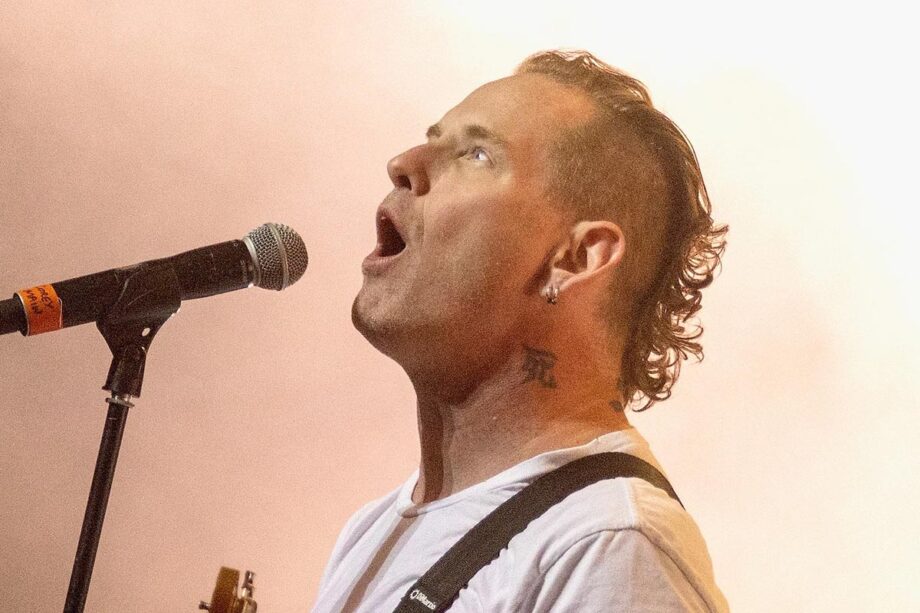
Slipknot frontman Corey Taylor has candidly discussed his personal transformation and the role his wife, Alicia Taylor, has played in his emotional healing. During an appearance on Mythical Kitchen, Taylor credited his marriage as a turning point in his life. He revealed how unconditional love and support have fundamentally changed his perspective on vulnerability and strength.
“My wife is probably the first person in my life who’s loved me for me and didn’t ever want anything from me. If it wasn’t for her, honestly, I wouldn’t be here,” Taylor shared emotionally. He further elaborated on the profound impact of their relationship: “It wasn’t until I met Alicia that I realized what real love is and what real appreciation is. She’s my inspiration in a lot of ways because she knows who she is. She understands that without life and family, what is success?”
Taylor’s reflections extend beyond his marriage to a broader critique of the cultural conditioning that shapes masculine identity. He articulated a fundamental problem embedded in how men are socialized from childhood. This emphasis on emotional suppression disconnects traditional masculine ideals from emotional health.

The rock icon has been transparent about the systemic nature of toxic masculinity. He explained how cultural expectations discourage emotional expression and vulnerability among men. “There’s just a different culture that we grow up with as men. We’re not taught to be vulnerable. We’re not taught that being vulnerable is a show of strength. We are taught to be stoic. We are taught to be strong,” Taylor explained.
He connected these cultural patterns directly to the perpetuation of harmful behaviors within masculine spaces. Such conditioning inadvertently encourages negative aspects of male culture that ultimately damage relationships and individual wellbeing.
Taylor’s personal journey toward healing has been intensive and deliberate. He has been working with three therapists simultaneously for three years to address deep-seated insecurity. This work has helped him confront the emotional toll of his past actions on those closest to him.

This commitment to professional mental health support represents a stark departure from traditional masculine stoicism. It demonstrates that seeking help is not a weakness but a necessary step toward genuine strength and self-awareness. His therapeutic process has involved confronting past mistakes and making amends, particularly with his wife. Her self-confidence has become a model for his own healing journey.
The catalyst for Taylor’s decision to seek help came from a moment of profound realization. He recognized that he was not happy and that his actions had hurt the people he worked with and his family. Rather than accepting this as inevitable, he chose to undertake what he describes as an “arduous process of building me back up.” This required examining his past mistakes and committing to meaningful change.
This vulnerability in addressing his own struggles has resonated deeply with fans. It has positioned him as an advocate for mental health awareness within the rock community.
Beyond his personal transformation, Taylor has channeled his experiences into broader advocacy work. He founded The Taylor Foundation, a non-profit organization dedicated to supporting active military personnel, veterans, and first responders struggling with PTSD. The organization helps these individuals find connection and healing.
Taylor has also been open about his struggles with alcohol and his journey toward sobriety. He regularly addresses healthy habits alongside therapy. His willingness to discuss these challenges publicly has helped destigmatize mental health conversations within rock culture and beyond. He emphasizes the importance of compassion for those struggling with psychological and emotional issues.
Taylor’s message is clear: the stoic male culture that discourages vulnerability and emotional expression ultimately harms men and those around them. By rejecting these outdated standards and embracing therapy, honest communication, and emotional accountability, he demonstrates that true strength lies not in suppressing feelings but in confronting them. His ongoing commitment to mental health advocacy serves as a powerful reminder that seeking help is an act of courage, not weakness, and that transformation is possible for anyone willing to do the work.