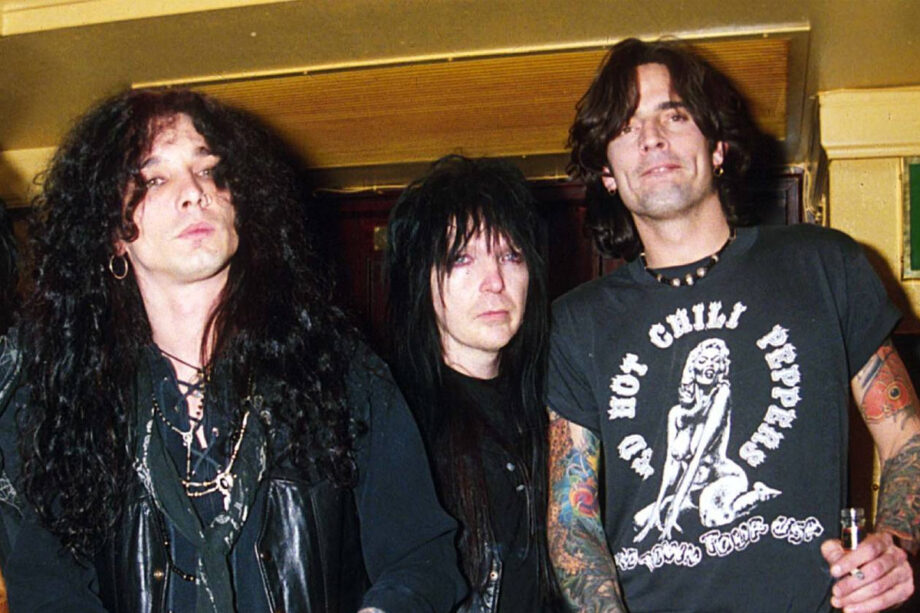
Former Mötley Crüe singer John Corabi has opened up about the difficult aftermath of his time with the legendary band. He admitted that joining in 1992 may have been a mistake. If he could turn back time, Corabi would warn his younger self against abandoning his rising former band The Scream. He would advise himself to read the fine print and avoid becoming too emotionally attached to a business that ultimately cost him his friendships with three of the band’s core members.
“Well, yes. I probably would not have put… I don’t know if I would’ve left The Scream,” Corabi explained. “If I could go back and tell myself, ‘Hey, hold on a minute. Let’s think about this for a second. You’re gonna leave this band that’s on kind of an upward trajectory for another band that, at the end of the day, is only gonna keep you for four years.'”
The singer also addressed the label often applied to his career trajectory. “There’s a word that bugs me in my descriptions, and I don’t wanna say it bugs me, but to a degree it does, and that’s the word ‘journeyman’. And it’s only because none of this was planned. None of it was me going, ‘F*ck you, guys. I’m out. I’m leaving. I’m gonna go do something.’ It was just the way the cards were dealt to me.”

Corabi’s tenure with Mötley Crüe lasted from 1992 until 1996, a relatively brief four-year period that would define much of his career narrative. When he joined the band, he replaced original vocalist Vince Neil, who had been fired by the group. The band was seeking to pursue a bluesier musical direction at that time. Corabi’s arrival represented a significant shift in the band’s sound and creative vision, though it would ultimately prove to be a temporary experiment that the band would reverse within just a few years.
During his time with the band, Corabi recorded the 1994 self-titled Mötley Crüe album. The album achieved a Top Ten chart placement but struggled commercially in the face of the rising grunge movement. The fanbase never fully embraced the new vocalist. The album’s creation was marked by internal tensions, particularly between Corabi and bassist Nikki Sixx, whose relationship deteriorated significantly during the recording process. Despite these challenges, Corabi’s era with the band produced music that showcased a different facet of Mötley Crüe’s capabilities.
The most painful aspect of Corabi’s departure from the band was not the professional rejection, but the personal toll it took on his relationships with the other members. He maintains occasional contact with drummer Tommy Lee and guitarist Mick Mars. These relationships have endured despite the passage of time and the band’s decision to reunite with Neil. However, his connection with Sixx has been severed entirely. This reality continues to weigh on him. “Nikki and I have no dialogue at all. And it, to some degree, kind of bums me out a little bit,” Corabi admitted.

After leaving Mötley Crüe, Corabi formed Union with former KISS guitarist Bruce Kulick, drummer Brent Fitz, and bassist Jamie Hunting. The project failed to gain significant industry attention or commercial traction. This experience further reinforced his sense of being caught in circumstances beyond his control. He moved from one opportunity to the next without the stability or long-term success he might have achieved had he remained with The Scream. “Who knew I was gonna get a call to join Mötley? Who knew Mötley was gonna bring Vince back? Who knew Union wasn’t gonna get any attention from anybody that mattered? So it’s just been this ongoing thing, but I would love nothing more than to be sitting here talking to you about the 15th Scream album.”
Reflecting on what he would tell his younger self, Corabi’s advice centers on protecting his emotional well-being in an industry that prioritizes business over relationships. “If I was to go back, I might tell myself not to leave The Scream, but I would definitely tell myself, if I was getting in Mötley, ‘Don’t become so emotionally attached to anything.’ ‘Cause the hardest part, to me, out of that Mötley thing was I felt like I was losing three friends.” His final counsel is pragmatic and tinged with hard-won wisdom. “Read the fine print. Don’t get so emotionally attached to everything. And just you know what? If you’re gonna be here, do your job, make the best of it, and move on.”