

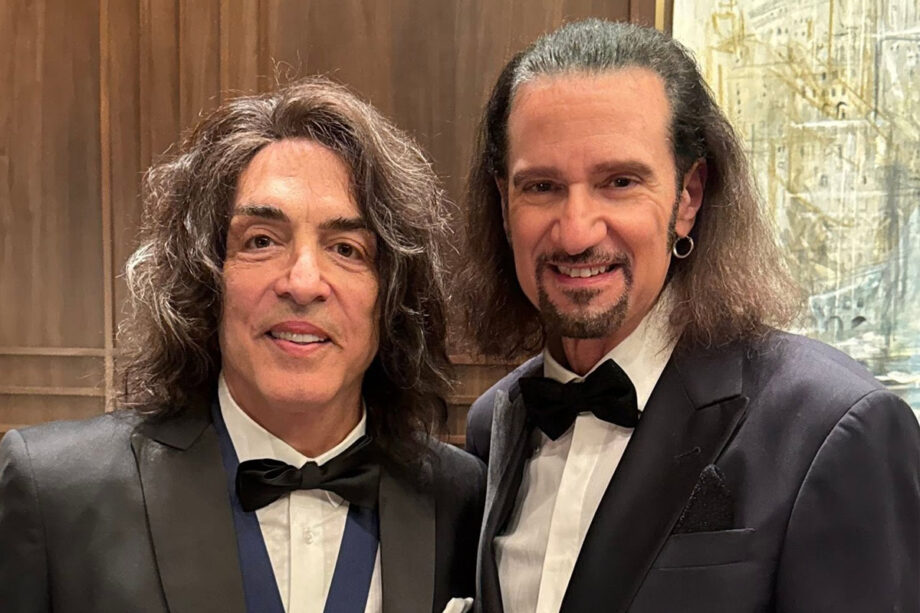
Former KISS guitarist Bruce Kulick recently discussed the band’s historic MTV Unplugged performance on Shout It Out Loudcast. He explained that frontman Paul Stanley avoided rare deep cuts on massive stadium tours because those multi-million dollar arena productions demanded predictable hits. The intimate, fan-driven environment of prior conventions organically paved the way for their acclaimed acoustic setlist.
“I have a theory about the setlist and the fact that Paul Stanley’s rule is, ‘No, they wanted to hear Love Gun and Detroit Rock City and Rock and Roll All Nite,'” Kulick said. He acknowledged the reasoning behind Stanley’s approach. During major, massive tours, the band isn’t up close with fans at all. “It becomes like this, ‘mass love thing.’ And then as a production, with the $1,000,000 worth of lasers, lights, and platforms and things,” Kulick described the scale of these arena spectacles.
The guitarist contrasted this with the band’s recent experience at conventions, which created a fundamentally different dynamic. “We just came off of a very awesome experience that I think really got them seeing things a little different, and accomplished exactly what Gene Simmons thought it could do. Y’know, ‘Let’s get up close and personal. We should be the stars of a Kiss Expo.’ And then casual people throwing out songs. Like, who knew someone would say ‘Love Theme from Kiss’?” Kulick reflected on how the intimate setting allowed for unexpected song requests that would never surface in traditional concert settings.

The MTV Unplugged performance, recorded in August 1995 at Sony Studios in New York, became a watershed moment for the band’s approach to setlist curation. The acoustic performance featured a 16-song setlist that showcased deep cuts and rare material. Songs like “Comin’ Home” from Dynasty, “Plaster Caster” from Love Gun, and “A World Without Heroes” from Music from The Elder demonstrated how effectively the band could reimagine their catalog in an intimate acoustic setting. The performance marked the first time since 1979 that all four original founding members—Ace Frehley, Paul Stanley, Gene Simmons, and Peter Criss—performed together without makeup, adding historical significance to the event.
Kulick’s perspective reveals how the conventions directly influenced the Unplugged performance. “So I just think that the setlist approach for Unplugged was born out of what happened organically at the conventions. And that doesn’t happen in concerts when you are just a mega star, and it’s sold out every night, and you’re taking 12 trucks on the road. It’s just not the same,” he explained. The guitarist emphasized that the intimate convention environment allowed fans to make requests and interact with the band in ways that massive arena productions simply couldn’t accommodate.
The acoustic environment fundamentally changed how the band perceived their own material. Kulick noted that songs from the Elder era took on new life when performed acoustically. “Now, I’m not trying to defend Paul not doing deeper tracks at those venues. But I’m just saying the mindset I’m trying to put us into, ‘Well, would we do an Elder song?’ ‘Coo!’ Now acoustically, now we’re in a different environment. Now you have pretty lights, candles, you’re all sitting. So, it’s perfect. Some of those songs, I was familiar with them, but I didn’t realize how amazing they were and how well we could interpret them,” Kulick reflected. The Unplugged album, released in March 1996, ultimately proved that KISS’s deep catalog could resonate powerfully with audiences when presented in the right context. This validated the band’s willingness to step outside their stadium rock formula.