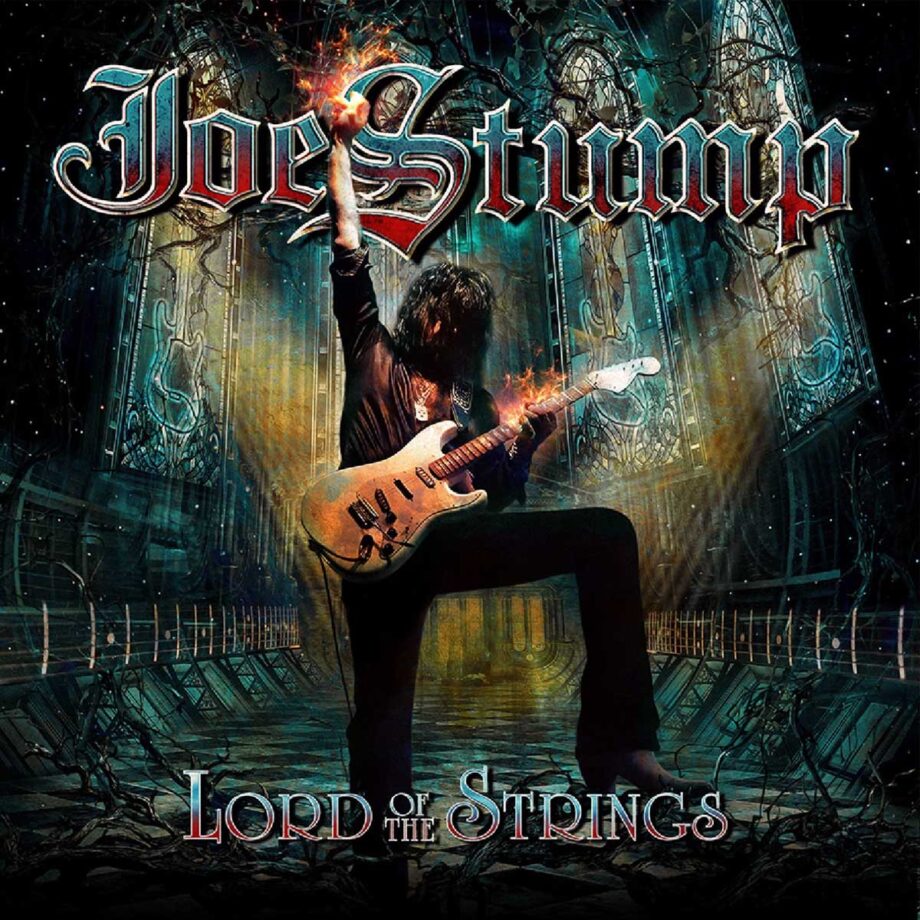
Joe Stump’s solo album Lord of the Strings arrived on 16 October 2026 through Silver Lining Music. It holds twelve instrumental tracks of guitar-driven heavy metal, built on speed, melody, and carefully worked-out lead lines instead of vocals. I hear it as a straight continuation of his solo work, not a change of direction.
Stump has spent his career in neoclassical metal, shred guitar, and traditional heavy metal. He leads Reign of Terror, has played with HolyHell, and has a long solo catalogue going back to Guitar Dominance! and Night of the Living Shred. That makes this album one more entry in a long run of guitar-focused records rather than a one-off showcase.
The timing matters too. A veteran shred player is putting out an instrumental guitar record at a moment when technical playing gets a lot of attention online and in modern production. At twelve songs and roughly fifty-six minutes, it’s a big statement within his solo discography.

The electric guitar carries both the melody and the structure. “Full Throttle” is fast, “Playing with Fire” leans on traditional heavy metal, and “In the Hall of the King” and “Eternity of Darkness” are more lyrical. “Den of Vipers” and “Leipzig 1722” add acoustic contrast.
The production values clarity and attack. Little here is atmospheric for its own sake, and the guitar takes the role a singer would normally fill. That means the record lives or dies on phrasing, tone, and arrangement as much as on speed.
Coverage so far is thin. The album is only days old, and most of what exists is release news and early features rather than a wide spread of reviews. What is out there stays fairly consistent: a committed neoclassical shred record that mixes relentless speed with traditional heavy-metal melody and a few quieter passages. I’d treat that as a first impression rather than a verdict, since there’s no real debate yet about originality, sequencing, or staying power.

Fan discussion is hard to measure at this stage. There isn’t enough on Reddit, Metal Archives, or Album of the Year to describe a clear community reaction, and I won’t guess at one. The visible response is mostly release listings and promotional coverage.
For modern metal listeners, this album matters as proof that shred vocabulary still works without being bent into a vocal-led or trend-chasing shape. Its neoclassical runs, traditional melody, and guitar-as-narrator approach will appeal to players watching the renewed interest in technical guitar. It sits apart from metalcore’s breakdown-driven writing, though, so it reads more as a parallel influence than a piece of that scene.
For guitarists, the point isn’t a new formula. It’s a reminder of how much a disciplined instrumental format can express. Stump treats speed as one tool among several, next to melody, acoustic contrast, and traditional heavy-metal structure.