

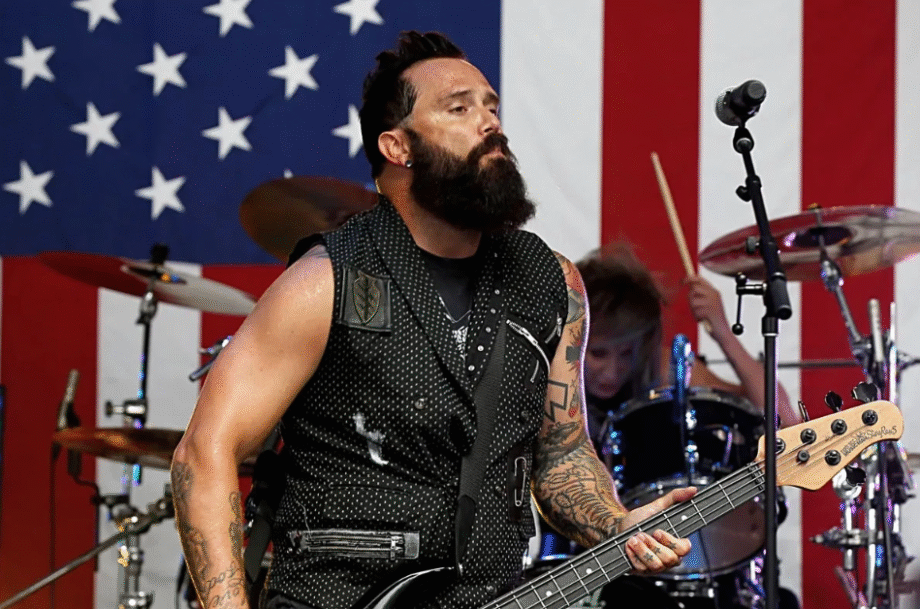
John Cooper, frontman of rock band Skillet, recently addressed the backlash over the band’s new song “O Come, O Come Emmanuel” in a statement shared with Rock Feed.
The track is a heavy-rock rendition of the classic Christmas hymn and drew criticism online from those who felt the group had mishandled sacred material. Cooper offered a calm, reflective response, describing both the band’s excitement over the song and the surprising reaction it received. “It was for Skillet an instant kind of big song for us. It was very exciting. But yeah, then all of a sudden there was this crazy… I mean the internet can be such a weird place, you know, what you’re getting into is just people that feel that you have taken something sacred and made it really evil,” Cooper said.
He noted that accusations of satanism were something the band hadn’t dealt with in a long time, making the reaction both unexpected and slightly ironic given the song’s roots.

“So, it’s been a long time since we’ve been called like satanic, but we got called satanic and demonic and all this other stuff. And I was laughing because it’s I mean, it’s a Christmas hymn. It’s not just a Christmas song. It’s a hymn. So, it was kind of interesting. And unfortunately, sometimes you see kind of the worst of people on the internet, you know. So, I didn’t really get mad. I was just more like perplexed,” he continued.
Rather than escalating the conflict, Cooper chose to respond with humor and acceptance, acknowledging how limited online debates can be.
“And so, we commented on it and I just said, ‘Look, I’m not mad at anybody. You don’t have to like it. I don’t even mind if you think it’s demonic. It’s not. I’ll never change your mind.’ You’re not going to change somebody’s mind on X. It ain’t going to happen. So, it is what it is. But you’re right. It helped the song shoot up. So, bring it on,” Cooper concluded.

Instead of harming the release, the controversy seems to have amplified its reach. Skillet dropped their first-ever Christmas song in mid-November 2025, and it quickly gained traction, topping iTunes’ rock and Christmas charts and amassing hundreds of thousands of views on YouTube.
The uproar focused less on lyrics or doctrine and more on style. As reported by Church Leaders, Skillet’s version leans into a heavy-rock arrangement with a metal breakdown and a vocal growl—elements far removed from traditional Christmas presentations. Some conservative Christians argued that pairing a sacred hymn with aggressive rock aesthetics was inherently unsuitable for worship-related content.
In response, Cooper shared his broader theology of music. He stated: “I’m not angry or even offended by those who believe my music is somehow satanic,” and explained that he was raised to believe all music ultimately belongs to God and only becomes demonic when an artist’s intent makes it so. He underscored a key idea: “the devil doesn’t create stuff, he distorts.” In his view, music by nature glorifies God, while the devil’s role is to twist what God has made good.
Many Christians came to Skillet’s defense, pointing to the band’s long track record of sharing the gospel and leading people to faith from the stage. Supporters argued that the uproar said more about personal taste than about theology.
One commentator observed: “The real problem isn’t theology to these people. It’s apparently just the vibes,” according to Encounter Today. Defenders also stressed that minor chords, heavy riffs, and intense artistic imagery do not automatically signal demonic influence. Limiting Christian music to a narrow set of styles, they argued, only constrains creativity within the church.
In the end, the backlash appears to have propelled “O Come, O Come Emmanuel” rather than suppressed it, highlighting how bold artistic choices in Christian music continue to challenge assumptions, invite debate, and expand the conversation around tradition and innovation in faith-based art.
You can listen to Skillet’s new song via YouTube.