

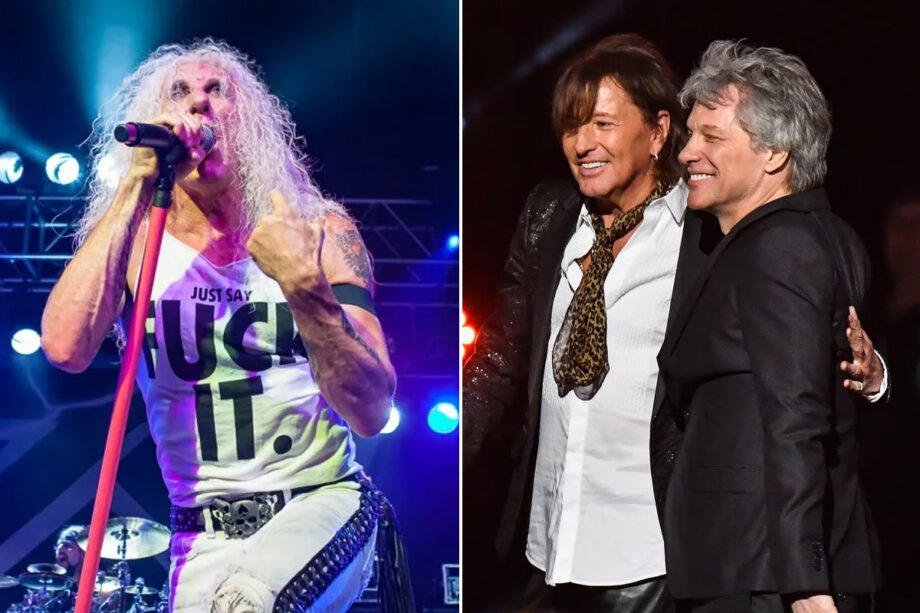
During a recent Q&A session on his X account, Twisted Sister’s Dee Snider made a bold claim about Bon Jovi’s vocal dynamics. When asked which song he wished he had written first, Snider pointed to “Wanted Dead or Alive.” He revealed an observation that has sparked debate among rock fans: Richie Sambora, the band’s guitarist, is actually the true vocal powerhouse behind many of Bon Jovi’s signature high parts.
“There’s a few… ‘Wanted Dead or Alive’ [by Bon Jovi] is one. Richie Sambora’s vocals are underrated too. I didn’t realize how much singing he did (all the high parts) until I watched them from side stage. He’s the singer in that band,” Snider explained to his followers.
When fans expressed surprise at this revelation, they questioned whether Jon Bon Jovi sang the high parts. Snider was direct in his response: “It ain’t.” He further clarified that the only exception was “Runaway,” which predates Sambora’s full integration into the band’s vocal arrangements. “No. That’s BR (before Richie). Jon gets full ‘credit’ for the high part at the end!” Snider noted. He acknowledged that the band’s vocal structure changed significantly after Sambora joined.

Snider’s comments align with what music historians and industry observers have long noted about Sambora’s role in the band. According to K104.7, Richie Sambora’s backing vocals were one of his best contributions to Bon Jovi. They created the band’s signature harmonies alongside Jon Bon Jovi. While primarily known as the band’s lead guitarist, Sambora’s vocal presence became integral to the group’s sound and live performances.
The guitarist’s vocal range allowed him to handle the demanding high-register parts that defined many of Bon Jovi’s biggest hits. His ability to complement Jon’s lead vocals with powerful harmonies and occasional lead parts made him far more than just an instrumentalist. He was a crucial component of the band’s overall sonic identity.
According to Wikipedia, Richie Sambora was a member of Bon Jovi from 1983 to 2013. He played a major role in the band’s songwriting and vocal arrangements. His tenure with the group saw the development of their signature two-part vocal harmonies, which became a hallmark of their most successful albums and tours.

The distinction Snider made between pre-Sambora and post-Sambora Bon Jovi is significant. Songs like “Runaway,” released before Sambora fully integrated into the band’s vocal structure, featured Jon Bon Jovi handling the high parts solo. However, as the band evolved, Sambora’s contributions became increasingly prominent. This transformation changed the group’s sound into a more layered, harmonically complex arrangement that defined their arena rock dominance throughout the 1980s and 1990s.
Snider’s observation came from watching Bon Jovi perform from the side of the stage. This gave him a unique perspective on the band’s live vocal dynamics. Reports from fan discussions and music forums have long highlighted how Sambora’s live vocal presence was often underappreciated by casual listeners who focused primarily on Jon Bon Jovi as the band’s sole vocalist.
The reality of live rock performances often differs from studio recordings, where vocal parts can be layered and overdubbed. On stage, Sambora’s ability to deliver the high parts night after night demonstrated his vocal prowess and stamina. His contributions weren’t merely background support. They were essential to recreating the band’s recorded sound in a live setting, making him an indispensable member of Bon Jovi’s touring lineup for three decades.