

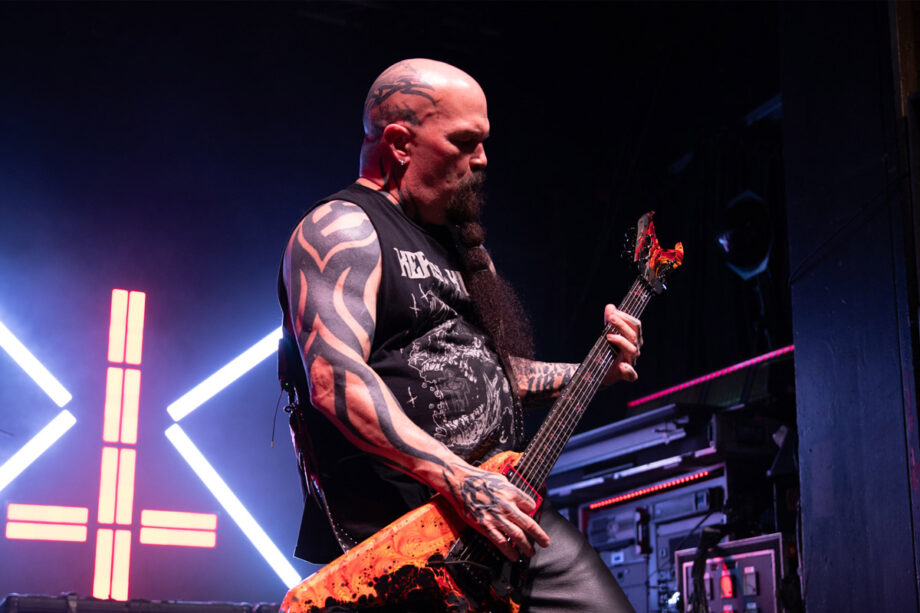
In a recent interview at the Alcatrazz Metal Festival, Slayer guitarist Kerry King opened up about the bands he would want to perform at a hypothetical farewell show in his honor. He drew inspiration from the star-studded lineup that gathered for the late Ozzy Osbourne’s ‘Back to the Beginning’ tribute. King himself performed at that event. The legendary guitarist outlined his vision for celebrating his own legacy.
When asked who would represent the “Kerry King universe” at such an event, King’s response was characteristically inclusive. “Well, basically anybody I’ve ever met,” he said. “Metallica, all the Big Four bands, the Exoduses, Testament. All the thrash metal guys, of course.” His answer reflects his deep connections within the metal community. It also demonstrates his respect for the genre’s foundational acts that shaped his career.
King’s mention of the Big Four and thrash metal pioneers underscores the interconnected nature of the metal scene. This scene has defined his four decades with Slayer. The guitarist’s vision for a farewell celebration speaks to the camaraderie and mutual respect that exists among metal’s elite performers.

King’s reference to “all the Big Four bands” carries significant weight in metal history, as revealed in the Alcatrazz Metal Festival interview. The Big Four of thrash metal—Metallica, Megadeth, Anthrax, and Slayer—represent the genre’s most influential and commercially successful acts. These bands collectively defined the sound and ethos of thrash metal throughout the 1980s and beyond. They make them the natural choices for any celebration of Kerry King’s contributions to the genre.
The inclusion of Metallica alongside Slayer in King’s dream lineup is particularly noteworthy. Both bands have maintained their relevance and touring presence for decades. Their continued influence on metal music and culture makes them essential components of any retrospective on the genre’s greatest guitarists and songwriters.
King’s specific mention of Exodus and Testament highlights his appreciation for the deeper cuts of the thrash metal movement. Slayer’s official announcements demonstrate that the band has consistently collaborated with and supported fellow thrash metal acts throughout their career. Exodus and Testament, while perhaps less commercially dominant than the Big Four, have maintained devoted followings. They have also continued to produce quality metal music for over three decades.

These bands represent the broader thrash metal community that King has been part of since Slayer’s formation in 1981. By naming them specifically, King acknowledges the collective effort that went into building and sustaining the thrash metal genre. Rather than focusing solely on the most commercially successful acts, he recognizes the contributions of all involved.
King’s inclusive approach to his hypothetical farewell show reflects a philosophy of metal brotherhood. This philosophy has characterized his career. Recent interviews with Metal Hammer magazine revealed that King has consistently emphasized the importance of the relationships he’s built within the metal community over his decades-long career. His statement that he would want “basically anybody I’ve ever met” to perform speaks to the genuine connections he’s maintained with fellow musicians.
This perspective stands in contrast to the competitive nature often associated with the music industry. Instead, King’s vision for his farewell celebration emphasizes collaboration, mutual respect, and the shared legacy of thrash metal. As the metal community continues to evolve and new generations discover the genre’s classics, King’s inclusive approach serves as a reminder of the bonds that unite metal musicians and fans alike.