

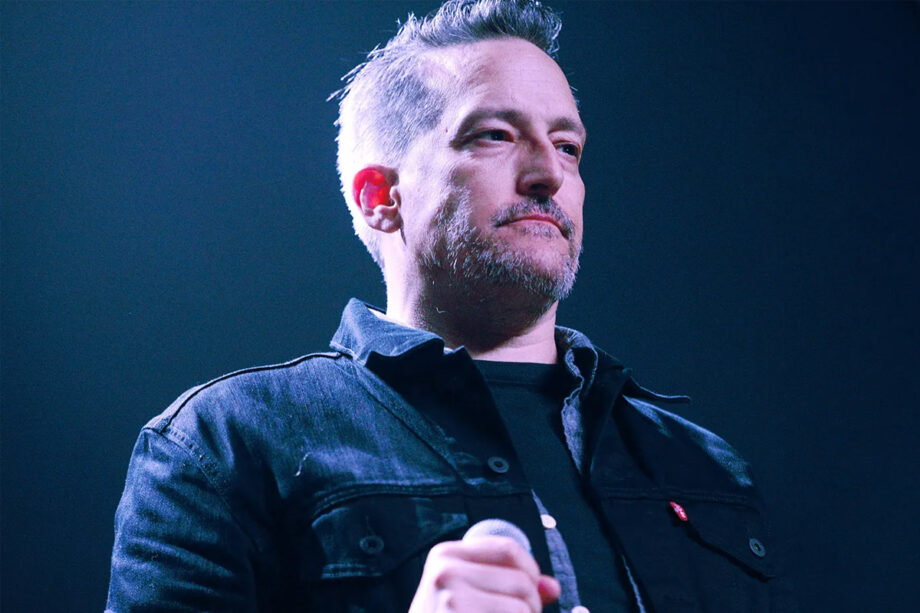
Filter frontman Richard Patrick has revealed that he has been forced to silence himself and step back from public political commentary after experiencing severe doxing and death threats directed at his family and children. During a recent interview, Patrick opened up about the difficult decision to withdraw from expressing his political views publicly. He cited the real and ongoing safety risks he and his loved ones face.
When asked whether artists have a responsibility to use their platform to express their politics, Patrick acknowledged that while it is a personal choice for musicians to engage politically, he has chosen a different path. He expressed admiration for artists like Bono, Joe Strummer, Bruce Springsteen, Tom Morello, and Robert De Niro, who have spoken out against various political issues. Patrick considers these artists “incredibly brave” for doing so. However, his own experience has made such public engagement impossible for him.
“I’ve received death threats,” Patrick stated. “So that’s why I’ve kind of silenced myself, because I don’t want my kids to be at risk. I was doxed, and there was a whole bunch of shit that went down that I don’t want to really talk about.” The combination of being doxed and receiving threats forced him to reconsider his approach to public discourse entirely. He felt compelled to step away from the kind of outspoken commentary that once defined his public persona.
The financial burden of maintaining security has also played a significant role in Patrick’s decision. Unlike major artists with substantial resources, Patrick cannot afford the 24-hour security that figures like Bono and Bruce Springsteen have access to. “Filter’s a big band and we’ve traveled the world over, but I can’t afford 24-hour security,” he explained. “Bono and Bruce Springsteen have that because the death threats are real. You have to take them seriously.”
Patrick emphasized how easily threats can be made in the digital age. Anonymous accounts on social media platforms like Instagram can be used to send direct messages threatening violence against his family. “It’s so easy to make them,” he said. “You start up a fake account on Instagram, you DM me that you’re going to kill my family and now that’s a threat, and so I have to worry about that.” The ease with which such threats can be issued has forced him to take every warning seriously. He has connections within law enforcement that provide some level of protection, but this is not enough to eliminate the concern.
The broader issue at the heart of Patrick’s experience reflects a troubling trend in contemporary society where political expression has become increasingly dangerous. Public figures who engage in political discourse face significant personal risks. Critics on opposing sides are ready to attack not just their views but their families and personal safety. Patrick’s experience with doxing and death threats represents a documented pattern affecting public figures who speak out on controversial topics. It illustrates the real consequences of polarized discourse in the digital era.

Patrick’s frustration extends beyond his own circumstances to the state of public discourse itself. He expressed deep concern about a world where people are criticized harshly for expressing their political opinions, regardless of whether those opinions are right or wrong. “People want to say how they feel and they’re criticized for it by the other side, whether it’s right or wrong,” he said. “In my case, I’ve gotten death threats and horrible things have been said about my kids online. There’s a whole litany of things I could go through and tell you about.”
The repercussions of simply having a political stance have become so severe that they now constitute a genuine threat to personal safety and family security. “The repercussions of just having a political opinion is a dangerous thing these days,” Patrick reflected. “That’s really one of the things that pisses me off about this world we live in.”
The musician’s decision to withdraw from public political commentary, while born out of necessity for his family’s safety, represents a loss for public discourse. His experience demonstrates that the cost of speaking out has become prohibitively high for many artists and public figures who lack the resources and security infrastructure available to the most prominent celebrities. As polarization continues to intensify, more voices may find themselves silenced not by censorship but by the very real threat of violence and harassment directed at themselves and their loved ones.