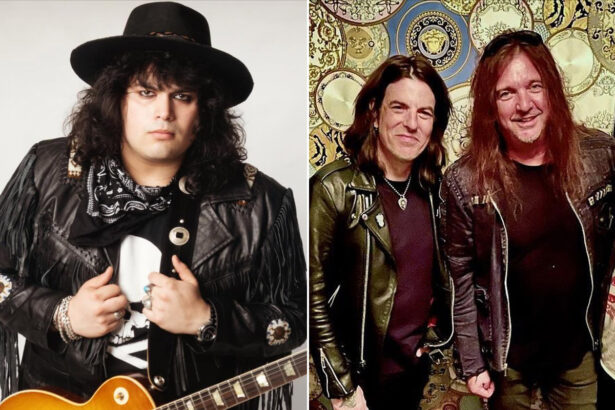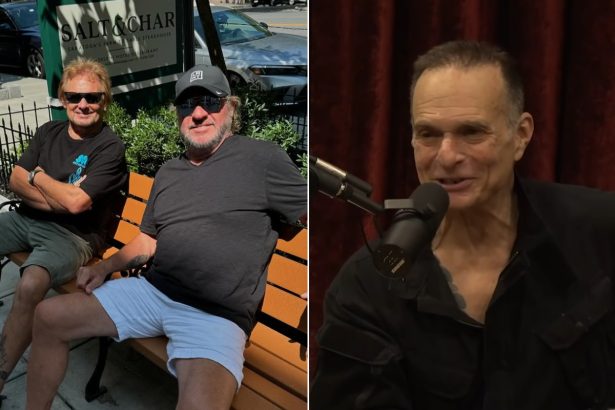


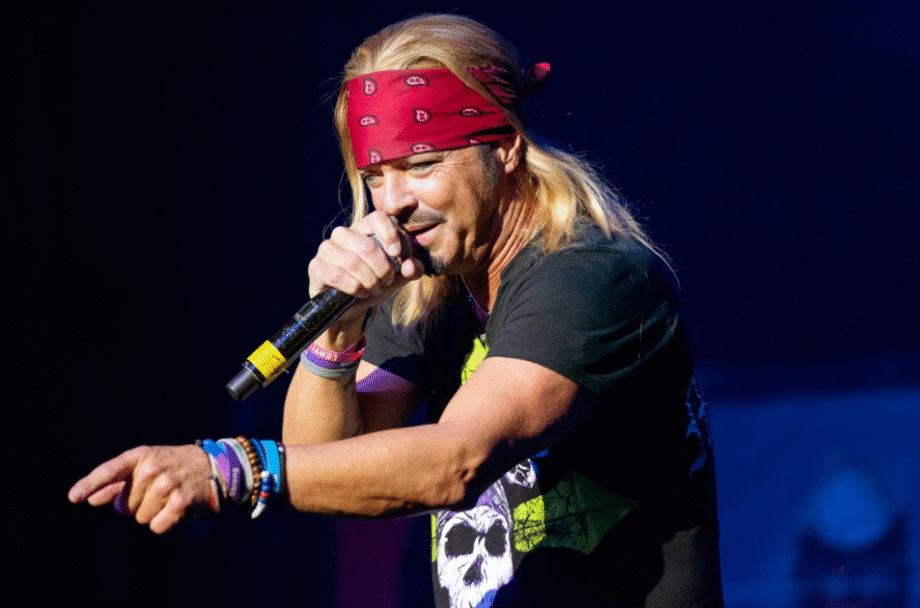
Tuff frontman Stevie Rachelle has disclosed that he was once approached to replace Bret Michaels in Poison following a heated on-stage dispute between Michaels and bassist Bobby Dahl in Atlanta. The revelation came during an interview with Chris Akin Presents, where Rachelle discussed the incident that occurred sometime between 2008 and 2012.
He recounted receiving an unexpected phone call from Poison’s camp about potentially stepping in for a short run of shows. “I’ve never talked about this publicly, maybe on the message boards, but when Bret Michaels and Bobby Dahl had their dust up in Atlanta, which was 2008, 10, something like that, 12, Bobby Dahl called me,” Rachelle said. “I was on the phone with Bobby Dahl. I was on the phone with their travel agent, and they were talking to me about possibly coming out to finish out a half a dozen shows in Poison.”
Rachelle went on to describe the chain of events leading up to the offer, starting with the on-stage altercation. “In Atlanta, 15 or 17 years ago, Bobby and Bret were having an argument on stage. Bobby picked up his bass, threw it at Bret. It hit him in the leg. And Bret says, ‘You might have just saw the last ever Poison show,’” he explained. “And there was a huge dust up. They left the stage. And the next day, I got a phone call from Kendra Jade, the porn star, who was a friend of mine who I dated previously at some point. She said, ‘hey, Bobby Dahl wants to talk to you. There’s an issue with Bret. They might need you to sing some shows.’”

He also recalled his conversation with Bobby Dahl about the possible arrangement. “I said to him, I said, ‘what does Rikki and CC think about this?’ I mean, clearly there’s been a longstanding rift between me and Bret, which has long been settled, by the way,” Rachelle noted. “Bobby goes, ‘they think it’s awesome.’ And I was just like, and I go, ‘well, I could probably sing 10 of your songs tonight. I could play the acoustic on a couple, but this sounds kind of crazy to me.’ And he literally said, ‘what do you want?’ And I told him right then, I said, ‘give me a thousand bucks a show and pay all my expenses.’ And it was gonna be six shows left.”
Rachelle further reflected on the internal conflicts within Poison and how those issues have impacted their touring consistency over the years. “Some of the long standing feuds that maybe Bret and CC had or Bobby and Bret had and the band in general is probably why you only get a Poison tour every two or three or five years because Bret’s obviously really established himself as a solo artist,” he said. “Poison can still go out and do those big shows and great numbers but Bret still, you know, he’s clearly went to the mountaintop for this era.”
In the end, the proposed replacement never happened, and Poison continued performing with its original lineup. This revelation sheds new light on the internal struggles Poison faced during the late 2000s and early 2010s. The Atlanta incident stands as a notable example of the band’s long-documented internal friction during that time. Conflicts between members were reportedly frequent and often fueled by personal tensions and the stress of life on the road.

According to Legendary Rock Interviews, Rachelle is best known as the lead vocalist and face of the glam metal band Tuff, which rose from the late 1980s Sunset Strip hard rock scene. Tuff had early ties to Poison, having opened for or performed alongside them before Rachelle officially joined. Beyond his role in Tuff, Rachelle became a recognizable figure in the glam metal community, co-founding the parody and news site Metal Sludge, which chronicles the history and gossip of hard rock and metal culture.
Over the years, Poison has endured numerous internal disputes, both personal and professional. BraveWords reported that the band’s dynamic has occasionally turned combative, with instances of physical confrontations and heated exchanges. These tensions have been attributed to the pressures of constant touring, substance issues, and clashing personalities, which at times led to lineup changes, hiatuses, and public feuds.
Despite these difficulties, Poison has remained an active touring act since their mid-1980s breakthrough, frequently headlining nostalgia-driven glam metal tours and festivals. Full in Bloom highlighted that their touring activity ramped up again in the 2000s with reunion runs and anniversary celebrations of their classic albums—efforts that both reignited old tensions and reaffirmed their enduring fanbase.
Rachelle’s account offers a rare behind-the-scenes perspective on the volatile dynamics within one of glam metal’s most iconic bands. It reveals just how close Poison came to undergoing a major lineup change during one of their most turbulent chapters.