

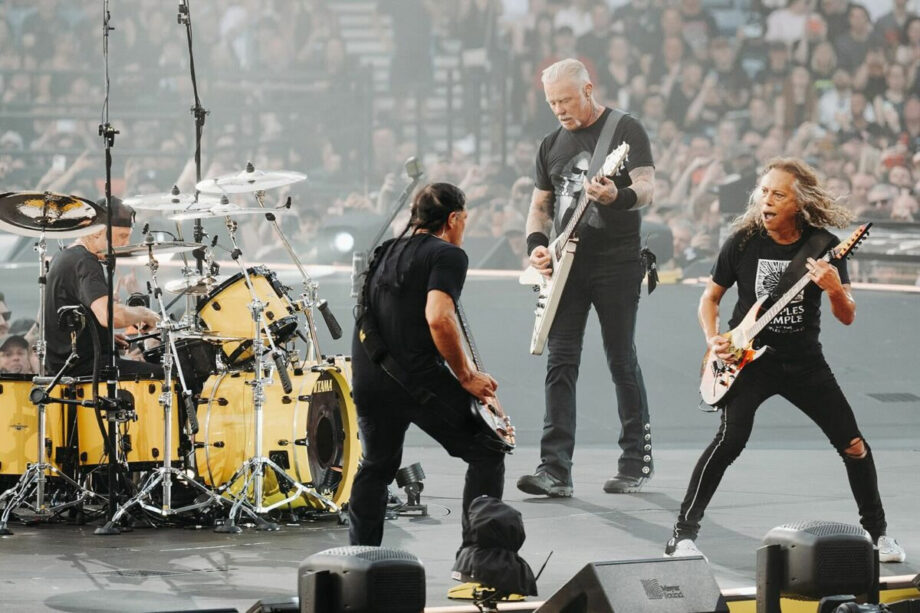
Kirk Hammett and Rob Trujillo of Metallica completely bypassed an official venue ban during their concert in Cardiff, Wales on June 28, 2026. They performed a snippet of the traditional Tom Jones anthem “Delilah” to a roaring stadium of supportive Welsh fans who heavily criticized the censorship. The performance took place at Principality Stadium as part of their M72 World Tour. The band delivered a 16-song set, with the banned song performed as their nightly “doodle”—a tradition where the band covers an artist local to the region where they are performing.
Metallica fan reactions to the bold move were overwhelmingly positive. One fan wrote in the caption of the video: “Metallica: Delilah (Tom Jones cover) at Cardiff, Wales – June 28, 2026.” Another commented enthusiastically, “Yes, go Metallica! Delilah is a murder ballad along with a couple of thousand other songs! Should never have been banned!” A third fan noted the irony of the situation, writing, “The song is not allowed to be played there, lol. I wonder what the fallout will be.” Yet another supporter defended the band’s decision, stating, “If this song is banned, then why is the audience enjoying it? Should’ve not been banned in the first place. Good on Metallica for dusting off this song for the Welsh!”
The decision to ban “Delilah” at Principality Stadium stems from concerns about the song’s violent subject matter. The track, released by Sir Tom Jones in 1968, tells the story of a man who murders his wife after catching her having an affair with another man. The lyrics contain particularly troubling depictions of the act itself. For years, the song served as an unofficial Welsh rugby anthem. The Welsh Rugby Union routinely played it before international matches at the venue, and Jones himself has performed it ahead of certain matches.

The stadium’s relationship with the song began to shift in 2015 when officials removed it from halftime playlists during rugby matches. The situation escalated significantly in 2023 when the Welsh Rugby Union issued a formal ban on the song. Choirs were prohibited from performing it during pre-match ceremonies and throughout games. This decision came during a period of intense public scrutiny on the Welsh Rugby Union, when the chief executive was forced to resign amid allegations of sexism, misogyny, and racism within the organization. The organization acknowledged that the song was problematic and upsetting to some supporters because of its violent narrative.
The ban represented a dramatic reversal for a song that had become deeply embedded in Welsh sporting culture and national identity. Despite the official prohibition, the performance by Metallica demonstrated that public sentiment remained divided on the matter. Many Welsh fans viewed the censorship as an overreach. Rob Trujillo led the audience in a rousing singalong during the performance, transforming what could have been a quiet moment into a defiant celebration of the controversial classic. By performing “Delilah” as their nightly doodle, Metallica honored the local musical heritage of Wales. The band also made a subtle statement about artistic freedom and the right to perform music regardless of its subject matter.