

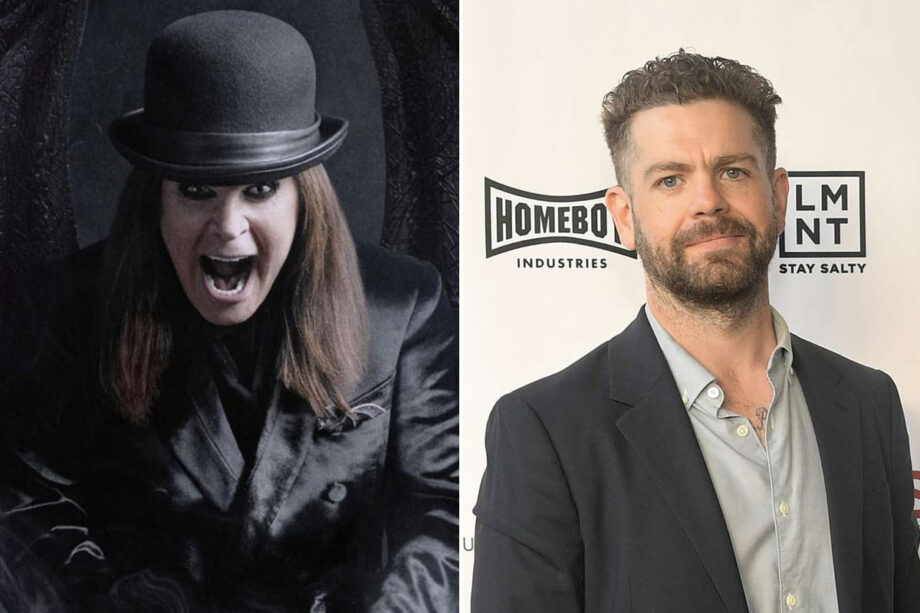
Jack Osbourne recently discussed his father Ozzy Osbourne’s songwriting abilities, sharing insights during an appearance on The HoneyDew With Ryan Sickler.
The discussion focused on whether the legendary Black Sabbath frontman wrote all the lyrics to the songs he recorded throughout his career, both with the band and as a solo artist. Jack explained that while his father was not classically trained, his strength lay in creating melody lines rather than writing lyrics.
“Uh, no, he didn’t. He didn’t,” Jack Osbourne said. “My dad’s big thing was — ’cause he never was trained. He never went to school for music. The only instrument he could really play was harmonica. But his thing was melody lines, and that was where he really — that was his strong suit.”

He went on to clarify who wrote the lyrics during Ozzy’s time with Black Sabbath and during his solo career.
“And he wrote a lot of his own lyrics when he went solo,” Jack continued. “But most of the lyrics, when he was in Sabbath, were written by Geezer Butler.”
Jack also emphasized that his father was always honest about his contributions and never pretended to write everything himself.

“[Ozzy] never was one of these artists that pretended he wrote every[thing],” Jack added. “He never was that, ’cause he was, like, ‘No. I know what I’m good at. I know what I’m not. I know when I need help, and I’ll say it.'”
He then compared his father’s approach to other major artists in the music industry, specifically mentioning Taylor Swift.
“You look at a Taylor Swift album, you turn it over, and it says, ‘Written and produced by Taylor Swift.’ Well, that ain’t f*cking true,” Jack said. “It’s, like, there’s things called buyouts, and that’s what’s happening there. And 100%, Taylor Swift is f*cking talented, beyond talented, but she’s not writing all that music alone. It takes a village.”
Jack’s account of his father’s songwriting role is consistent with the historical record of Black Sabbath. Geezer Butler served as the band’s principal lyricist for many years, and he has explained that the task fell to him partly because he read extensively, enjoyed English literature, and had already been writing poems and short stories before the group formed. “So when it comes to writing lyrics, it came quite easy to me,” Butler said.
Butler’s contribution to the band’s identity went well beyond the bass lines. He ranks second only to Tony Iommi in the number of Sabbath albums he appeared on, with 14, and he penned the words to classics such as “Black Sabbath,” “War Pigs,” “Paranoid,” and “Iron Man.” He has also described how writing lyrics helped him cope with difficult periods in his life, noting, “I used to get into really dark places. The only thing that could get me out of it was to write lyrics.”
Ozzy’s solo career depended on collaboration as well. The 1991 album No More Tears featured lyrics from Motörhead frontman Lemmy Kilmister, who helped write “Mama, I’m Coming Home,” “Desire,” “Hellraiser,” and “I Don’t Want to Change the World.” The title track of the album also included contributions from guitarist Zakk Wylde and bassist Bob Daisley, underscoring that even Ozzy’s most successful solo work was a group effort.
Ozzy himself acknowledged his limits when it came to finishing lyrics. In the liner notes for his 1997 compilation The Ozzman Cometh, he recalled carrying the melody for “Mama, I’m Coming Home” in his head for years before completing it. “I had been walking around with the melody in my head for a couple of years but never got a chance to finish it until I was working with Zakk on the No More Tears album,” Ozzy said.
That division of labor was present even on some of Black Sabbath’s earliest material. In his memoir I Am Ozzy, Ozzy wrote that he hummed a melody over the top of what became “War Pigs,” and Butler then wrote the lyrics, which were inspired by the breakup drummer Bill Ward was going through at the time. “I thought the song was brilliant from the moment we first recorded it,” Ozzy recalled.
Taken together, these accounts support Jack Osbourne’s description of his father as a gifted creator of melodies and a performer who openly relied on collaborators for lyrics. Ozzy died on July 22, 2025, leaving behind a legacy shaped by both his Black Sabbath recordings and his solo catalog, whose songwriting credits reflect that collaborative process.