

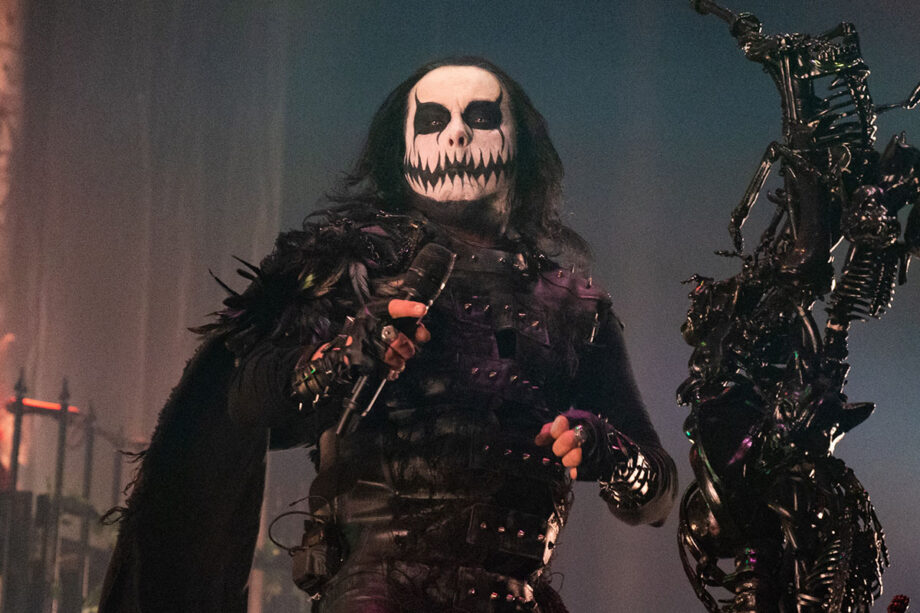
Cradle of Filth frontman Dani Filth recently shared his candid perspective on censorship in metal music. He suggested that those who enforce content restrictions are often too “stupid” to catch his provocative lyrics. During an appearance on The Jasta Show, Filth discussed his band’s history with controversial imagery and lyrics while reflecting on the broader landscape of metal censorship.
When asked whether he self-edits his content due to past censorship experiences and controversial merchandise, Filth responded with characteristic irreverence. “Probably. I think most of those people who control those lists are a bit too stupid anyway. I think a lot of stuff gets past them,” he stated confidently.
Filth drew parallels to metal’s earlier battles with censorship. He referenced legendary bands who faced institutional scrutiny. “Twisted Sister, Dee Snider was up with the PMRC, wasn’t he? I’m sure Blackie Lawless was. I mean, it was fun times to be honest. It was those records with the stickers on. I was like, I want that one. That’s going to be great. Plasmatics. Brilliant. Bring it on,” he recalled with nostalgia, highlighting how controversial album artwork and warning labels actually enhanced the appeal of metal records during that era.

The comments reveal Filth’s philosophical stance on artistic freedom. They also illustrate the cat-and-mouse game between artists and censors. Rather than viewing restrictions as obstacles, he frames them as part of metal’s rebellious heritage—a tradition of pushing boundaries that has defined the genre for decades.
To understand Filth’s perspective, it’s important to recognize the significant role censorship has played in metal music’s evolution. The 1980s witnessed unprecedented scrutiny of rock and metal music in the United States. Various organizations attempted to regulate content deemed inappropriate for younger audiences during this period. This era established many of the precedents that continue to influence how metal artists approach their work today.
The landscape of music censorship has shifted considerably since the height of institutional oversight in the 1980s and 1990s. While formal censorship bodies no longer wield the same power they once did, artists continue to navigate complex terrain regarding content moderation on streaming platforms, social media, and other distribution channels. Dani Filth’s comments suggest that despite these modern challenges, the fundamental dynamic between provocative artists and those seeking to restrict their expression remains largely unchanged.