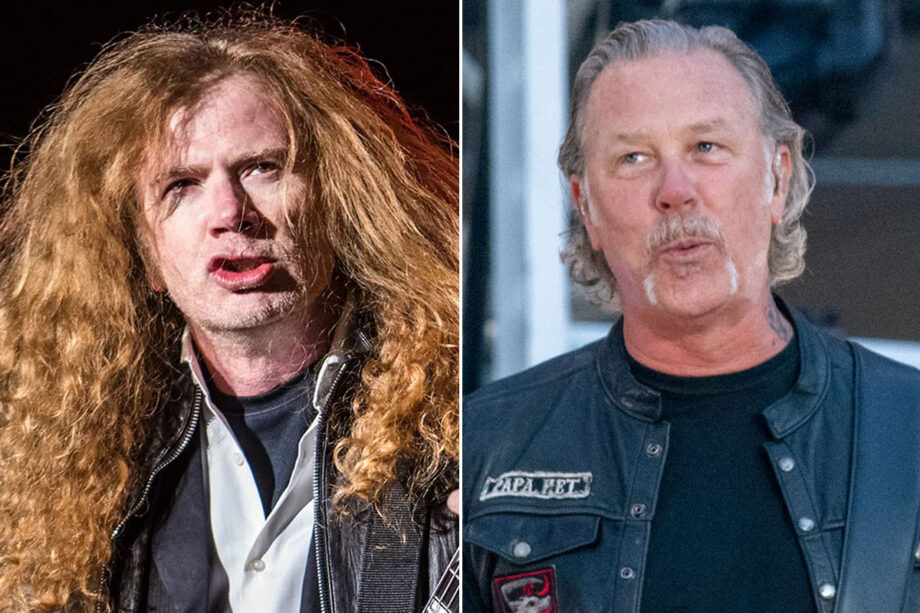
Megadeth frontman Dave Mustaine has detailed his significant songwriting contributions to Metallica’s early catalog. He claims that James Hetfield modified many of the compositions he created during his time with the band. In a recent interview, Mustaine broke down his involvement across the legendary thrash metal outfit’s first two albums, highlighting the extent of his creative input that shaped some of metal’s most iconic tracks.
“Well, on ‘Kill ‘Em All,’ I wrote the music for ‘Jump in the Fire,’ and the lyrics,” Mustaine explained. “James changed that a little bit. And then I wrote ‘Mechanix,’ which James changed the lyrics on that to ‘The Four Horsemen.'” He continued by listing additional compositions: “I wrote the music for ‘Phantom Lord’. I wrote the music for ‘Metal Militia.’ I wrote the music for ‘Ride the Lightning.’ I wrote the music for ‘Call of Ktulu,’ which was called ‘When Hell Freezes Over.’ And there are parts of my music in ‘Leper Messiah.'”
The guitarist’s claims extend beyond simple creative contributions. Mustaine previously explained, “Part of the reason why we haven’t been able to really reconcile is because I had songs that when I left I didn’t want them to record, and they went ahead and recorded them but they didn’t pay me what my share of the songs were.” He specifically added, “James and I wrote ‘Metal Militia’ and ‘Phantom Lord’ – every note. And somehow, on the record [‘Kill ‘Em All’], it says Lars gets 10%. And on ‘Metal Militia’ that Kirk [Hammett] gets some of it, and he wasn’t even in the band!”

Mustaine is credited as a co-writer on six Metallica songs across ‘Kill ‘Em All’ and ‘Ride the Lightning’: “The Four Horsemen,” “Jump in the Fire,” “Phantom Lord,” “Metal Militia,” “Ride the Lightning,” and “The Call of Ktulu.” These credits represent a formal acknowledgment of his contributions. However, Mustaine’s claims suggest his involvement was more extensive than the official credits indicate. The song “The Four Horsemen” grew directly out of his earlier composition “Mechanix,” which he had written before joining Metallica. This makes it one of his most recognizable contributions to the band’s legacy.
Mustaine’s contributions to individual tracks reveal the depth of his creative input during his brief tenure with Metallica. On “Phantom Lord,” he wrote the riff that appears towards the end of the song’s bridge section, the part that precedes Kirk Hammett’s iconic solo. On “Metal Militia,” Mustaine contributed the main riff and major structural elements of the composition. For “Ride the Lightning,” the title track of the band’s second album, he contributed at least the intro section or key riff that defines the song’s opening. “The Call of Ktulu,” originally titled “When Hell Freezes Over” during Mustaine’s involvement, represents another significant contribution where he provided substantial musical material that would become one of Metallica’s most celebrated instrumental pieces.
The credit discrepancies that Mustaine has highlighted raise questions about the fairness of songwriting attribution in the band’s early years. On the ‘Kill ‘Em All’ record, Lars Ulrich received a 10% writing credit on songs where Mustaine claims he and Hetfield wrote every note. Kirk Hammett received songwriting credit on “Metal Militia” despite not being in the band at the time of its composition. These inconsistencies have fueled Mustaine’s frustration over the decades, contributing to the ongoing tension between the Megadeth leader and his former Metallica colleagues. The financial implications of these credit disputes have been substantial, as songwriting royalties represent a significant portion of musicians’ earnings from their work.