


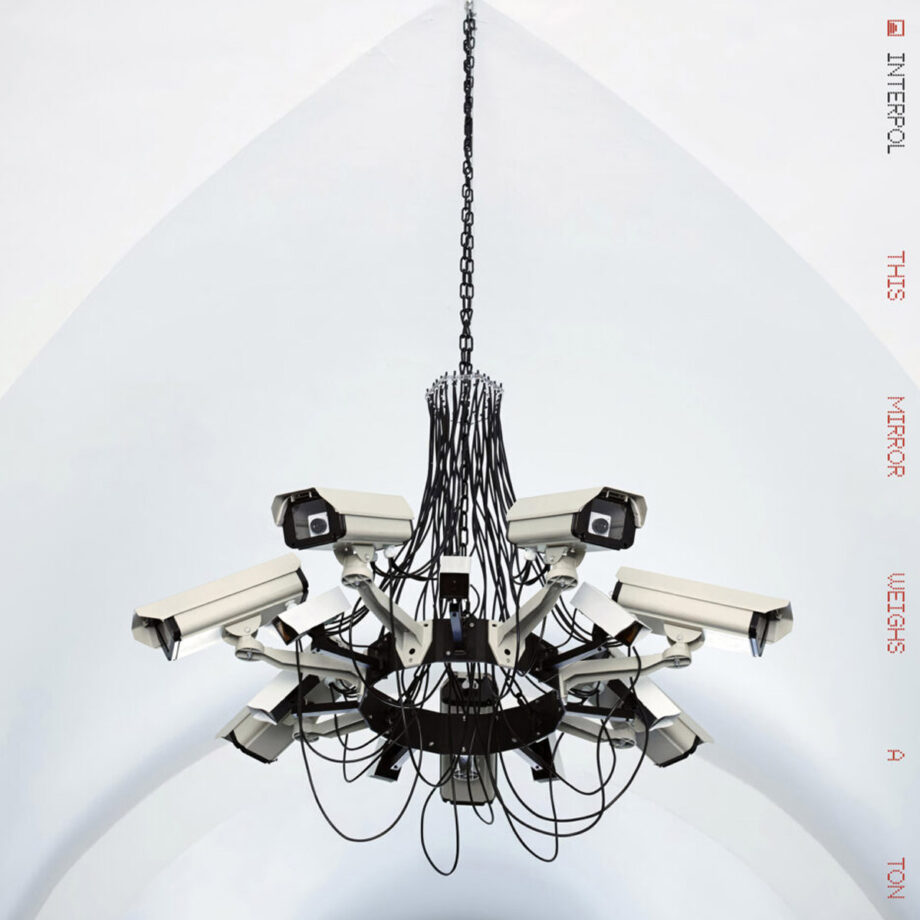
Interpol’s This Mirror Weighs a Ton arrives as a late-career reset rather than a full reinvention. Released on August 28, 2026, the band’s eighth studio album finds Interpol refining its familiar darkness while adding new textures and a more restrained approach.
The album marks Interpol’s first release through Partisan Records and comes at a point where the band has little left to prove. Rather than trying to recreate the impact of its early records, the group seems more interested in finding new space within a sound it has spent decades developing.
Recorded at a homebase studio on Manhattan’s Lower East Side, the album also has a relatively self-contained character. That setting fits a record that feels less like a major comeback attempt and more like a veteran band testing how far it can push its established identity without losing what makes it recognizable.

Producer Andrew Wyatt helps move Interpol toward a more atmospheric and spacious sound, while Dave Fridmann’s mixing gives the material additional depth. Strings, woodwinds, electronic elements, and experimental sound design appear alongside the band’s usual post-punk foundation.
As a result, This Mirror Weighs a Ton often relies more on texture and tension than straightforward guitar power. The title track is particularly effective in this area, using drum loops, synth haze, and minimal movement to create an uneasy, almost haunted atmosphere.
This approach does not completely change Interpol’s identity. The cold mood, controlled performances, and sense of isolation remain familiar, but the production gives those qualities a slightly different shape. It feels like an extension of the band’s style rather than an attempt to escape it.

The album stands among Interpol’s stronger late-career releases, even if it does not reach the urgency or impact of the band’s best-known work. Its strengths come from atmosphere, patience, and consistency rather than dramatic surprises.
There will naturally be comparisons with Interpol’s earlier peak, but those comparisons can distract from what the album does well. At this stage of the band’s career, This Mirror Weighs a Ton succeeds by sounding comfortable without becoming completely predictable.
For metal and metalcore listeners, the connection is more about mood than genre. The album’s controlled dynamics, darker textures, and slow-building tension may appeal to listeners who enjoy the atmospheric side of heavier music.
Still, this is clearly a post-punk and art-rock record rather than anything close to metal. Its weight comes from mood, repetition, and emotional tension instead of heavy riffs or aggression.
Ultimately, This Mirror Weighs a Ton does not attempt to rewrite Interpol’s story. Instead, it shows a veteran band making careful changes to a well-established sound. It is dark, polished, restrained, and confident enough to let atmosphere do much of the work.