


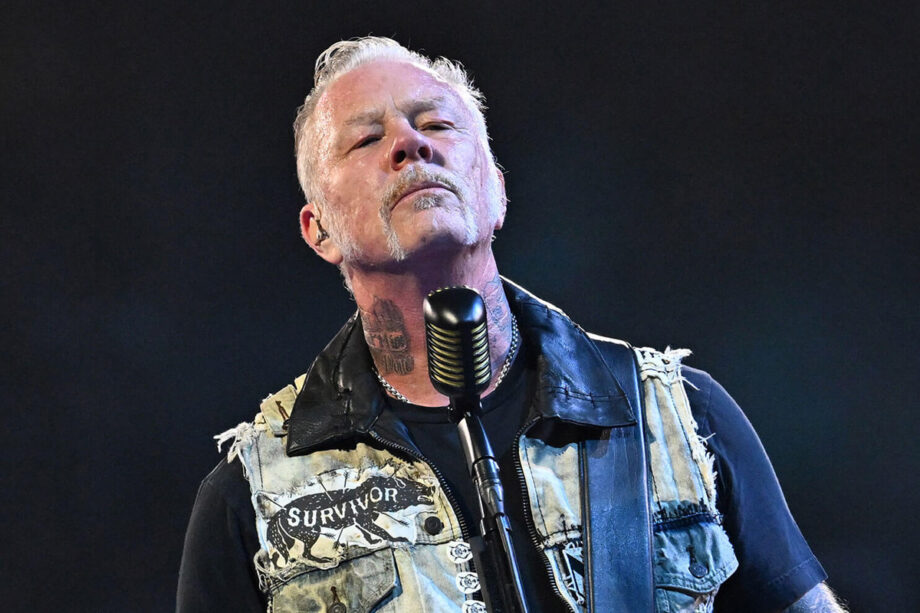
Metallica frontman James Hetfield has revealed the deeply personal nature of the band’s latest album ’72 Seasons.’ He discussed his ongoing journey with childhood trauma and intrusive thoughts in an interview published on Apple Music. The album represents a significant moment of vulnerability for the legendary musician, who has chosen to confront his inner struggles through his art.
“I’m a work in progress buddy. And life is a work in progress for me and for all of us,” Hetfield said. “We all go through stuff we all uncover things from our 72 seasons. We’re still working through whatever trauma, old, new, big trauma, little trauma, whatever it may be.”
Hetfield emphasized the role of acceptance in his healing process. Rather than fighting against his internal struggles, he has learned to embrace them. “It’s the opposite of being lost. It’s acceptance,” he stated. “There’s so much acceptance of where we are in our lives and where I am in my life. I can fight fight fight and try and change shit. The end of the day, it’s a part of me. You embrace it.”

The frontman credited music as a vital lifeline. Without this creative outlet, he would not have survived his battles with mental health. “Life would not be around I think if there wasn’t music to express these feelings. I would be long gone for sure,” Hetfield concluded, underscoring the therapeutic power of artistic expression.
Hetfield’s candid remarks about his personal journey provide crucial context for understanding the album’s conceptual foundation. The title ’72 Seasons’ refers to the first 18 years of life—roughly 72 seasons—representing those formative years that shape a person’s identity and psychological foundation, as noted by Revolver Magazine. This framework allows Hetfield to examine how childhood experiences continue to influence his present-day struggles and growth.
The album’s conceptual approach reflects Hetfield’s deliberate effort to process his past rather than suppress it. Revolver Magazine reported that Hetfield stated “there’s been a lot of darkness” in his life, and the album serves as a vehicle for confronting that darkness head-on through songwriting and musical expression.

The transparency evident in ’72 Seasons’ marks a significant shift in how Hetfield approaches songwriting and vulnerability. PopMatters noted that Metallica uses heavy music not merely for aggression or catharsis, but as a vehicle for trauma disclosure, mental health reflection, and emotional healing. This approach transforms the album into a therapeutic document that addresses despair, identity, and the fear of facing oneself.
Songs like “Screaming Suicide,” “Too Far Gone,” and “Room of Mirrors” exemplify this inward focus. PopMatters highlighted these tracks as directly confronting Hetfield’s struggles with darkness and inner conflict, refusing to hint at pain while instead naming it explicitly in the lyrics. This unflinching honesty gives the record a sense of authenticity and emotional vulnerability that resonates with listeners facing their own battles.
Beyond artistic expression, Hetfield’s comments underscore music’s role as a literal lifeline for mental health recovery. The album represents a broader philosophy where naming trauma, turning personal pain into creative expression, and using songwriting as a form of processing and self-repair become acts of survival. Hetfield’s explicit statement that he would not be alive without music to express his feelings elevates the discussion beyond typical artist interviews into a conversation about the genuine therapeutic power of creative outlets.