

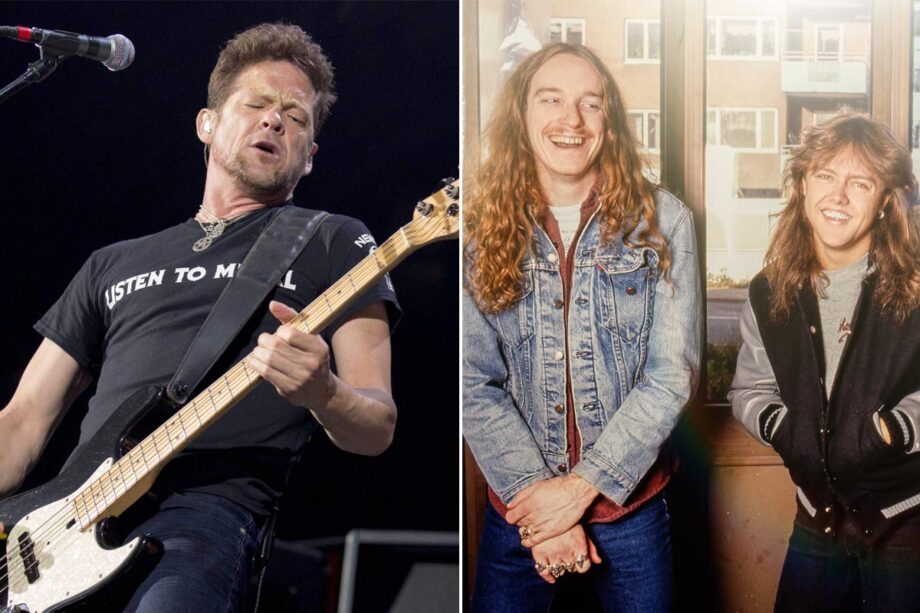
Former Metallica bassist Jason Newsted has revealed that the band members completely suppressed their grief and ignored their mental health stability in the aftermath of Cliff Burton’s death. They prioritized the band’s momentum over emotional processing. In a recent interview, Newsted explained how the young musicians were forced to “blindly blow through” their trauma while industry expectations and their own ambitions kept the “Metallica machine” rolling relentlessly forward.
“They never got to process,” Newsted stated. “Everybody was 23 years old. Male consequence ain’t even formed yet. Absolutely gutted, but then not being able to comprehend. To drink it away, do whatever you have to do to chase it away.” He described how external pressures prevented the band from grieving properly. “They didn’t let themselves grieve, but other people didn’t let them grieve either. We got this ball rolling, this motherf*cker’s going downhill in the snow, and we can’t stop. We got to keep the momentum.”
Newsted emphasized that the band’s leadership and the expectations placed upon them created an impossible situation. “There was never any thought about the mental stability of the persons involved—not the personas. What they actually were, this brotherhood, us against the world thing, also being a spearhead or leaders and everybody expecting them to do so much. It has a lot to do with the expectations of others, expectations of themselves for themselves, what they had planned for it, and they had to blindly blow through it and almost pretend it didn’t happen in certain ways.”

Cliff Burton, the band’s original bassist, died in a tour bus crash in Sweden on September 27, 1986, at just 24 years old. He was widely considered irreplaceable by the band and the metal community. Newsted himself joined Metallica mere weeks after this tragedy, stepping directly into an environment of raw grief and emotional volatility that the band had no time to process.
The band members—particularly James Hetfield, Lars Ulrich, and Kirk Hammett—were all in their early twenties when Burton died. At this age, emotional maturity and coping mechanisms are still developing. Management and industry pressures pushed them to continue touring and working rather than taking time to grieve. This decision would haunt the band for decades. Hetfield later acknowledged in therapy that he had never properly learned to grieve. The band’s approach to Burton’s death was fundamentally unhealthy. He stated that he “didn’t deal with it until I had therapy” and that he “wasn’t able to grieve.”
The unresolved trauma created a toxic dynamic within the band that persisted for years. Hetfield revealed that the band’s collective grief and sadness became unconsciously directed at Newsted. Newsted had the difficult task of filling Burton’s shoes while the band processed their loss through anger and resentment rather than healthy emotional work. This dynamic placed immense psychological pressure on Newsted, contributing to his eventual mental and emotional exhaustion during his 14 years with the band.

Newsted’s reflection on this period demonstrates how the band has finally begun to heal. “There was no way they could ever forget it. It happened right in front of them. They were in it. They were amongst it. They just happened to walk away. The chemistry that we had, being able to finally process 25 f*cking years later, that’s what’s real. They are finally able to go, ‘Yeah, it’s our boy,’ and I go, ‘That’s my boys.’ We did our thing, and it’s pretty f*cking awesome.” This statement underscores that genuine healing and reconciliation only became possible decades after Burton’s death. The band members finally had the emotional tools and distance to properly grieve and honor their fallen bandmate’s legacy.