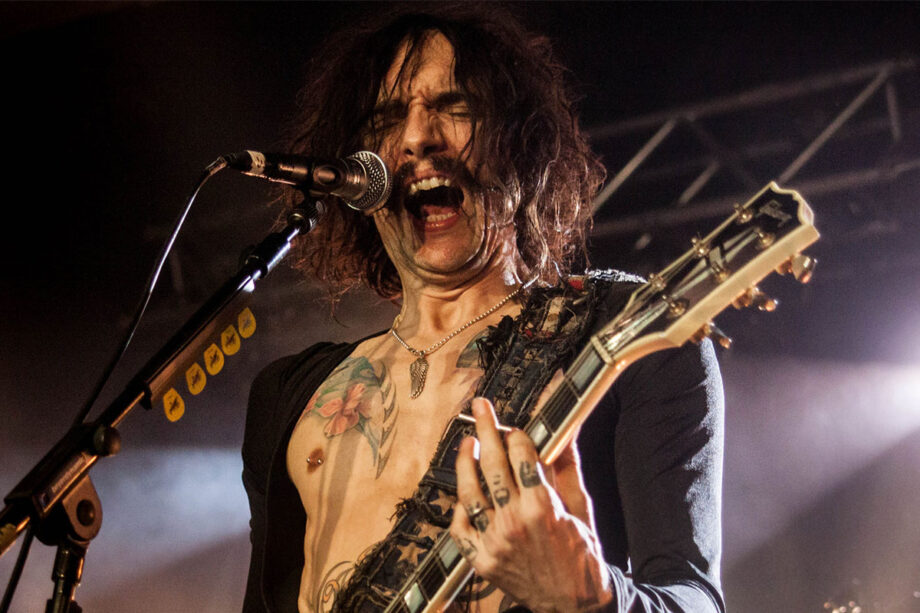
The Darkness frontman Justin Hawkins has targeted the massive rise of smartphone usage at rock concerts. He detailed a frustrating live incident in Luxembourg where he fell directly onto the floor during a stage dive because fans were too busy recording video to catch him.
“We talked about doing this [banning phones] for The Darkness stuff, but it’s a little bit impractical,” Hawkins explained. “I know it’s actually quite expensive to do that. But it would make a huge difference to the atmosphere of the performance itself.”
Hawkins recalled a specific moment from a Luxembourg gig where he attempted a stage dive. He was up on the barrier performing his usual antics when fans began filming him. Because they were focused on recording, they didn’t catch him as he fell to the floor.

The incident underscores a broader frustration Hawkins has expressed about the pervasive presence of mobile devices at live performances. Beyond the safety concerns highlighted by his Luxembourg mishap, the frontman views smartphone usage as fundamentally damaging to the concert experience itself.
Hawkins describes it as “boring to sing to a load of lenses.” He advocates for a world without mobile phones at live shows, arguing that the devices fundamentally undermine the connection between performer and audience. When The Darkness performs fan favorites like “I Believe In A Thing Called Love,” a sea of phones emerges. Hawkins often pauses the performance entirely, saying “F*cking hell, where’s the vibe gone?” He calls on audiences to actually participate in the experience rather than mediate it through a screen.
The Darkness frontman recognizes that his band delivers exceptional live performances. He believes it is crucial for fans to witness that energy firsthand. However, the prevalence of recording devices creates a paradox where the very act of capturing the moment prevents fans from truly experiencing it. Hawkins emphasizes that concert-goers have paid significant money to see the band perform. That investment should translate into genuine engagement and connection rather than passive documentation.

While phone-free concert initiatives have gained traction in recent years, implementing such policies remains challenging for most venues and promoters. The financial and logistical barriers to enforcing phone bans are substantial. Hawkins acknowledges the impracticality of widespread adoption. Nevertheless, his passionate advocacy highlights a growing tension in live music between the desire to preserve authentic concert experiences and the modern expectation of capturing and sharing every moment. For artists like Hawkins, the solution lies not just in technology or policy, but in a fundamental shift in how audiences approach live performance. Being present should take precedence over being seen.