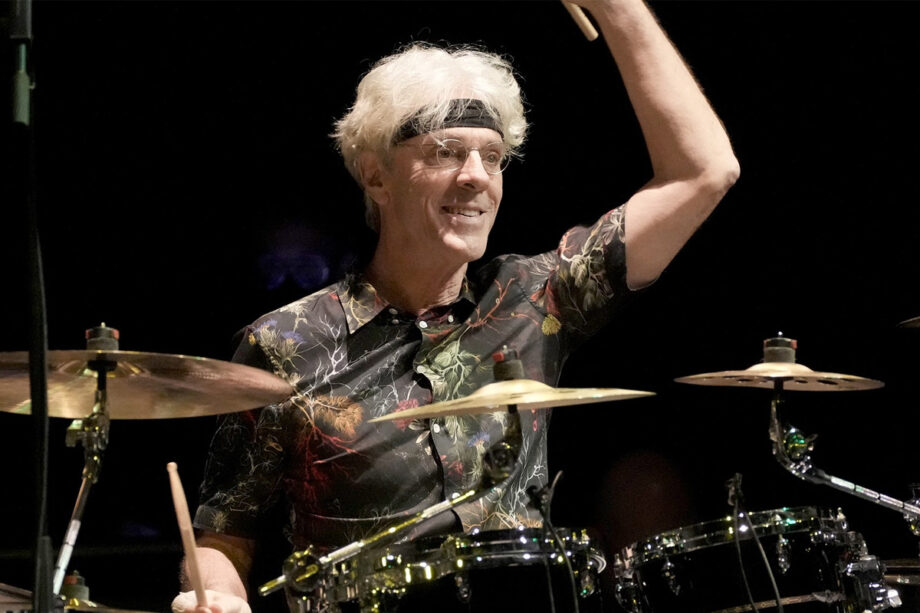
The legendary Police drummer Stewart Copeland recently discussed why the band’s reunion tour felt “mercantile” and alienating, sharing his thoughts during an appearance on The Magnificent Others with Billy Corgan.
Copeland explained how the massive scale of the reunion tour differed significantly from the band’s early days, leaving the members feeling like they had lost control of their own project.
“It was very strange,” Copeland said. “It was very mercantile in a weird way. The emotion of the audience was the big deal. Everything else was weird. You know, back in the day, we had a drum tech, guitar tech, front of house guy, and a tour manager. On the reunion tour, we had 200 people.”

“But the concerts were really uplifting, but we were no longer… it was no longer our band,” he continued. “Used to be the three of us and we decide where we’re going to go. We work it out with Miles, our manager, and what we’re going to do. This we are now three soldiers in a giant army. And it’s not ours anymore. My hands don’t belong to me. They belong to the tour. It’s like irresponsible and it’ll mess everybody up if I twist my… No more horseback riding.”
“In fact, specifically, we were very much subsumed and we’re playing those songs and our rule was to resolve any dispute,” Copeland added. “The way we did it before is the arbiter. Anyone wants to try something new. If everybody likes it, fine. But if there’s dispute, we go back to what we did before. So, it just didn’t belong to us anymore. The Police was this huge brand out there with gazillions of people, and it was this machine. It belonged to Live Nation, who actually did us pretty good. I used to say, ‘If they’re ripping us off, come on, rip us off some more.'”
Copeland’s remarks arrive nearly two decades after that reunion run, and they fit into a much longer story of tension, ambition and shifting control inside the trio.

The reunion itself began at the 2007 Grammy Awards, where the band performed together for the first time in years before setting out on a world tour that ran through 2007 and 2008. That run was described as the third-highest-grossing tour of all time at that point, which helps explain the corporate machinery Copeland describes.
The scale of the operation stood in sharp contrast to the band’s first life. The Police broke up at the peak of their fame in 1984 because of tensions within the group, and Sting wanted to pursue a solo career. Britannica also notes that the group’s creative conflict centred partly on Sting’s control of the songwriting, which frustrated both Copeland and guitarist Andy Summers.