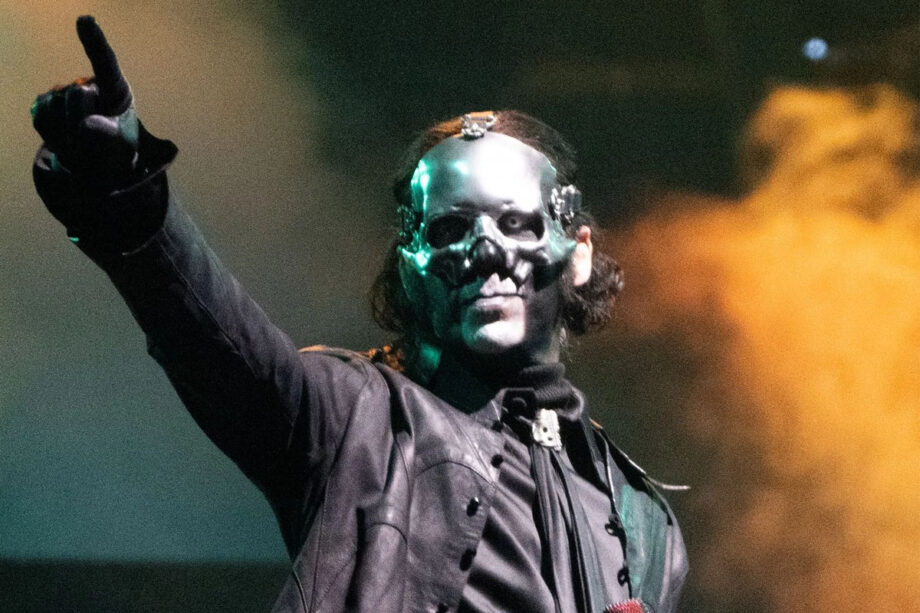
Ghost frontman Tobias Forge recently explained why the band chose to go on a hiatus instead of embarking on a scaled-down festival tour, sharing his thoughts in a new interview with Kerrang!.
Forge discussed the challenges of adapting the band’s massive “Skeletour” production to outdoor festival stages and why he ultimately decided to turn down certain promoter offers.
“If I want to instil some hope into whomever is hoping anything, a year back when we were talking about how the tour was gonna end, we found ourselves in a little bit of a weird crossroad situation, where some promoters were very keen on us basically taking the show that we did, and putting it into an outdoor setting,” Forge said.

“Just for the record, that works. You could have put the entire Skeletour onto an outdoor setting. But you can’t do that on a festival – it needs to be your own stage, or a stage that you could control for several days. Now I’m getting technical here, but you need to reconfigure the whole stage layout.”
He went on to explain that while some of the proposed outdoor stadium shows were dream opportunities, they came with conditions that would have compromised the quality of other performances.
“I’m not gonna posthumously announce shows that didn’t happen, but some of them were dream-come-true outdoor stadium shows,” Forge continued. “There was a handful – five or six of them – and one, actually, in England. But it was like, ‘If you want to do that, you need to do these 15 festivals.’ And it was like, ‘F*ck that.’ I’m not gonna go and give, like, Sweden, Norway, Poland, this country, this country and England the big show, and then we’re gonna go to all these other festivals where it’s a skin-and-bones thing. That’s not cool, and it’s not fair, at least in my head.”

Forge added that he preferred to wait for the right opportunity to deliver a full-scale production rather than risk disappointing fans with a lesser show.
“I’d run the risk of maybe not being offered that in five years, rather than doing something that will just tick everyone off,” Forge said. “But on a positive note, at least I know that I was very close to getting it, and that is the sign I’m making it, too. You have the promoter saying, ‘We think we can do two nights here. We think we can do one night here in this fucking amazing football stadium…’ My wish is one day I can do that. But if it doesn’t happen, I’m still very happy with what we achieved.”
The scale of Skeletour helps explain why Forge was unwilling to present a reduced version of the show at festivals. The production was designed as a complete theatrical experience, with its staging, lighting and video elements working together as one spectacle.
Skeletour featured nine musicians, extensive rigging, more than 800 moving lights and 400 LED tiles. The production rig weighed approximately 136,000 pounds.
That size also created practical challenges during the European leg. The show required careful overlays and height adjustments, while some venues used downsized video walls to accommodate the production’s physical limitations.
Ghost’s elaborate presentation is closely connected to Forge’s evolving stage persona. Forge made his first public appearance under his real name in 2017 after years of performing as the masked Papa Emeritus.
That transformation became another chapter in the band’s carefully developed mythology. Forge has fronted Ghost through several identities, including Papa Emeritus I through IV, Cardinal Copia and Papa V Perpetua. The band’s theatrical evolution has also brought major recognition, including the 2016 Grammy Award for Best Metal Performance for “Cirice.”
Ghost is currently on hiatus as Forge considers the band’s next steps. For now, his comments suggest that the group would rather wait for the right opportunity to present its full vision than compromise the production for a festival schedule.