


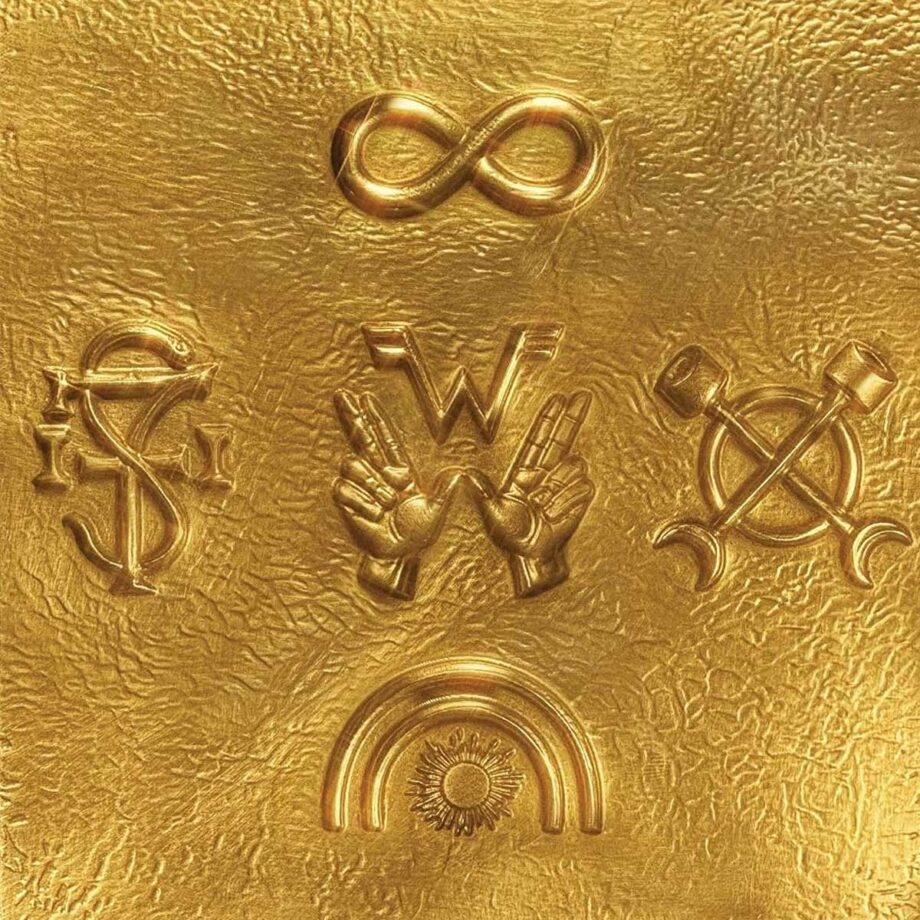
Weezer’s self-titled 2026 release, commonly known as the “Gold Album,” is a verifiable 10-track record issued on 21 August 2026. It marks the band’s 20th studio LP and their first full-length effort since 2021’s Van Weezer, placing it within the group’s long-running pattern of periodic creative resets.
The self-titled tradition, now in its seventh color-coded iteration, signals continuity rather than reinvention, and the album’s announcement centered on the single “We Might As Well Be Strangers,” a collaborative pop-rock pivot that fits the band’s familiar approach to launching a new era. That framing matters for metal audiences because Weezer has long occupied a space where heavy guitars, melodic hooks, and a self-aware studio aesthetic still resonate with listeners who follow alternative and metal crossover releases.
Sonically, the album leans into faithful, nasal power pop, preserving the band’s core vocal and melodic identity rather than chasing a darker or more aggressive palette. At the same time, the music is grungy, dynamic, and heavier than Van Weezer, suggesting a modest increase in guitar weight without turning the record into a metal-leaning statement.

Production duties from Klas Åhlund and Kenneth Blume point to a polished but modern approach, balancing a clean studio finish with an intentionally rougher guitar edge. For metalcore listeners, that production profile is notable less for outright heaviness than for how tightly the band layers distortion, hooks, and forward momentum.
The overall critical picture is one of cautious approval rather than unanimous acclaim. Assessments have ranged from a middling three-star take emphasizing dependable power-pop fundamentals to more favorable readings that call this one of the band’s strongest recent efforts, recalling something close to their peak-era energy.
That range reflects a familiar Weezer pattern: competence, hooks, and improved guitar presence are widely acknowledged, but the album stops short of being treated as a major artistic reset. A more enthusiastic take frames the record as recalling The Blue Album and Pinkerton without simply recycling them, reinforcing the sense that this is a strong craft record rather than a transformative one.

Community-facing reaction appears active but not definitive, with early preview material generating curiosity and cautious optimism about whether the band can still deliver a convincing hook-forward rock record at this stage of its career. The album has drawn attention across listener-oriented review spaces, reflecting a mix of staff and audience engagement, though detailed, reliable summaries of broader forum-based discussion aren’t available to characterize in depth.
For readers focused on heavier music, this album’s relevance lies less in genre purity than in its relationship to heavy-guitar aesthetics, melodic compression, and polished alternative-rock craftsmanship. It reads as heavier and more immediate than some recent Weezer material, making it a useful reference point for listeners who split time between power pop, alt-rock, and accessible metal-adjacent releases.
Even so, it isn’t a crossover metal release in any strict sense — it stands as a solid late-career Weezer record rather than a major event for the metal world, succeeding primarily by tightening the band’s core formula rather than expanding what a Weezer album can be.