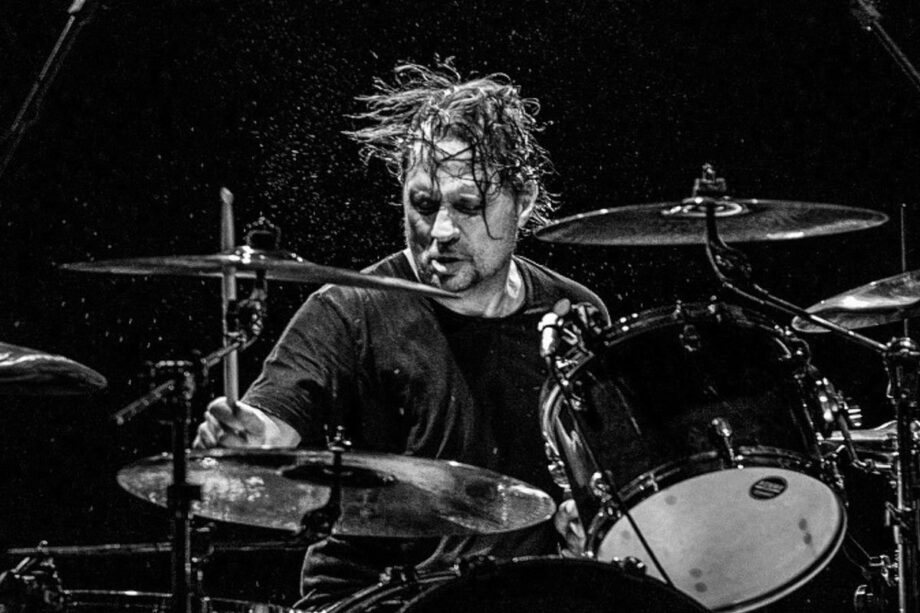
Dave Lombardo has explained that Slayer’s landmark album ‘Reign In Blood’ did not become a legacy record overnight, but rather built its reputation gradually through the late 1980s. Speaking on This Day In Metal, the drummer described how the album’s influence grew as more bands began to imitate Slayer’s sound and audiences showed their enthusiasm for the record.
Lombardo was asked about when the band realized their career was taking off and the album was becoming significant. He explained that the process of becoming a legendary record took considerable time to develop.
“Well, I think maybe it was around when our career just started moving up,” the drummer said. “People were really interested. They were coming to the shows. It had to have been — obviously the album was released [in 1986], so ’87, ’88, and then we released ‘South Of Heaven’. It was an ongoing process. It wasn’t from here to here and overnight. I think legacy bands and legendary records and stuff like that, it takes time to work on those. It takes time to grasp or to achieve.”

One of the clearest signs of influence came when other musicians began copying Slayer’s style. “When other bands start imitating you, you start realizing, ‘Wow, we’re really influencing a lot of fans,'” Lombardo said. “When they hand you a demo tape and you decide to go to the back of the bus and listen to it, and it sounds exactly [like you]. Imitation is the greatest form of flattery, but it was obvious.”
The drummer pointed to a specific show in Los Angeles as a moment when the band understood their impact. “And then, as time goes on and, the shows you play. For example, our hometown, we played Los Angeles, the Hollywood Palladium. And there’s a riot outside,” he continued. “They oversold the show. They got a riot squad. They’re all in line getting ready with their billy clubs and ready to go in and start cracking skulls. And it’s, like, ‘Hey, we, we must be doing something right.'”
Lombardo described the attitude that kept Slayer moving forward during this period. “And what’s cool is that you look back and it’s that attitude of, ‘We do what we want. It’s our music. We’re musicians. We’re artists. We do whatever the hell we want. If you like it, welcome aboard. If you’re not [into it now], well, we’ll wait for you.’ Cause eventually people will come around, ’cause it won’t go away.”

The band did not receive universal praise from critics when the album first arrived. “At the time you’re really not aware [of how influential your music is going to become]. On occasion you go to the grocery store or the newsstand, you pick up a magazine and you see your face in it and you see a review. Sometimes those reviews, they weren’t all great at the time,” Lombardo explained. “You guys think, ‘Oh, this is a great album,’ but we got shit for that record a lot of the times. But after a while, obviously, they had to conform.”
Lombardo made these comments while discussing the ‘Reign In Blood’ album’s long journey to becoming recognized as a landmark record in heavy metal history. His remarks highlight how critical reception and commercial success do not always coincide with immediate impact.
The album’s path to becoming an influential record began with significant obstacles. Reign in Blood was released on October 20, 1986, by Def Jam Recordings, but Columbia Records, Def Jam’s distributor, refused to handle the album because they believed its subject matter and artwork were too graphic. The album was eventually distributed by Geffen Records instead, though the controversy delayed its release.
Despite the early resistance from major distributors, the album found its audience among metal fans. Without any radio support, Reign in Blood debuted at number 127 on the Billboard 200 Album Chart and six weeks after release peaked at number 94. The record received positive reviews from metal outlets, and guitarists King and Hanneman were praised in guitar magazines for their tight rhythms and wild solos. The album earned a gold certification from the RIAA in 1992.
The incident at the Hollywood Palladium on August 12, 1988, demonstrated just how powerful Slayer’s appeal had become. Around 200 people gathered outside the venue for a show featuring Slayer, Danzig and Junkyard, but the venue had oversold the concert. About 40 officers were sent to manage the increasingly hostile crowd, which screamed and threw bottles. One man was seriously injured when he was thrown through a plate-glass window, and the riot led to extensive damage and a police presence that included riot units and helicopters. Kerry King later noted that the riot cost the band years of shows in Los Angeles county.
Over time, Reign in Blood came to stand alongside Megadeth’s Peace Sells…but Who’s Buying? and Metallica’s Master of Puppets as one of the albums that defined the sound of American thrash metal in the mid-1980s. Bands including Possessed, Death, Morbid Angel and Obituary developed their own styles, but Slayer’s impact proved impossible to avoid. The album proved that metal could become faster, harsher and more brutal while keeping its musical identity, effectively building a bridge between thrash and death metal.