

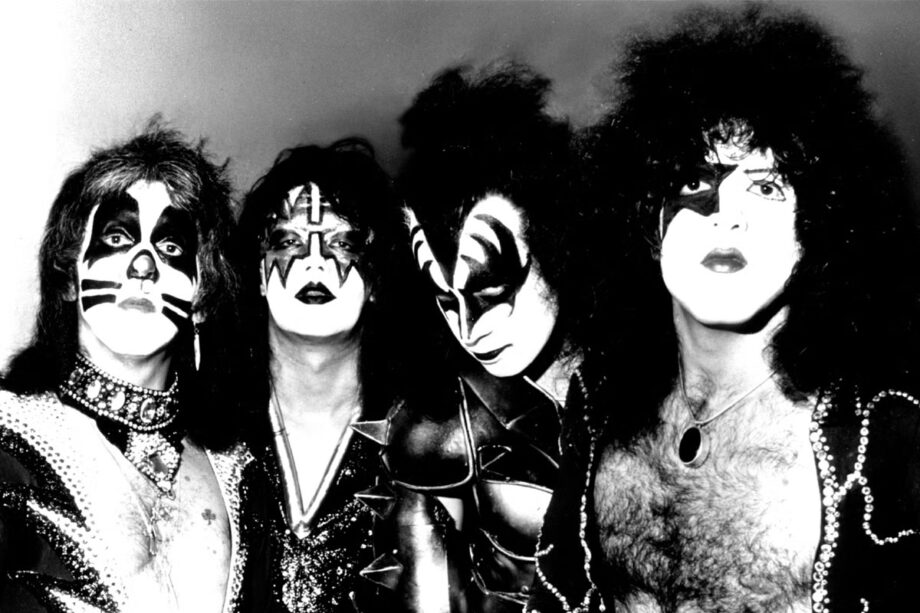
KISS bassist and co-founder Gene Simmons recently explained why former bandmates Ace Frehley and Peter Criss couldn’t handle being in the band, addressing their struggles with substance abuse and how they were eventually bought out in an interview on The Moynihan Report.
The discussion focused on the psychological pressures of touring and how different individuals cope with the demands of being in a massive rock band.
“[Ace’s death] is so hard for the fans,” Simmons said. “It’s heartbreaking. Ace had a massive influence on guitar players. Dimebag, Daryl, Mike of Pearl Jam, Metallica, just everybody across the line. But not everybody’s designed in their DNA to run a marathon. Some people just, you know, short race and they can do well for that, but they can’t do it. Ace told me to my face when he was leaving the band, ‘I’m going to have a solo career because if I go out on tour again, I’m going to kill myself.'”

Simmons went on to describe how psychological pressures affect people differently, noting his own ambition compared to others.
“Just the psychological pressures affects different people in different ways,” he continued. “I never have a problem with anything. I’m voraciously ambitious and love the attention and the money and the fame—like all that stuff. But it doesn’t affect everybody the same way. I’m not a shrink, but I think I’ll talk about myself. It starts with who you are in your own skin. Regular people every day drink themselves until they’re numb and can’t even walk and use drugs and become drug addicts even when nobody’s watching just because they’re not comfortable in their own skin. And Ace and Peter handled it for a few years. And then they were in and out of the band three different times. And it breaks the heart of fans for me where asshole comes in. If I tell the truth.”
He compared the band’s internal struggles to a family dynamic where children are heartbroken by the truth about a parent.

“You know, you have your mom and dad and your mom turns to the kids and says, ‘Your dad’s not at home. I threw him out because he’s a drunken loser and he doesn’t show up on time and he doesn’t go to work and all that,'” Simmons explained. “So, the kids are heartbroken. They start hating mom for ‘How could you say those things about dad?’ even though it’s true. When Ace came back the third time, it was very serious drug use. The stuff that makes you—I don’t want to mention the name because it’s so depressing. And his daughter was affected and all that stuff breaks our hearts.”
Simmons also addressed Peter Criss’s attitude toward his departure, suggesting he viewed himself as a victim.
“It’s tough for me to be honest and stuff,” Simmons said. “Peter’s always considered himself a victim. Like ‘They ganged up on me and what they did to me’ and stuff like that. Instead of if you’re really cured and everything, you look in the mirror and said it’s my fault. You say, ‘I used. I didn’t do my work and I was complaining instead of being grateful to be in one of the largest bands that has ever existed.'”
He concluded by discussing the business side of the band and the financial buyouts of both members.
“He makes very little money from KISS,” Simmons stated. “We bought him out in 1982. We bought Ace out too. All groups of people are a business. Money’s got to come from someplace. Life is business. People don’t like that. This rock and roll world is filled with f*cking losers.”
Simmons’ comments also come in the wake of Frehley’s death and renew attention on the original KISS lineup, its history, and the personal struggles that affected the band over the years.
Frehley died in 2025 at the age of 74 after suffering complications from injuries sustained in a fall at his home.
An autopsy attributed Frehley’s death to blunt-force trauma to the head resulting from the fall. Frehley’s death brought renewed focus to his influence as KISS’s original lead guitarist and his long career outside the band.
Frehley’s first KISS tenure lasted from 1973 until his departure in 1982. He later returned to the group in 1996 before leaving again in 2002. Frehley disputed the idea that he had simply been fired, saying, “I was never fired from KISS,” while describing the circumstances of his departures.
Criss left KISS earlier. The band announced on May 18, 1980, that Criss was no longer a member. Accounts of the period have linked his exit to serious alcohol and drug use, which reportedly made it difficult for the band to rely on him.
Together, the departures of Criss and Frehley marked the collapse of KISS’s original lineup and established a pattern of reunions, separations, and business disputes that continued throughout the band’s history. Simmons’ latest remarks present his perspective on why those fractures occurred, while the band’s complicated history remains a subject of debate among KISS fans.