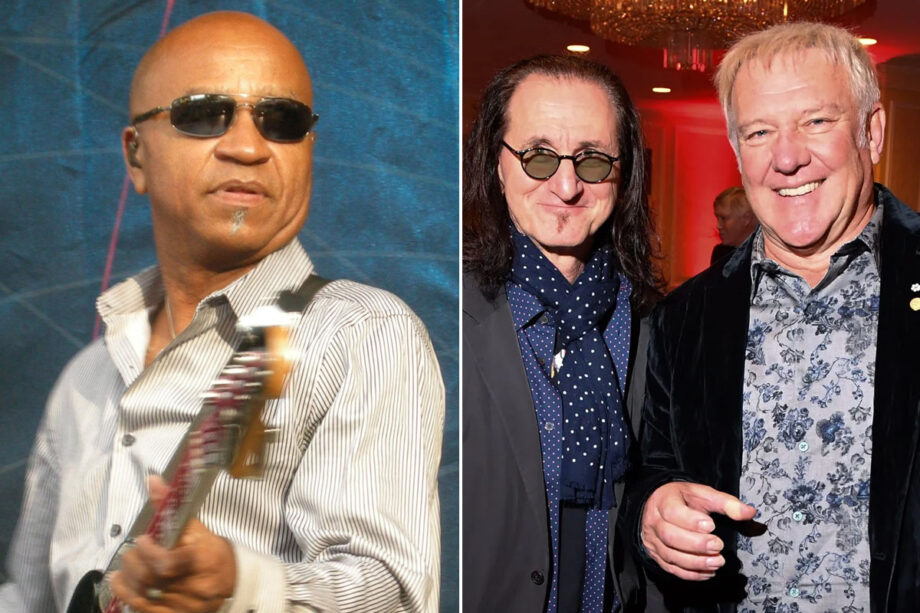
Jeff Jones, the original bassist of Rush, has set the record straight about his departure from the legendary rock band. Jones recently spoke about his exit, debunking the long-standing historical rumor that he was fired for missing a gig to attend a party. He revealed instead that his departure resulted from a simple logistical misunderstanding.
“It’s really funny when I see stories about Alex and me not getting along,” Jones explained. “We never had an issue. I know the story that goes something like I didn’t show up to a gig because I wanted to go to a party, and Alex kicked me out of Rush. I’m sure everyone has heard it, and it’s pretty much the way I’m remembered within Rush’s history. But it’s not true.”
The truth is far more straightforward. The band had performed at a battle of the bands competition, and Jones was present. What history has consistently gotten wrong is that they were all just kids at the time. The real issue was logistical: Jones had to take a long bus ride to reach Alex Lifeson’s house for rehearsals. This journey consumed hours of his time in round trips.

Faced with this challenge, Jones made a simple suggestion to Lifeson. “I just told Alex, ‘Hey, this guy Geddy that you’ve been hanging around with plays bass. He lives right around the corner. Why don’t you ask him to join?'” Jones recalled. What happened next would reshape rock history, though not through any dramatic confrontation. “And I guess Alex took that as me leaving, and that was it. Next thing I knew, Geddy was in Rush. There was never any formal conversation beyond that; we just drifted apart.”
Jones was the founding bassist and primary vocalist in Rush’s first incarnation during the summer of 1968. He performed alongside guitarist Alex Lifeson and drummer John Rutsey. His tenure with the band was remarkably brief, lasting only a couple of weeks before their second performance. Geddy Lee took over the bass position in September 1968. Despite his short time with the group, Jones never recorded an album or made any studio recordings with Rush. His contributions exist only in the band’s earliest live performances and in the foundation he helped establish.
By the summer of 1968, Jones found it increasingly difficult to balance his personal commitments with the band’s growing schedule. The commute to Lifeson’s house became an insurmountable obstacle. His suggestion to bring in Geddy Lee, who lived in the neighborhood and also played bass, seemed like a natural solution. Neither Jones nor Lifeson anticipated that this casual recommendation would become the catalyst for one of rock music’s most iconic lineups.

After leaving Rush, Jones continued his musical career with considerable success. At just seventeen years old, he joined the gospel rock band Ocean. He played bass on their million-selling 1971 hit “Put Your Hand in the Hand.” He later became a member of Red Rider, performing bass on their 1981 hit “Lunatic Fringe,” which remains a radio staple. Jones also played with bands including Stingaree, the Infidels, and the Carpet Frogs throughout his career.
In the early 1980s, when Red Rider toured with Rush, Jones reunited with Lifeson. He finally met Geddy Lee and Neil Peart in person. This brought the circle full circle after more than a decade of separation.
Jones has reflected on the alternate history that might have unfolded had he remained with Rush. The band would have sounded fundamentally different with him as the bassist and vocalist. Today, he remains an active and respected musician. He has built a substantial career independent of the legendary status that Rush would eventually achieve. His willingness to set the record straight about his departure serves as a reminder that the stories told about rock history are often more dramatic than the reality. Sometimes the most significant moments in music happen not through conflict, but through circumstance and the simple passage of time.