

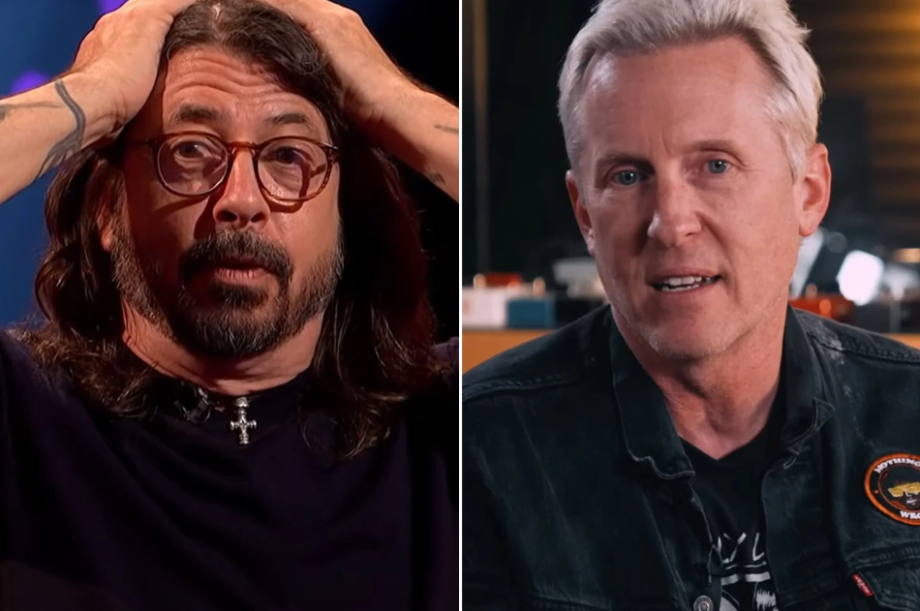
Josh Freese recently spoke about his exit from the Foo Fighters, shedding light on why he has chosen not to publicly speculate about the circumstances surrounding his dismissal. During an interview on Trunk Nation With Eddie Trunk, Freese explained that while he has his own thoughts about why he was let go, he has deliberately avoided sharing them due to the intense scrutiny that comes with the band’s global profile.
“Not really. I mean, I’ve got a couple of theories, but I feel like people are so interested in that because they’re such a massive band that I’m kind of hesitant to comment at all about it yet because anything I say is gonna be used and thrown around and republished and reposted. But, yeah, I loved my time I spent down there. I had a great couple of years with those guys,” Freese said.
He also addressed the timing of his departure and the highly publicized move that followed, as he rejoined Nine Inch Nails after Ilan Rubin left that band to join Foo Fighters. Freese stressed that the situation was not a planned exchange between the two groups but rather a coincidence driven by availability.

“As far as the drummer swap thing, it’s funny because it’s just coincidence the way it worked out. It’s not like there was a purposeful drum swap. And, actually, if Ilan, who was playing with Nine Inch Nails, who joined the band after I left in 2009, if he left Nine Inch Nails to go join — pick a band — Muse, I don’t know, Trent would’ve called me. It’s not like it was an intentional swap,” he explained.
Freese went on to describe how his return to Nine Inch Nails came together organically through his longstanding relationship with Trent Reznor, whom he previously worked with from 2005 to 2009.
“It’s like when Trent needed a drummer, when Ilan split, he was, like, ‘Well, I’m gonna call Freese.’ And he called me and I was, like, ‘Hell yeah.’ Because I missed working with Trent and I loved working with him the last time I did it back between ’05 and ’09. And it just so happens to be he needed a drummer because his drummer was going to join the band that I just was let go from,” Freese continued.

“So it was just completely coincidence that that that’s the way that that worked. You know what I mean? It wasn’t premeditated, it wasn’t worked out by anybody. It was just kind of, like, ‘Well, I need a drummer. Sure, I’ll call Josh. Oh, how funny. I’m calling Josh because I need a drummer, because my drummer just left to work with the band that Josh just left.’ So it was just pure coincidence.”
Freese’s departure from Foo Fighters surprised many within the music community. According to Modern Drummer, the firing occurred nearly two years to the day after he officially joined the band on May 21, 2023, stepping in following the death of Taylor Hawkins. Freese publicly confirmed his dismissal in May 2025 via Instagram, revealing that the band told him they were “going in a different direction with their drummer.”
The moment marked a rare turning point in Freese’s decades-long career. As reported by Ultimate Classic Rock, it was the first time in his 40 years as a professional drummer that he had been fired from a band. Despite the unexpected nature of the decision, Freese expressed understanding and support for Foo Fighters’ choice, noting that his long-standing freelance career left him open to new opportunities.
In subsequent interviews, Freese offered additional perspective on the split. He suggested that challenges with Foo Fighters’ management played a role, according to Ultimate Guitar, and acknowledged that the band’s music “wasn’t [what] I really resonated with.” He also admitted feeling added pressure while filling the role previously held by Hawkins.
The subsequent drummer move drew widespread attention. In July 2025, Freese officially rejoined Nine Inch Nails for his second tenure with the band, while Ilan Rubin transitioned to Foo Fighters, as noted by Ultimate Classic Rock. Freese praised Rubin as a “phenomenal drummer” well-suited for the role, describing the situation as unbelievable—an assessment consistent with his insistence that the exchange was purely coincidental rather than calculated.