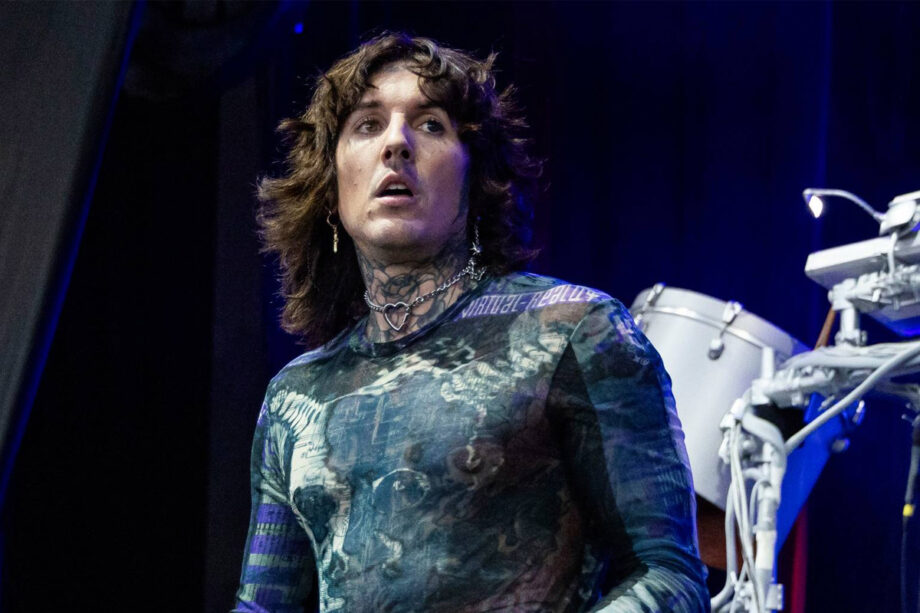
Bring Me The Horizon frontman Oli Sykes has opened up about the internal conflict he faced when considering whether to censor graphic and potentially misogynistic lyrics from the band’s 2006 debut album Count Your Blessings during recent throwback performances.
In a candid interview, Sykes discussed the dilemma of revisiting the band’s early material. When asked if there were any lyrics from the album he felt uncomfortable performing in the present day, he acknowledged the struggle: “Yeah. I mean, that was the main thing I was like, ‘Do we censor some of this? Do we like change the lyrics?’ Obviously some stuff that could be like, you know, interpreted as misogynistic. Obviously at the time when we were like 16 writing it, I wasn’t thinking about it. I was listening to bands like Glassjaw and stuff that were saying this stuff. I just thought that’s cool. I never like thought about it.”
Sykes highlighted one particularly jarring lyric as an example of the album’s shock value: “I think the most confusing one is ‘mouth tastes like corpse of every pregnant teen.’ I’m just like, what does it mean? Like, what could that possibly mean? It’s just west as f*ck. Yeah, there’s a couple there.”

However, the frontman ultimately decided against sanitizing the material. He argued that the decision becomes philosophically impossible when considering the album’s broader themes. He explained: “But then like as soon as I started, I could sense this could take out cuz this cuz this is not cool. Do you know what I mean? But then we’ve got a song about me helping and assisting with the suicide of my partner’s father, who I knew abused her and stuff like that. So it’s like the song’s about eradicating the human race. There’s all this like just it’s kind of like how long is a piece of string kind of situation where like, where do you stop?”
To understand Sykes’ hesitation, it’s important to recognize the album’s place in the band’s history. Wikipedia notes that Count Your Blessings was Bring Me The Horizon’s debut album. When it was released in 2006, the lyrics drew significant criticism for being intensely focused on heartbreak, anger, and bleak themes. Sykes was only 16 years old at the time and heavily influenced by bands like Glassjaw, whose provocative lyrical style he admired and emulated without fully considering the implications of the content.
The album became most associated with the band’s early controversial and abrasive image. It established a sonic and lyrical foundation that would eventually evolve as Sykes matured as a songwriter and public figure. Over the years, the band’s approach to lyricism became more varied and less one-dimensional. However, Count Your Blessings remains a defining artifact of their raw, unfiltered early era.

In a significant move, Bring Me The Horizon announced a re-recorded anniversary version of the album in 2024, titled Count Your Blessings: Repented. Rock Sound reported that Oli Sykes shared footage of himself re-tracking vocals for the project. This gave fans a glimpse into the re-recording process. This initiative represents more than just a technical refresh—it’s an opportunity for Sykes to revisit his younger self’s work with the perspective and maturity he’s gained over two decades.
The re-recording project demonstrates the band’s willingness to engage with their past while acknowledging their evolution as artists. Rather than erasing or censoring the original material, the Repented version allows Sykes to reinterpret the songs with his current vocal approach and artistic sensibility. It creates a bridge between the raw energy of the original and the refined artistry of the present day.
Sykes’ candid discussion about the censorship dilemma reflects a larger conversation within the music industry about how artists should handle problematic content from their past. Alternative Press highlighted that the re-recording of Count Your Blessings has positioned the band at the center of this debate. Sykes chose transparency over sanitization.
Rather than pretending the controversial lyrics don’t exist or simply removing them, Sykes has opted to acknowledge the complexity of the situation. He recognizes that some lyrics are genuinely problematic while others are simply provocative or poorly conceived. This nuanced approach suggests that artistic growth doesn’t require erasing history. Instead, it requires engaging with it honestly and allowing audiences to understand the context of an artist’s evolution.