

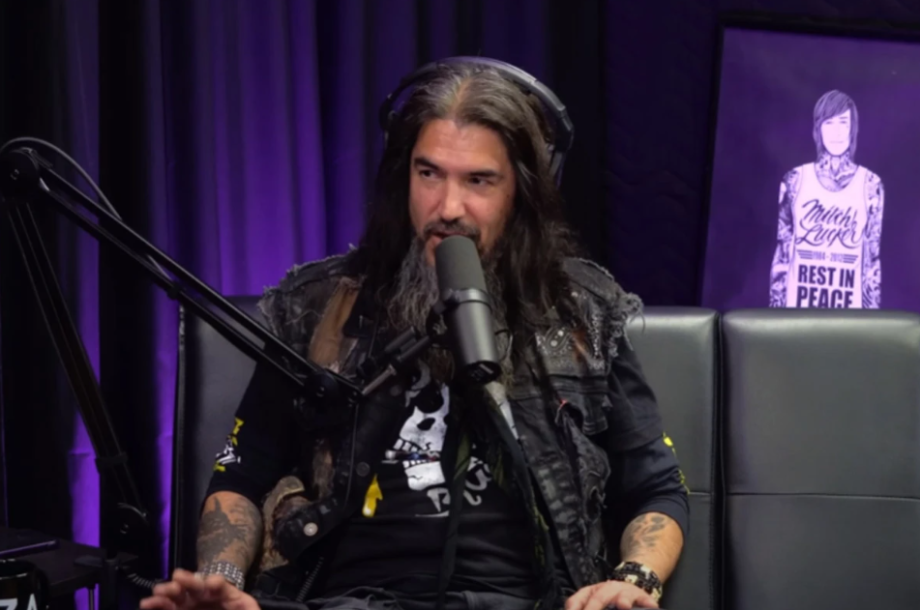
Robb Flynn, frontman of Machine Head, has recently opened up about the band’s long-term future. As reported by Rolling Stone, Flynn shared that he believes every project has a natural endpoint and that Machine Head shouldn’t continue endlessly.
He spoke about the value of recognizing when it’s time to move on and the importance of ending something before it loses its impact. “I don’t want this to go on forever, it shouldn’t go on forever,” Flynn said. “It needs to end. Things end. I don’t know when that is for us… I’m always thinking in the back of my head like, ‘It should probably end soon…?’”
Flynn compared this mindset to other successful creative works that end at the right moment. He warned that lingering too long can diminish what was once powerful.

“You don’t want to be the old guys still hanging around at the party when the party ends,” he continued. “Like Stranger Things! It’s a phenomenon, right? But it’s ending. I hope I reach the point where, when the time comes, we step away gracefully.”
These reflections arrive during a pivotal period for Machine Head. According to Wikipedia, the band formed in 1991 in Oakland, California, marking more than three decades as a staple of the heavy metal genre. Flynn, the band’s founder, remains its sole original member after departing the thrash group Vio-lence due to creative differences.
Machine Head’s evolution over its 34-year run has included numerous lineup changes and stylistic shifts, as highlighted by Louder Sound. Throughout it all, Flynn has remained the creative anchor shaping the band’s direction. Their most recent release, Unatoned (2025), continues their tradition of merging heavy foundations with experimental ideas.

Flynn’s staying power is particularly striking in light of early doubts. As recounted by Guitar World, a record executive once claimed Flynn would last only five years in the industry. Instead, he has gone on to build one of metal’s most enduring careers. Machine Head has earned significant acclaim over the years, including a Grammy nomination for The Blackening (2007), which reached #54 on the US Billboard chart.
As the band continues to maintain a dedicated fanbase and evolve creatively, Flynn’s recent comments indicate a thoughtful consideration of Machine Head’s legacy. His outlook underscores the importance of ending on the right note and reflects the wisdom gained from decades of artistic persistence.