

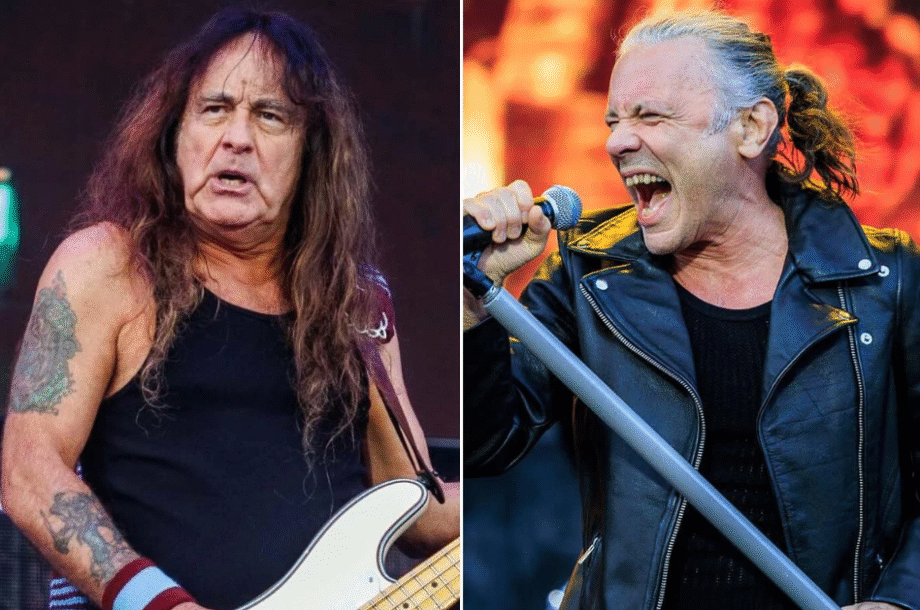
Steve Harris, Iron Maiden’s bassist and chief songwriter, has spoken candidly about his early uncertainty surrounding Bruce Dickinson’s return to the band. In a recent discussion featured on Music Radar, Harris admitted that although Dickinson’s comeback ultimately proved beneficial, he wasn’t fully convinced it was the right move at the time.
Despite his hesitation, the reunion went on to revitalize the group’s creative chemistry. “When Bruce came back it was a wonderful thing to a certain degree,” Harris said. “But I wasn’t a hundred per cent sure of the reasons behind it. So I was like, ‘Well, okay, let’s see.’ And it was great. We did a great tour, and from then on it was alright. It’s been great ever since. But at the time, I’ll be honest, I wasn’t sure.”
Harris explained that age and experience helped him move beyond those initial concerns. He noted that working through disagreements becomes easier over time, especially when long-term collaboration is at stake.

“You have to put things to one side,” he continued. “I think the older you get, the easier it is to deal with, in the sense that you just bite your tongue and get on with it. You don’t let things get bogged down where they might have done a few years before.”
The bassist also discussed the complexity of working with strong individual personalities. He emphasized that Dickinson’s distinctive qualities—both musically and personally—have been essential to Iron Maiden’s identity.
“People are tough to live with anyway. I mean, everyone is,” Harris said. “So you just have to work out what works for everybody. And I think with a band, you just learn when to leave people alone. Bruce is unusual, put it that way. Which is probably what makes him so good. He’s got an unusual quality to his voice. But it’s difficult to talk about other people and analyze what they are or what they’re not.”

His honest reflections shed light on the emotional and professional challenges surrounding one of heavy metal’s most iconic reunions. Understanding the timing helps explain Harris’s hesitation and the band’s subsequent resurgence.
Dickinson officially rejoined Iron Maiden in February 1999, according to Ultimate Classic Rock, with the announcement made on February 10. His return, which also brought guitarist Adrian Smith back into the lineup, ended the Blaze Bayley era that began in 1994. The group then became a six-piece, retaining Janick Gers.
This reunion set the stage for a major creative rebirth. Louder Sound reports that the first album after Dickinson’s return was Brave New World, released on May 29, 2000 as the band’s 12th studio record. Its success proved that Harris’s initial doubts had been unnecessary, as the album reestablished Iron Maiden as a dominant force in metal.
The acclaim surrounding Brave New World and the tours that followed confirmed the strength of the renewed lineup. Loudwire notes that Dickinson’s powerful vocals and commanding stage presence brought new energy to the band and its global audience. The tour Harris referenced became a highlight in Maiden’s storied career, reinforcing their reputation as one of metal’s most enduring acts.
More than twenty years later, Harris’s comments reveal the personal growth involved in sustaining a long-running creative partnership. His shift from skepticism to acceptance underscores the value of patience, mutual respect, and willingness to adapt—qualities that ultimately helped Iron Maiden thrive after Dickinson’s return.