

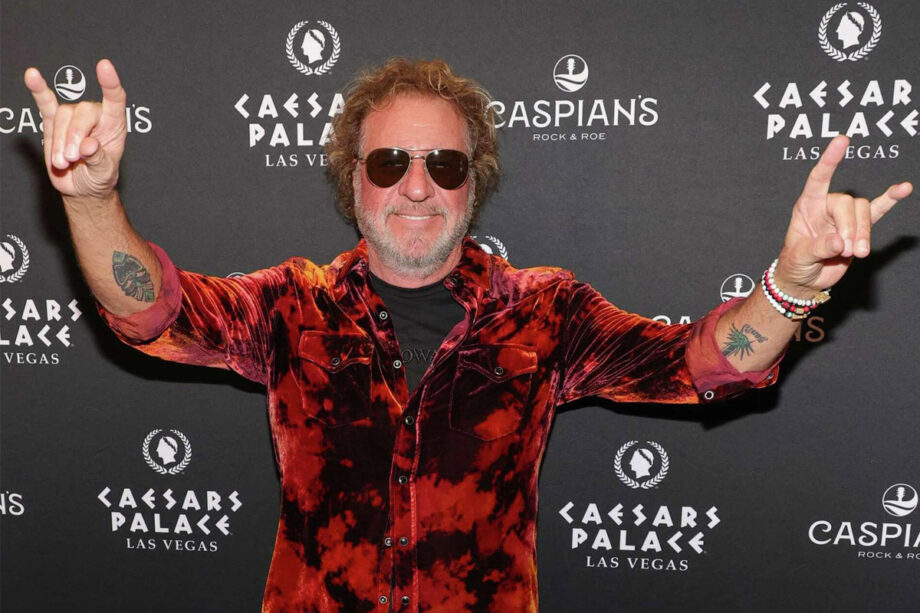
Rock legend Sammy Hagar recently shared the compelling backstory behind his classic anthem “There’s Only One Way to Rock” in an Instagram video. He revealed that the song was born from pure frustration with a San Francisco radio station’s rejection of his music.
Around 1982, a local San Francisco radio station called “the Rock of the Bay” refused to play his song “I’ve Done Everything for You.” They dismissed it as too heavy. However, when Rick Springfield recorded a lighter version of the same track, the station immediately added it to their rotation. This rejection sparked Hagar’s creative response.
“So, they wouldn’t play it, so I wrote this song called ‘One Way to Rock’ and say ‘You call yourselves the rock of the bay, [but] there ain’t no…'” Hagar explained in the video before demonstrating the iconic riff on guitar. “Writing that song, it was just all about writing that riff. Songs like that just write themselves. Sometimes you just pick up your guitar and it happens.”

The track became far more than just a response to radio gatekeeping. It evolved into one of Hagar’s most enduring solo classics and a concert staple that transcended his solo career.
“There’s Only One Way to Rock” was released on Hagar’s sixth studio album Standing Hampton on January 6, 1982, through Geffen Records, according to Wikipedia’s Standing Hampton entry. This marked a significant moment in Hagar’s career as it was his first album following his departure from a previous chapter in his musical journey. The song’s straightforward, no-nonsense approach to rock and roll resonated with audiences and radio programmers alike, proving that Hagar’s defiant anthem had struck a nerve with listeners who shared his philosophy about authentic rock music.
The album’s success demonstrated that Hagar’s frustration with industry gatekeeping had channeled into something genuinely powerful. Rather than fading as a one-off protest song, “There’s Only One Way to Rock” became a defining moment in his solo catalog. It established him as an artist unafraid to challenge the status quo of the music industry.

Perhaps the most remarkable testament to the song’s quality came through its adoption by Van Halen. As Hagar noted in his Instagram video, “Of all my solo songs, Van Halen played this song in every set. Eddie loved this song. We had a real cool arrangement, we did a dual solo.” This wasn’t merely a song performed occasionally—it became a permanent fixture in Van Halen’s live performances. The song showcased Eddie Van Halen’s genuine appreciation for the track.
The dual guitar solo arrangement between Hagar and Eddie Van Halen transformed “One Way to Rock” into something even greater than its original conception. The song’s presence in every Van Halen setlist speaks volumes about Eddie’s respect for the composition and Hagar’s artistry. It elevated the track from a radio station revenge anthem to a rock and roll institution.
Hagar’s song emerged from his broader frustration with the music industry’s tendency to overcomplicate rock and roll, as noted in Houston Eagle’s rock history coverage. The track represented a return to basics—a blunt, straight-ahead celebration of loud, unapologetic rock music without pretense or compromise. This philosophy resonated deeply with rock audiences who felt similarly alienated by radio stations’ increasingly cautious programming decisions.
The song’s enduring legacy proves that Hagar’s instinct was correct. “There’s Only One Way to Rock” and his other classic “Rock Candy” remain what Hagar himself describes as “just classic hard rock songs.” These are timeless tracks that refuse to apologize for their intensity or their uncompromising approach to the genre. What began as a response to one radio station’s rejection became an anthem for everyone who believed that rock and roll should never be watered down or softened for commercial appeal.