


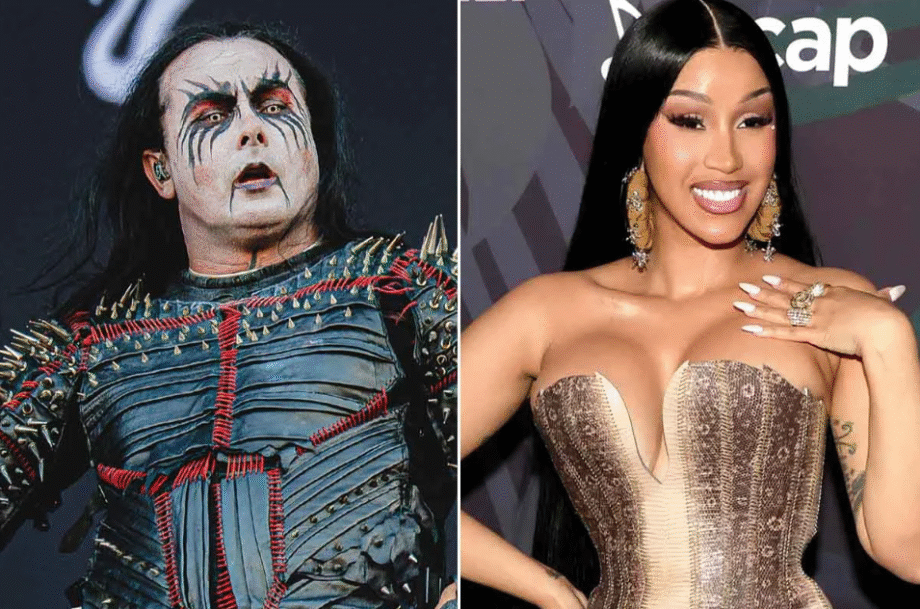
Dani Filth, frontman of extreme metal band Cradle of Filth, has faced criticism from fans after sharing images of rapper Cardi B wearing merchandise from the band’s collaboration with fashion house Vetements. The images were first posted by The Oracle Management on Instagram.
The controversy began when Filth reposted a carousel of photos originally shared by the band’s management group, The Oracle Management. These photos featured Cardi B in a Cradle of Filth T-shirt maxi dress from their Vetements collaboration. The repost quickly drew backlash from fans, many of whom questioned whether the rapper genuinely supported metal music.
“This is embarrassing,” one Cradle of Filth fan commented on the post. Other fans voiced similar doubts about the authenticity of the collaboration. “I wonder if she know any Cradle of Filth songs lmao,” another fan wrote.

A third fan compared the situation to past celebrity fashion controversies within the metal scene. “It’s like Khloe Kardashian wearing the Slayer shirt,” another Cradle of Filth fan commented.
The incident highlights a growing trend of luxury fashion brands collaborating with metal bands—a phenomenon that often divides music communities. According to Mr Porter, Vetements released a capsule collection with Cradle of Filth featuring oversized paneled printed cotton jersey T-shirts and hoodies inspired by classic concert merchandise, showcasing the band’s gothic logos and signature imagery.
This collaboration marks a significant shift from traditional band merch pricing. Patron of the New reported that the Cradle of Filth x Vetements Iconic Nun Metalized T-Shirt retails for $2,240, while T-shirt dresses are sold for $1,940 at select retailers. The collection embraces Vetements’ signature oversized and deconstructed silhouettes, featuring designs referencing Cradle of Filth’s “Iconic Nun” artwork—a nod to the band’s controversial 1998 album cover.

The backlash toward Cardi B reflects a familiar pattern in metal culture. Loudwire noted that there is no public evidence or statement confirming Cardi B’s interest in metal or rock music.
The incident seems to be more of a fashion statement than a reflection of musical taste. Reactions within the metal community were mixed. Some questioned her credibility as a fan, leaving comments such as “Name three songs” and “What’s her favorite album?”, while others defended her right to wear the merch without being subject to gatekeeping.
This controversy echoes previous instances of celebrities wearing metal band apparel. Figures like Kendall Jenner and Bella Hadid have faced similar criticism for sporting vintage band shirts without apparent connections to the music. In each case, fans debated whether these acts represented cultural appropriation or genuine appreciation, often accusing the celebrities of superficial fandom.
The recurring “Name three songs” challenge underscores ongoing tensions within metal and punk subcultures surrounding authenticity and credibility. While these debates often center on accusations of inauthenticity, they can also bring broader visibility—and occasionally new listeners—to niche musical genres, creating a double-edged effect for the communities involved.