


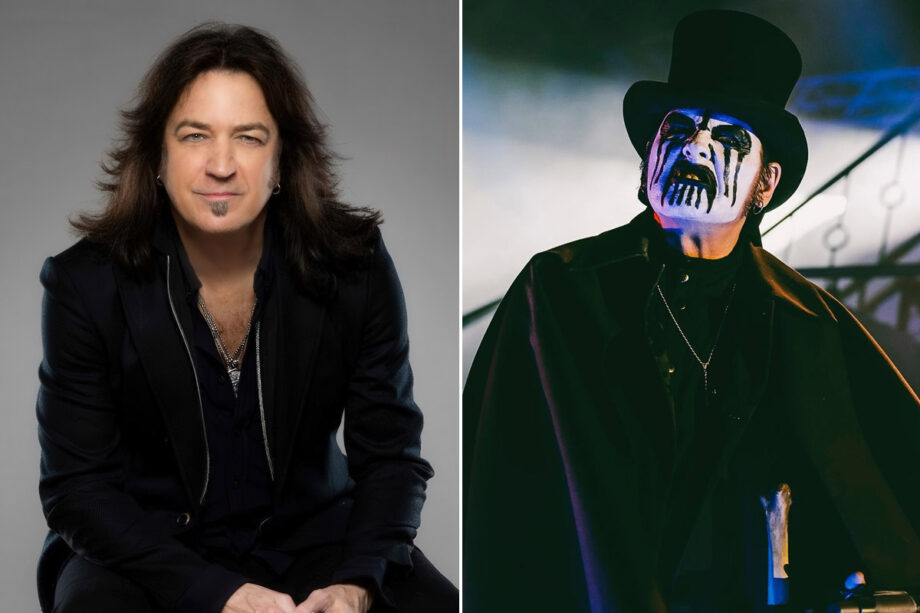
Stryper frontman Michael Sweet was asked whether he would ever consider playing guitar for King Diamond’s band if the opportunity arose and the numbers were right. He explained why he would say no.
“You mean, like be in [King’s] band? I don’t know that I would do that. I would probably safely say no, I wouldn’t do that. I would think that he would probably say the same thing if we asked him to come and sing for Stryper. I could be wrong.”
“But it’s nothing against him as a person, but just I don’t agree with anything spiritually in terms of what he sings about versus what we sing. It’s a polar [opposite]. So it’s, like, I would feel like I’m basically betraying my, my faith, betraying myself and what I stand for.”

“Now, some people might not agree with that, and that’s okay. But now, would we go tour with him and play with Mercyful Fate or King Diamond — Stryper and Mercyful Fate? Absolutely. 100%, 100%.”
Sweet’s answer reflects the sharply contrasting identities that Stryper and King Diamond have developed throughout their careers. While he ruled out joining King Diamond’s band, he made clear that he would be open to sharing a concert bill with the Danish metal vocalist and his bands.
The band began as Roxx Regime before adopting the Stryper name in 1983 and becoming one of the first openly Christian heavy metal acts to gain mainstream recognition.

Michael Sweet has been central to that identity from the beginning. Michael and his brother Robert helped found the band, with Michael serving as its lead singer and guitarist while the group used its music to deliver an explicitly Christian message.
King Diamond built a very different musical identity through Mercyful Fate and his solo band, King Diamond. His work became closely associated with occult and Satanic imagery, themes that helped distinguish both projects from Stryper’s faith-based approach. Metal Archives describes Mercyful Fate’s early material as foundational to the occult side of King Diamond’s legacy.
King Diamond has also offered a more nuanced description of Mercyful Fate’s subject matter. In an interview with Louder Sound, he said, “In Mercyful Fate I was talking about myths and legends.” His public image and lyrics, however, have remained strongly connected to darker occult themes.
Sweet’s comments do not suggest a planned collaboration between the musicians. Instead, they draw a clear line between participating in King Diamond’s music and appearing alongside it at a festival or on a joint tour. That distinction allows Stryper to share a stage with King Diamond or Mercyful Fate without compromising the beliefs Sweet says define the band.