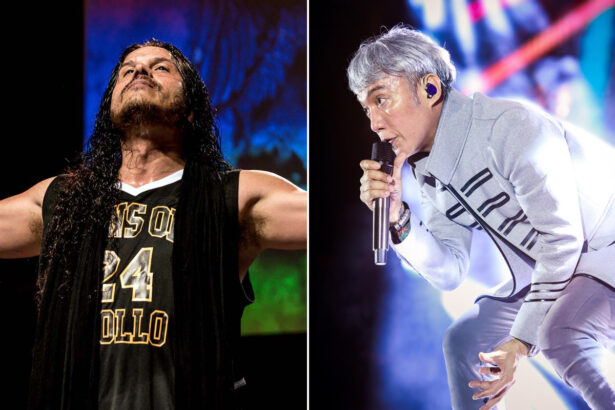


My Chemical Romance’s September 12, 2026 stop at the Alamodome in San Antonio played less like a routine tour date and more like a major late-tour statement. The night’s biggest surprise came when King Diamond joined the band during “Mama,” turning an already theatrical performance into an unexpected meeting between different generations of rock and metal.
The band delivered a long, career-spanning set that leaned heavily on The Black Parade while still making room for later material and fan favorites. The structure worked well for such a large venue, balancing familiar songs with enough variety to keep the performance moving.
King Diamond’s appearance during “Mama” became the clear theatrical peak of the night. Gerard Way introduced him before the two worlds collided onstage, and the collaboration fit naturally with the song’s dark and dramatic character. Rather than feeling like a guest appearance added simply for attention, it strengthened the theatrical side of the concert.

The substantial main set and additional second-stage section also helped maintain momentum. My Chemical Romance avoided building the entire night around one nostalgic moment, instead using different parts of their catalog and the production itself to give the show a sense of progression.
With nearly 50,000 fans expected at the Alamodome, the scale played an important role in the atmosphere. This was closer to a major city-wide rock event than an ordinary concert, and the size of the audience gave the biggest moments additional weight.

That was especially noticeable during the King Diamond appearance. A surprise like that might have been memorable in any venue, but inside a stadium-sized setting, it became one of those moments designed to generate an immediate reaction from tens of thousands of people.
The concert was clearly designed as a large-scale production, with distinct sections and a finale suited to the size of the venue. My Chemical Romance used theatrical staging, changes in presentation, and surprise casting to make the performance feel more personal despite the natural distance created by such a large space.
The King Diamond segment was again the strongest example. His presence added another layer of dark theatricality to a band already known for dramatic visual presentation. Combined with the size of the crowd and the production surrounding the performance, it gave San Antonio something beyond a standard stop on the tour.
There is not enough detailed technical information to make strong claims about every element of the sound or production, but the overall design appears to have succeeded in creating spectacle without allowing the staging to completely overshadow the songs.
The wider importance of the Alamodome show comes from the way My Chemical Romance connected its past with hints about its future. The heavy presence of The Black Parade kept the band’s most celebrated era at the center of the night, while suggestions of new material pointed toward what could come next.
King Diamond’s appearance added another dimension. It connected My Chemical Romance’s theatrical alternative-rock identity with an older tradition of metal showmanship without making the combination feel forced.
That balance ultimately defined the San Antonio performance. It celebrated the band’s history without becoming entirely dependent on nostalgia, while its scale, theatrical presentation, and unexpected guest gave the night its own identity. More than another large tour date, the Alamodome show demonstrated how comfortably My Chemical Romance can now operate on a stadium-sized stage while still leaving room for surprises.