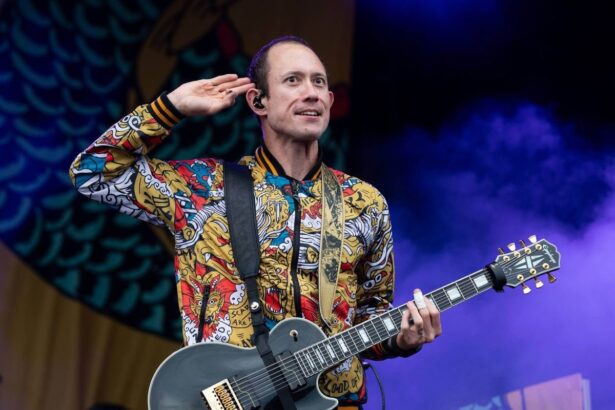
Steve Vai has explained how David Lee Roth’s approach to controlling Van Halen’s material benefited the band’s creative process, speaking on 101 WRIF. Vai said that having Roth as the final decision maker on songs prevented internal conflicts and allowed each member to focus on their role.
Vai discussed how different leaders manage their bands in different ways. He explained that Roth needed the guitarist and other musicians to bring finished music to him for consideration.
“Well, people run their ship differently,” Vai said. “Some people need good generals and lieutenants and this kind of thing that they can delegate to. And in the situation with Dave, he needed, for especially the guitarist, to bring music to the party.”

The guitarist described the practical system that developed around this arrangement. “So I, and the other guys too, would write and present the songs, and Dave would decide if he liked it and wanted to work on it or if it was shelved,” Vai continued. “So, this is how you do it. It’s nice to have an executive decision maker, because there’s no band arguing about whose song is gonna be used or any of that. And many other things, where it’s just like, ‘I don’t know, you gotta ask Dave.’ It lets you off the hook.”
Vai went on to describe Roth’s distinctive songwriting process. “Also, he was depending on myself and the band to bring music to him. He listened to it, if it struck a chord with him, he’d take the cassette and he’d get in his in Panama – which is that wild, wonderful red car that he has, convertible – and he’d have his driver drive around, and he’d sit in the back, listen and write lyrics to the demo. And then it would become a song.”
Vai’s comments came as part of a discussion about how Roth managed Van Halen’s creative output and his role in selecting the band’s material.

This approach gave Roth freedom to pursue his own musical vision while also pushing the band’s musicianship. Vai and the other band members brought riffs and songs to Roth, who would either approve or reject them. Once he liked a musical idea, Roth would take the material and develop lyrics and melodies to complete the song.
Roth’s creative method allowed him to work independently on the vocal and lyrical side of songwriting. When a demo struck his interest, he would listen to it in private, often while riding in his Panama convertible with a driver, and compose lyrics and melodies to fit the music. This separation of roles meant that Roth could add his artistic touch after the instrumental work was finished rather than working alongside the band in a traditional collaborative manner.
The system benefited the entire group by removing disputes over song selection. With Roth as the sole final decision maker, band members did not argue about which songs would be used or developed. This clear authority structure allowed each musician to contribute their skills without getting caught up in creative disagreements about direction or priorities.