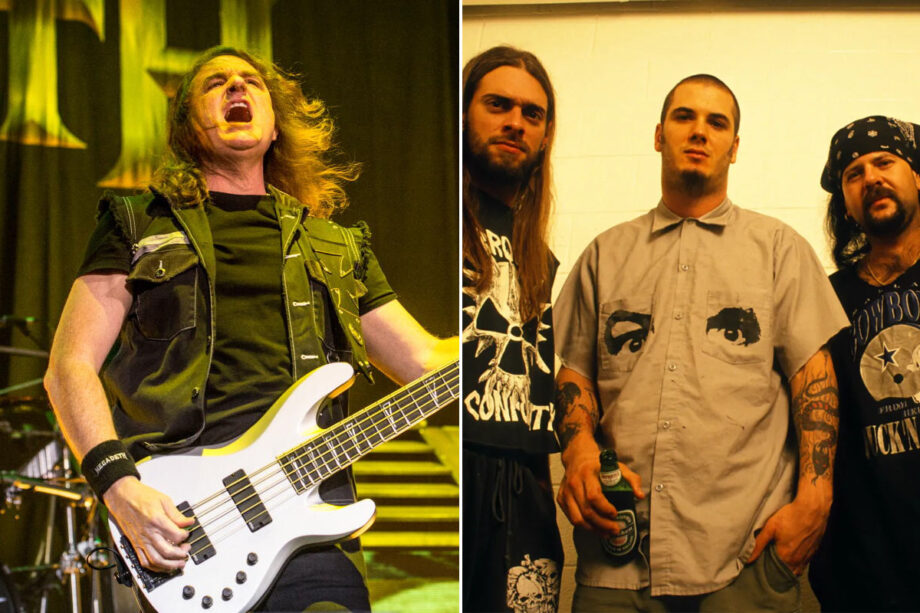
David Ellefson has explained how Megadeth kept its own sound during a time of rapid change in heavy metal, paying attention to emerging bands like Pantera without trying to copy them. He shared his thoughts in an interview with Eonmusic.
Ellefson discussed how the band stayed aware of what other acts were doing, both the bands ahead of them and the new voices coming up. He explained his approach to managing the band in a shifting musical landscape, where younger generations constantly demand new sounds.
“I always say Nirvana is always the nemesis of heavy metal, because of how, to some degree, the damage they caused in the heavy metal world,” Ellefson said. “They didn’t really affect our fan base. It more affected MTV, which was the loudspeaker for what was being marketed out to the fans.”

“But Pantera, as any new band that came after us, grunge, whatever, that was just the song of the next generation. There’s a new generation coming up. New music is always driven by young people. It just is. Young people are the ones crying out, screaming out for a new sound, a new voice.”
He compared his approach to investing in the stock market. “For me growing up, it was Kiss. When you become a professional and you’re now managing your business, your band, everything around it, you pay attention to what’s around. What are the guys ahead of us doing? What are the guys to the side of us doing? And what’s this new band Pantera behind us doing?”
“Suicidal Tendencies were kind of our brothers to the side. They were changing their sound a little bit. Slayer were our brothers to the side. Metallica, Iron Maiden were up front. Judas Priest, of course. You look what’s around, you pay attention, and you don’t chase what they do. You don’t try to do what they’re doing.”

“It’s like buying stocks in the stock market. As soon as your friend says, ‘Hey, I got a hot stock tip,’ it’s too late. You’ve already missed the wave. It’s more about just being aware of it. Megadeth was Megadeth. Pantera was a great new band, a great new sound. You could really see it connecting.”
Ellefson made these comments while discussing Megadeth’s approach to maintaining its identity through the 1990s, a period when the metal landscape shifted dramatically with the rise of grunge and new acts.
The 1990s brought major changes to heavy metal music and the bands that played it. Nirvana’s rise in 1991 marked a turning point in the music industry, forcing many hard rock bands off radio and MTV while album and tour sales dropped. Megadeth released “Countdown to Extinction” in 1992 during a peak moment for both MTV and thrash metal, but the early 1990s grunge scene made it a difficult time for the bands of the 1980s thrash metal era.
Pantera began as a glam-rock cover band in 1981 in Arlington, Texas, but became one of the most popular heavy metal groups of the 1990s. The band’s 1992 album “Vulgar Display of Power” established them as metal’s new rising stars and a potential heir to Metallica’s crown. In 1993, Pantera supported Megadeth on tour as both bands promoted their 1992 releases, with Pantera backing “Vulgar Display of Power” and Megadeth behind “Countdown to Extinction.”
Pantera’s ability to blend 1980s guitar-hero techniques with 1990s mosh-pit energy helped keep metal alive during the mid-1990s downturn. The band’s 1994 album “Far Beyond Driven” debuted at the top of both American and Australian Billboard charts and earned their first Grammy nomination, proving that heavy metal could still reach audiences even as grunge dominated mainstream radio.