

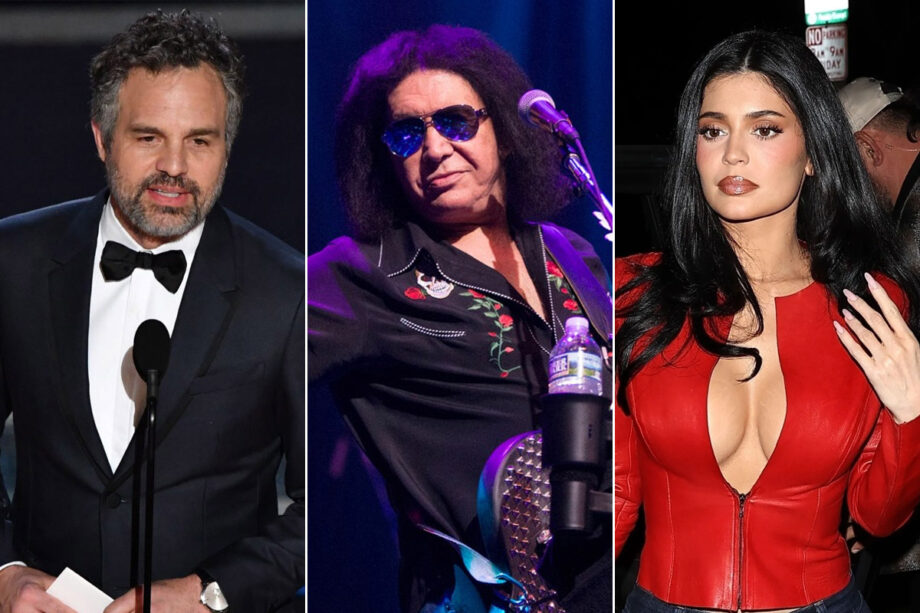
KISS icon Gene Simmons has criticized celebrities who use their platforms to espouse political views. He singled out actors Mark Ruffalo and Kylie Jenner for their public political commentary. Simmons expressed frustration with famous figures who leverage their celebrity status to influence political discourse, arguing that entertainment venues should remain spaces for art rather than activism.
When asked whether his freedom of intellectual thought has cost him work, Simmons acknowledged the reality of cancel culture. “Yeah, there’s such a thing as being cancelled. I have been canceled a little bit. But I’m blessed. I’m putting my hands together. When you get to a certain financial comfort zone, it doesn’t affect. But it’s offensive,” he stated. The KISS frontman emphasized that his financial security has insulated him from the worst consequences of public backlash. He views the phenomenon as fundamentally troubling.
Simmons positioned himself as a centrist freethinker willing to agree with either political party on specific issues. He expressed strong support for border security measures, stating, “I am a firm believer that the wall should be built, absolutely.” He drew a comparison to Vatican City, noting that the Pope’s residence is surrounded by walls for security purposes. He questioned the logic of opposing similar measures at national borders. “The previous pope who was a nice man and so on. I respected him said that it’s inhumane to have a wall between Mexico and America except for the fact that the Vatican has a massive wall around it for the same reason that we should. Border security,” Simmons explained.

Despite his own willingness to voice political opinions, Simmons expressed disdain for celebrity activism in general. “I do have a point of view as a performer myself. You get up on stage, it’s the place for art. I’m really not interested in famous people espousing their political or beliefs. I don’t want to go to Mark Ruffalo and this actor and find out what his sense is of our foreign policy in the same way that I don’t know what Kylie Jenner’s political points of views are,” he said. This stance reveals a fundamental contradiction in Simmons’ position. He demands that celebrities refrain from political commentary while simultaneously engaging in it himself.
Simmons’ history with political discourse extends back several years, demonstrating a pattern of evolving views on contentious issues. In 2018, he endorsed several Trump administration policies, including the border wall proposal and the relocation of the U.S. embassy to Jerusalem. He framed these positions as practical governance matters rather than partisan politics. However, his views shifted considerably over time, particularly regarding the former president himself. By 2022, Simmons had become critical of Trump, suggesting that the former president’s tenure had emboldened conspiracy theorists and damaged the Republican Party’s credibility.
The KISS legend has also demonstrated flexibility on other major policy questions. In January 2021, he refuted Trump’s claims of election fraud on social media, citing the dismissal of numerous lawsuits across multiple states by judges appointed by both parties. Later that same year, he expressed strong support for COVID-19 vaccinations and suggested that mask mandates should become law. He implied that the Trump administration bore some responsibility for the pandemic’s severity. These positions underscore Simmons’ self-identification as a centrist willing to critique both political parties when he believes circumstances warrant it.

More recently, Simmons has advocated for Americans to depoliticize their daily interactions and stop worrying about their neighbors’ beliefs. He has told entertainers to “do your art and shut up,” arguing that celebrity status does not automatically qualify someone to influence political views. “Take a pill, shut up and stop worrying what your next-door neighbor believes or doesn’t believe. It’s their America too,” he has stated in various interviews. This message reflects a broader frustration with what he perceives as excessive politicization of entertainment and public discourse. He continues to voice his own political positions on major issues.
The contradiction inherent in Simmons’ stance highlights the broader tension in contemporary American culture regarding the role of public figures in political debate. He criticizes celebrities for political commentary while engaging in it himself. His insistence that performers should focus on their art while simultaneously advocating for border walls and other policy positions suggests that his objection may be less about celebrity political speech in principle. It appears to stem more from disagreement with the specific political views held by figures like Ruffalo and Jenner.