

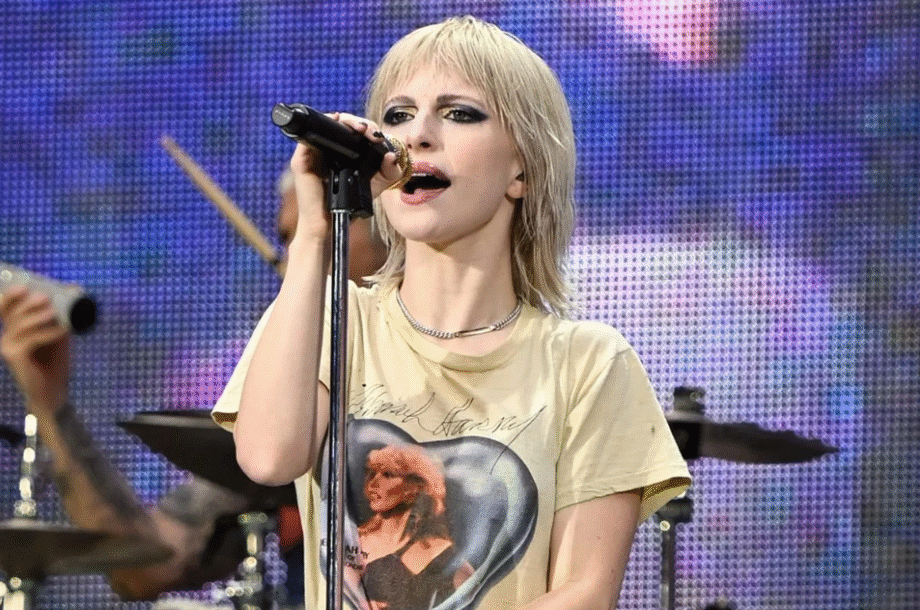
Hayley Williams recently spoke about her changing relationship with Paramore and her need for personal growth. During an appearance on Popcast, she shared open and thoughtful reflections about the band’s longevity and her desire to break down what Paramore has become.
When the host mentioned that it must be gratifying to see Paramore’s influence on artists like Taylor Swift, Williams offered a deeply introspective reply. “I’m still metabolizing it. I’m still seeing it play out. I don’t know when people are going to get sick of us, because I’ve been sick of us like twenty times by now,” Williams said.
She elaborated on her need for artistic growth and personal transformation. “But I’m so honored to get to do it, and I’m also very relieved to get to try something new and flex different muscles and be like, ‘You gotta deconstruct this, this system that you are a part of on multiple levels,’” she continued. “Like, I gotta tear down Paramore the same way I had to tear down my evangelical upbringing. I have to do it for me to grow up, because I don’t want to be stuck in a traumatized 18-year-old’s headspace for the rest of my life. I’m 36, it’s not cute anymore.”

Williams’ reflections follow more than two decades with the band she helped define from its earliest days. According to Wikipedia, Paramore was formed in 2004, and Williams has been the only consistent member through numerous lineup changes. She currently performs with drummer Zac Farro and guitarist Taylor York, who joined in 2007. The band has evolved from its emo and alternative rock beginnings to achieve major success with albums like Riot! and Brand New Eyes.
Williams’ wish to “flex different muscles” has already taken shape through her recent creative projects. Wikipedia notes that she released her solo album Flowers for Vases / Descansos in 2021 and has collaborated with artists such as Taylor Swift and Turnstile—further exploring creative avenues outside of Paramore. Her comments about deconstructing the band mirror its history of transformation and reinvention. Williams’ readiness to challenge the systems she’s part of reflects the maturity that comes from years of balancing artistry with integrity.
Her candid remarks about moving beyond a “traumatized 18-year-old’s headspace” echo the experiences of many artists who began young and now seek evolution beyond their early selves. By comparing the dismantling of Paramore to confronting her evangelical past, Williams underscores a deep dedication to growth—even when it means reexamining the very foundation of her success.