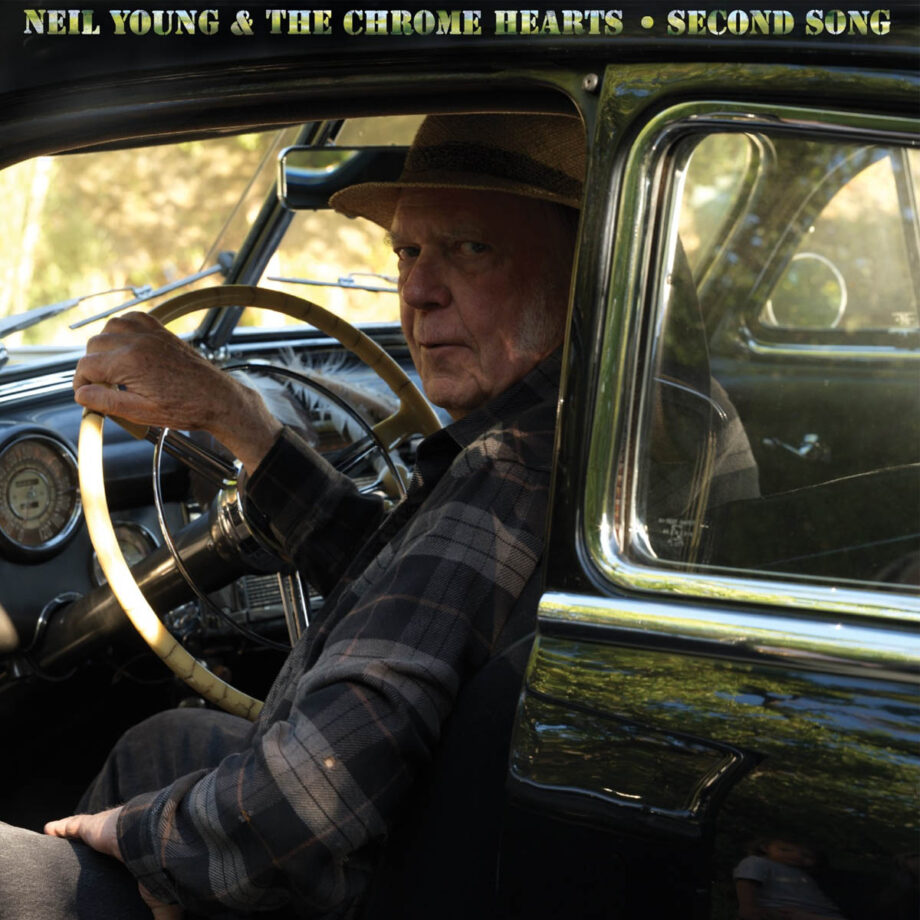
Second Song is Neil Young’s late-career reckoning with time, and it plays less like a reinvention than a recalibration. It’s a small landmark in a very long catalog — uneven in places, but it strikes gold often enough to matter.
At 80, Young still treats his output as a living archive, and this album belongs to that ongoing self-assessment. It’s his second with the Chrome Hearts, the band he put together in 2024 while Crazy Horse was on a break. Where Talkin to the Trees carried political anger, this one turns inward, toward personal reflection and the passage of time.
I hear it as part of a long arc rather than a standalone event. It’s a tender, direct conversation between the artist Young was and the one he has become, reaching back to the gentle country-rock of Harvest Moon, Comes a Time and Prairie Wind, with a twilight mood built around the roads already travelled.

Musically, the record is restrained and acoustic-leaning, more intimate than most listeners expect from him. Gentle instrumentation, long runtimes and a single purpose hold it together. The Chrome Hearts can still summon Crazy Horse’s monolithic stomp, but here they lean on grace and sensitivity, closer to the Stray Gators’ acoustic sway.
Even the harsher readings agree on the shape of the thing: classic Young idiosyncrasy seen through eighty years of living, short on spark but never on craft.
Reception is broadly positive without being unanimous, and the disagreement is about consistency rather than intent. Plenty hear a great record that belongs in the upper tier of his discography — a late-career classic, and a deeper, more rewarding listen than its predecessor. The cautious takes focus on pacing and uneven standout material: an album that only occasionally strikes gold, with at least one harsh rejection sitting against the warmer readings.

Listener reaction mirrors that split. An aggregate score of 3.6 puts praise for emotional depth right next to worries about momentum. Those who value atmosphere call it mellow, meandering and mesmerizing; those who want sharper edges find it flat.
For metal and metalcore listeners, Second Song matters less as a genre fit and more as proof that a legacy hard-rock figure can age without dropping volume, tension or emotional directness. The band’s ability to carry real weight while leaving room for tenderness should appeal to anyone who cares about dynamics and earned gravity. It isn’t a metal record, though, and it sits closer to late-period Americana than to metal’s core vocabulary.
Its value for those listeners comes down to craftsmanship and longevity. This is a veteran working with restraint instead of force, and a useful example of how heaviness, patience and emotional weight change across a long career.