

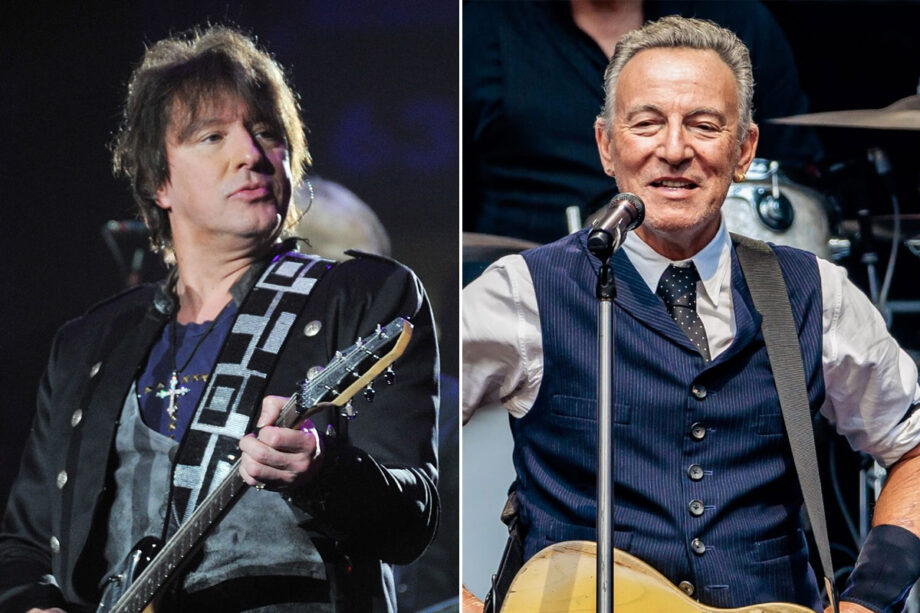
Former Bon Jovi guitarist Richie Sambora has fiercely rejected music journalist Mitch Lafon’s social media post claiming that Bon Jovi “booted Bruce Springsteen to the curb” in 1987. Sambora firmly shut down the fabricated rivalry narrative while reaffirming his profound, lifelong hero worship for the legendary New Jersey rocker.
Lafon had previously posted: “January 17th 1987, The great Bon Jovi boots Bruce Springsteen to the curb and FINALLY becomes the #1 album in America. If I remember correctly, everybody was Wild In The Streets in celebration of this blessed day.”
Sambora’s initial reply emphasized his deep respect for Springsteen. He stated: “Hey….nobody boots Bruce to the curb…a lifetime of dedication to his craft, commitment to his fans, a songwriter and performer that changed peoples lives. Profoundly…for all time.. certainly mine. So not here..”

When Lafon continued to push the narrative, Sambora responded more forcefully and called out the journalist directly. “Whoever you are right nobody does. The week before he was no.1. I got hero worship for the guy. You’re making something outta nothin.. dude, trouble maker man. No need. Absurdly not true. Stay off my site filling people with lies.. thank you,” Sambora wrote. His message made clear that the claim was not only disrespectful but factually inaccurate.
The dispute centers on the chart performance of Bon Jovi’s landmark album during the mid-1980s. Bon Jovi’s third studio album, “Slippery When Wet,” was released on August 18, 1986. The album became a commercial juggernaut that dominated the charts throughout 1986 and 1987.
The album spent eight non-consecutive weeks at number one on the US Billboard 200 chart. It remained in the top five for an impressive 38 weeks total. “Slippery When Wet” was named Billboard’s best-selling album of 1987 and has since achieved 12-times platinum certification in the United States. The album ranks among the best-selling albums of all time in America.

The album’s success was driven by a string of massive hit singles that defined the era. “You Give Love a Bad Name” became Bon Jovi’s first number-one single in November 1986. “Livin’ on a Prayer” followed, topping the charts for four weeks in February 1987. The power ballad “Wanted Dead or Alive” also became a substantial Top 10 hit, peaking at number seven on the Billboard Hot 100. This trio of chart-toppers made “Slippery When Wet” the first rock album to produce three hits in the top ten, cementing Bon Jovi’s status as one of the dominant forces in rock music during the late 1980s.
Sambora’s passionate defense of Springsteen underscores the mutual respect that exists among New Jersey’s rock royalty. Rather than viewing chart success as a competitive battle between artists, Sambora’s response emphasizes that both Bon Jovi and Springsteen were thriving during this period. Each contributed to the rich musical landscape of the era. The guitarist’s willingness to publicly correct the record demonstrates that the narrative of manufactured rivalries has no place in the legacy of these iconic musicians. Springsteen’s influence and artistry remain beyond reproach in Sambora’s eyes.