

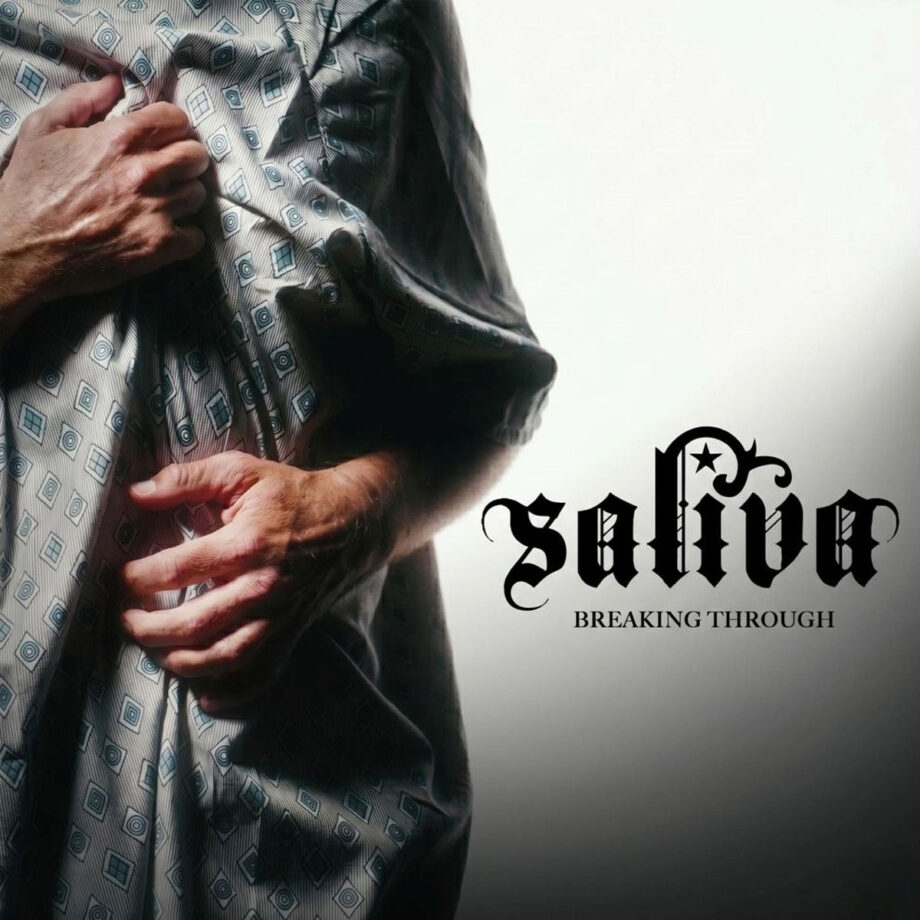
Saliva’s Breaking Through is a confirmed release dated August 14, 2026, with a solid public footprint covering its existence, title, label, and 13-track listing. What remains thinner is authoritative coverage of full credits, in-depth interviews, and broad critical reception as of August 19, 2026. That makes this less a conventional review and more an evidence-based editorial read on a newly released album whose public profile is still taking shape.
The timing fits Saliva’s long-running post-nu-metal identity. Breaking Through lands as a late-career statement, arriving via Judge & Jury Records and continuing the band’s current single-driven rollout, with pre-release singles and videos building toward the release. Catalog framing has been slightly inconsistent — some materials call it a 12th album, others suggest otherwise — but the overall picture is clear: this is not a surprise reinvention. It’s a carefully staged entry in a recognizable catalog, aimed at an audience already familiar with the band’s hard-rock/metal crossover lane, keeping Saliva visible within the broader ecosystem of melodic alt-metal, post-nu-metal, and radio-adjacent heavy music.
The 13-track running order is the most solidly documented part of the album’s metadata, repeatedly confirmed across listings: “Hit ‘Em Where It Hurts,” “Cope,” “Too Broke To Fix,” the title track, “Sadistic Love,” “Edge of a Knife,” “Rivers,” “Peace of Mind,” “Fight of My Life,” “Sin City Mistress,” “Last Goodbye,” “Weird,” and “Longshot.” Guest appearances are also well established, with Trevor McNevan, Austin John Winkler, and Johnny Van Zant named as featured contributors.

What’s harder to pin down is a complete, authoritative credit sheet. The album is clearly built around collaboration and external single promotion, but a fully reliable, centralized breakdown of songwriting, production, mixing, engineering, and label-side creative roles isn’t yet available. In short: the track listing is verifiable; the full credit architecture is not.
The record’s sonic profile points toward an accessible heavy-rock blend rather than a sharply modernized metalcore pivot. The writing leans into hooks and emotionally direct themes — resilience, mental-health struggle, grief, and healing — rather than stylistic extremity. The guest list reinforces this direction: McNevan and Winkler bring a melodic hard-rock and post-2000s alt-metal sensibility, while Van Zant adds Southern-rock reach on “Longshot,” suggesting an album built to widen appeal rather than narrow into an underground-metal niche. That positioning may resonate with listeners who value melody and crossover weight, but it’s unlikely to satisfy those seeking technical ambition or a harsher modern metal production stamp.
There is no robust professional consensus yet. The available coverage shows announcement copy, release-day reporting, and a handful of early writeups, but not a dense field of independent reviews from major metal or rock outlets — one review hub even lists no reviews posted for the album at all. That absence is itself part of the current story: the album has been released, but its critical afterlife is still in its opening stage. Calling it a consensus success or failure would overreach; the more defensible read is that the rollout has generated real awareness and confirms a deliberate comeback-style campaign, even if a stable critical verdict hasn’t yet formed.

Community reaction is similarly partial, without verifiable Reddit or Metal Archives activity available to draw on. What can be said is that reception tracking on review-aggregation platforms is only beginning, while the album is circulating quickly across digital heavy-music channels. For modern metal and metalcore listeners, Breaking Through stands out mainly as a case study in endurance and audience targeting — punchy, emotionally legible heavy music with guest-driven hooks and a mainstream-friendly mix of alt-metal, hard rock, and post-nu-metal traits, rather than a chase toward the genre’s more abrasive or experimental edges. At this stage, the album’s value lies less in confirmed acclaim and more in what it reveals: Saliva remain a veteran crossover act built to travel through the heavy-music mainstream, even as the fuller critical and community response has yet to catch up.